Influencer marketing in Ahmedabad, Chandigarh and Lucknow
Ahmedabad is a cloth, pharma and garba city shot in a dry state. Chandigarh is one planned grid under three administrations. Lucknow is a government, craft and food city where Urdu and the Islamic calendar belong in the brief. What each city changes, from buyers and language to permissions.
Playbooks Updated 20 min read The vexo.club desk
In this article11 sections
These three cities need three different briefs. Ahmedabad is a cloth, jewellery and pharma city whose creator calendar bends around Navratri and Uttarayan and whose shoots happen in a dry state. Chandigarh is a planned capital shared by two states, ringed by Mohali and Panchkula, so one campaign can touch three administrations and three languages. Lucknow is a government, craft and food city where Urdu and the Islamic calendar belong in the brief next to Hindi and Diwali. Settle who pays and who watches first, then the language, and only then the location and its permission.
Three cities, three different first questions
In short
- Ahmedabad: who in the cloth, jewellery, food or property trade pays, and how the Navratri and Uttarayan weeks and a dry state shape the shoot.
- Chandigarh: which of three administrations holds the location, and whether the post speaks Hinglish, Punjabi or both.
- Lucknow: Hindi, Urdu and the script of the caption, and where the Islamic calendar sits against Diwali and the winter weddings.
- In all three, the permission desk is a state or union territory office, and most of its published rules are written for film productions, not for a creator with a phone.
vexo.club, an influencer marketing agency run from one desk in Delhi NCR, has no office in any of the three cities, and briefs from all three are run from that desk.
Ahmedabad: the mills closed, the cloth trade and the pharma campuses stayed
Ahmedabad’s textile story is real and mostly historical. The first cotton mill opened in 1861 (Times of India), the Calico Museum of Textiles was founded in 1949 inside Calico Mills (the city’s heritage portal), and Calico Mills stopped production in 1998 (Karnavati University’s account). What survives as a buyer of attention is the trade the mills left behind: cloth by the metre, bandhani, chaniya choli, bridal wear and jewellery.
That trade sits in two different places, and the brief should pick one. The old-city lanes (Dhalgarwad, Sindhi Market, Ratanpol, Manek Chowk) are crowded, bargain-led and often shut on Sundays. The west-side showrooms along CG Road, Sindhu Bhavan Road and SG Highway are fixed-price and built for a camera. A creator who is comfortable in a bullion market is not automatically the right person for a designer boutique, and the other way round. The lane and showroom detail comes from local shopping guides such as OurCity, which are useful and unaudited.
Two Ahmedabads for a retail brief
The old-city lanes
- Dhalgarwad and Sindhi Market for cloth, Ratanpol for bridal wear.
- Manek Chowk: bullion and jewellery by day, food stalls after dark.
- Many wholesale shutters come down on Sundays, so shoot on a weekday.
The west-side showrooms
- CG Road and Sindhu Bhavan Road for branded and designer fashion.
- Malls on SG Highway, open every day.
- Weekday mornings are calmer than weekend evenings.
Pharma is the other engine, and the one most often misread. Invest India’s Ahmedabad profile lists Pharmez, Gujarat’s first pharma special economic zone, and names Zydus and Torrent among the corporates headquartered in the city. These are drug makers whose customers are mostly doctors, chemists and export buyers (the desk’s reading, not a sourced split), so the consumer-facing slice a creator can touch is narrow: wellness lines, hospital and clinic brands and employer branding. The Drugs and Magic Remedies (Objectionable Advertisements) Act, 1954, as published on India Code_act,_1954.pdf), bars advertising a drug in terms that suggest its use for the conditions section 3 lists, and bars false or misleading drug claims generally in section 4. Read the current text. For doctors as creators, the NMC guidelines post covers the other half.
Who actually buys influencer marketing in Ahmedabad? The desk found no public count, so this is inference from what the city trades. The likelier buyers are ethnic-wear and jewellery labels, restaurants and snack makers, developers selling on the west side (whose briefs carry their own rules) and the consumer-health arms of pharma houses. GIFT City in Gandhinagar adds finance and fintech, with the compliance weight that brings.
Garba, kites and a dry state: the Ahmedabad calendar and its limits
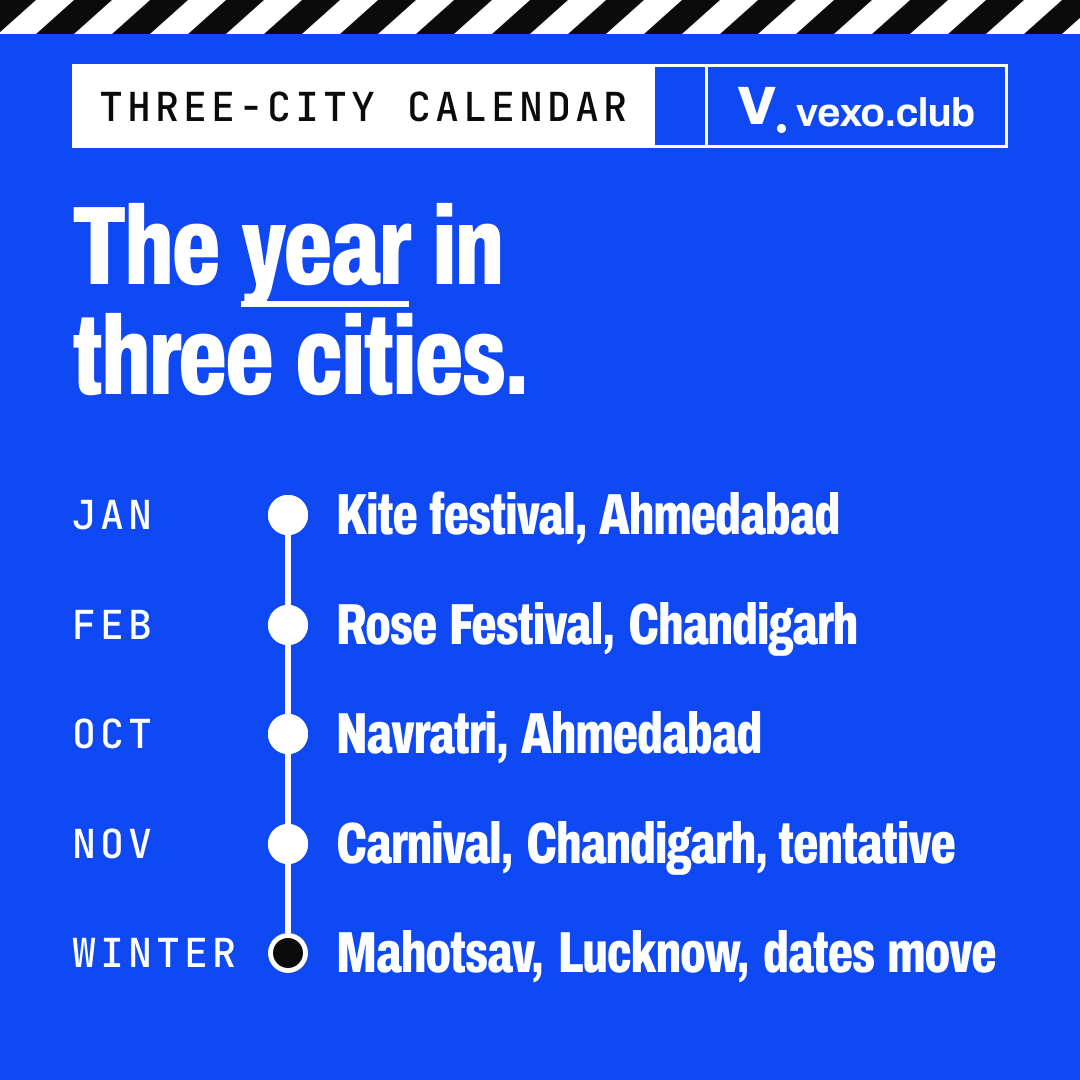
Navratri is the loudest date in the Gujarat diary, and it moves. It follows the bright fortnight of Ashwin, so the Gregorian dates shift every year. The 2026 Vibrant Navratri Festival, run by Gujarat Tourism in Ahmedabad, is listed as 11 to 19 October on the Gujarat Tourism page and 11 to 20 October on Incredible India. Two official pages a day apart is a reason to confirm the last night with the organiser before a contract is written around it. UNESCO inscribed Garba of Gujarat on 6 December 2023, which a fashion, jewellery or dance brief can cite without inventing a local claim.
The preparation matters more than the nine nights. Law Garden’s evening market sells chaniya choli, mirror work and oxidised jewellery all year and swells near Navratri, and one local guide calls the cloth lanes jammed in festival weeks. Casting and sample delivery therefore have to close well before the first night, not during it. Festive-season influencer planning sets out the general order of work.
Uttarayan runs on the same logic in January. Gujarat Tourism says kite making starts in the old city in November and that Patang Bazaar stays open around the clock in the week before the festival (Gujarat Tourism). Incredible India lists the next International Kite Festival as 10 to 14 January 2027 at the Sabarmati Riverfront (Incredible India). A brand that wants rooftops, food or sky in frame should film the November and December build-up and keep the festival day for live posting.
Then the constraint that surprises visiting crews. Gujarat has been dry since the state was formed in 1960, and the operative law is still the Bombay Prohibition Act, 1949 as adapted (India Today’s explainer). Tourist permits exist and GIFT City has a notified exemption, but neither makes an Ahmedabad restaurant or lawn a place to film a bar scene. Gujarat’s own film resolution says a production that needs a prohibition permit must obtain it from the district prohibition and excise officer. The newer policy says the facilitation cell will help with excise permission for cast and crew when the application goes through its portal. For a mixer, a glassware brand or a restaurant, write the script so that it never needs one.
What an Ahmedabad brief starts from
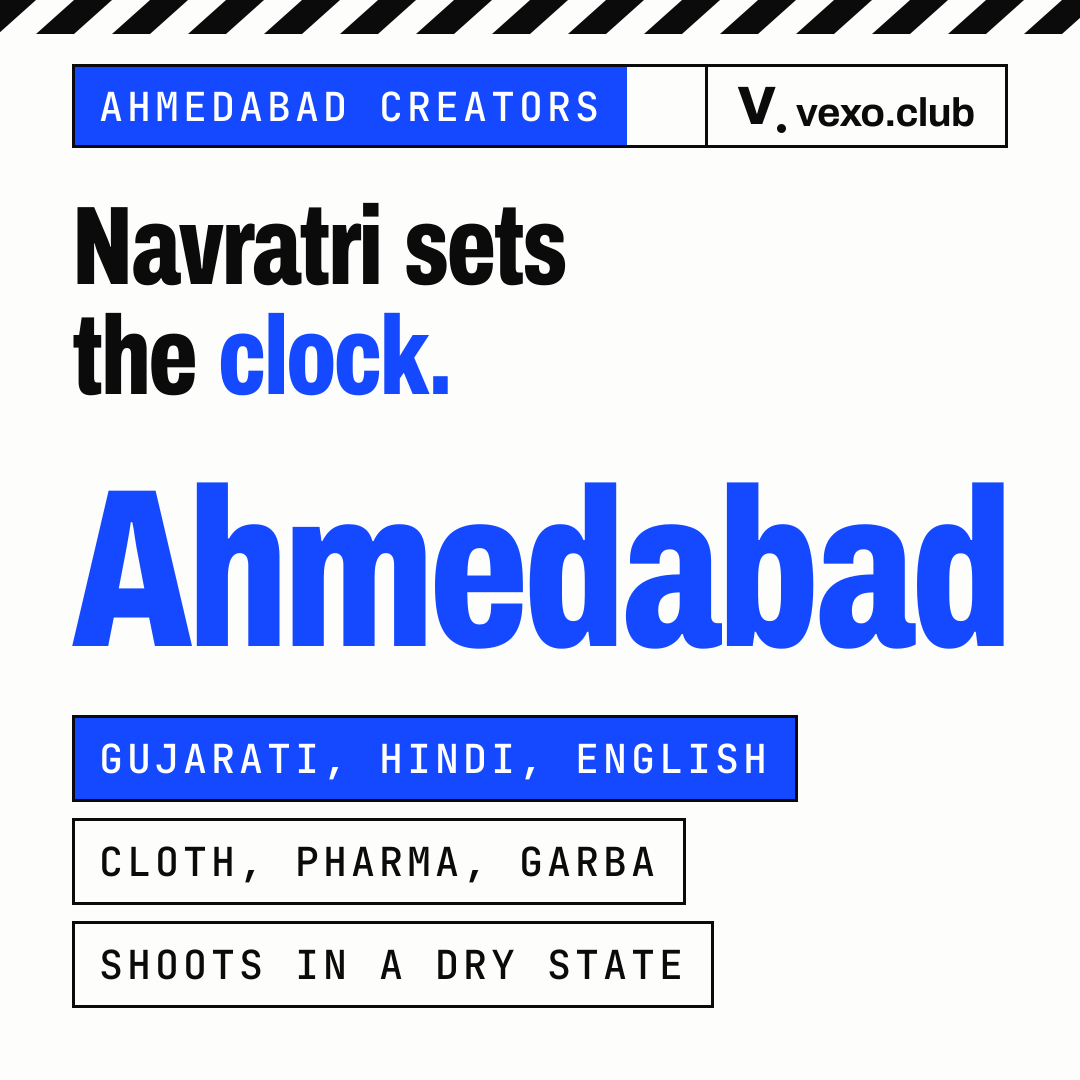
The Ahmedabad brief: one desk, a three-week line and a heritage core
The Tourism Corporation of Gujarat runs a Film Facilitation Cell with an online single-window portal for bookings, permissions and clearances. The 2022 Cinematic Tourism Policy puts the planning rule in plain words.
What Gujarat’s film policy asks of a production
“The request along with the requirements must be submitted to FFC at-least 3 weeks prior to commencement of shooting.”
Government of Gujarat, Industries & Mines Department, Cinematic Tourism Policy 2022-2027, security facilities,
Source: gujarattourism.com (PDF)
An older 2014 state resolution promised that municipal commissioners, police and collectors would decide within seven days or the permission would count as granted, but not at monuments protected by the Archaeological Survey of India or in forest areas. The desk could not confirm that the deemed-permission rule still operates in that form, so do not plan on it. The walled city is a UNESCO World Heritage property (UNESCO), the place where lanes, pols and temples make the best frame and attract the most scrutiny, so ask the cell about it by name. And here is the honest gap: none of these pages says whether one creator with a phone and a ring light needs the same clearance as a crew. Ask in writing, and keep the reply.
Chandigarh: one planned grid, three governments
Chandigarh became a Union Territory on 1 November 1966 when Haryana was carved out of Punjab, and it serves as the capital of both states while belonging to neither, under the central government (Chandigarh Administration). The Capitol Complex in Sector 1 holds the High Court, the Secretariat and the Assembly, and the city centre is Sector 17. Precision helps here: the government told Parliament that the city itself is not a World Heritage city and that the Capitol Complex was inscribed in 2016 as part of Le Corbusier’s transnational property (ThePrint, reporting the reply). A brief that calls Chandigarh a UNESCO city overclaims.
The planned boundary stops at the sector grid, but the market does not. Mohali sits across the border in Punjab and Panchkula in Haryana, and a viewer in Zirakpur, Kharar or Panchkula is part of the same audience. That is the operational point of the Tricity: one campaign, three police forces, three governments and three film desks. The economy behind creator spend is mixed. There is government and the courts. There are three IT clusters: the Rajiv Gandhi Chandigarh Technology Park, Mohali’s IT City and Panchkula’s IT Park, as described in a Mohali property guide, a secondary source. And there is a music business, the most distinctive of the three.
Hindustan Times reported that the Punjabi music industry’s centre of gravity moved from Jalandhar to Mohali for space, the nearby airport and the cafes and colleges of the Chandigarh side (Hindustan Times), and the Punjab government has said it is working on a Film City in Mohali (News On AIR). The inference for a brand is a creator pool unusually close to sound studios and video sets, and so used to a polished music-video look. Nobody publishes a count of creators here, so ask any shortlist for audience data rather than a headline.
Punjabi, Hindi and English: what a Chandigarh caption should say
The census figures are contested in a useful way. Wikipedia’s reading of Census 2011 puts Hindi at about two-thirds of the Union Territory and Punjabi at about a fifth, with Punjabi’s share falling since 1981. The Tribune, reporting the census bilingualism table, put Hindi mother-tongue speakers at over 73 per cent and said that after the mother tongue most residents were proficient in English (The Tribune). The gap comes from grouping: the census’s C-16 table for Chandigarh lists Haryanvi and several other dialects inside Hindi, and Bagri and Bilaspuri inside Punjabi. Treat the exact shares as unsettled and the shape as clear: the city’s streets run on Hindi and English, and the studios and stages run on Punjabi.
That shape gives a casting rule with three branches. A college, coaching or IT-employer brief aimed at the city proper can run in Hinglish. A launch aimed at Mohali, Zirakpur or the wider Punjab audience should be made in Punjabi by a creator who thinks in it, not translated from a Hindi script. On the Panchkula side, Haryanvi sits inside Hindi in the census, so ask whether the audience expects a Haryanvi voice before you assume Hindi will do. Running a regional launch in four languages covers approvals when a claim has to survive translation.
What a Chandigarh brief starts from
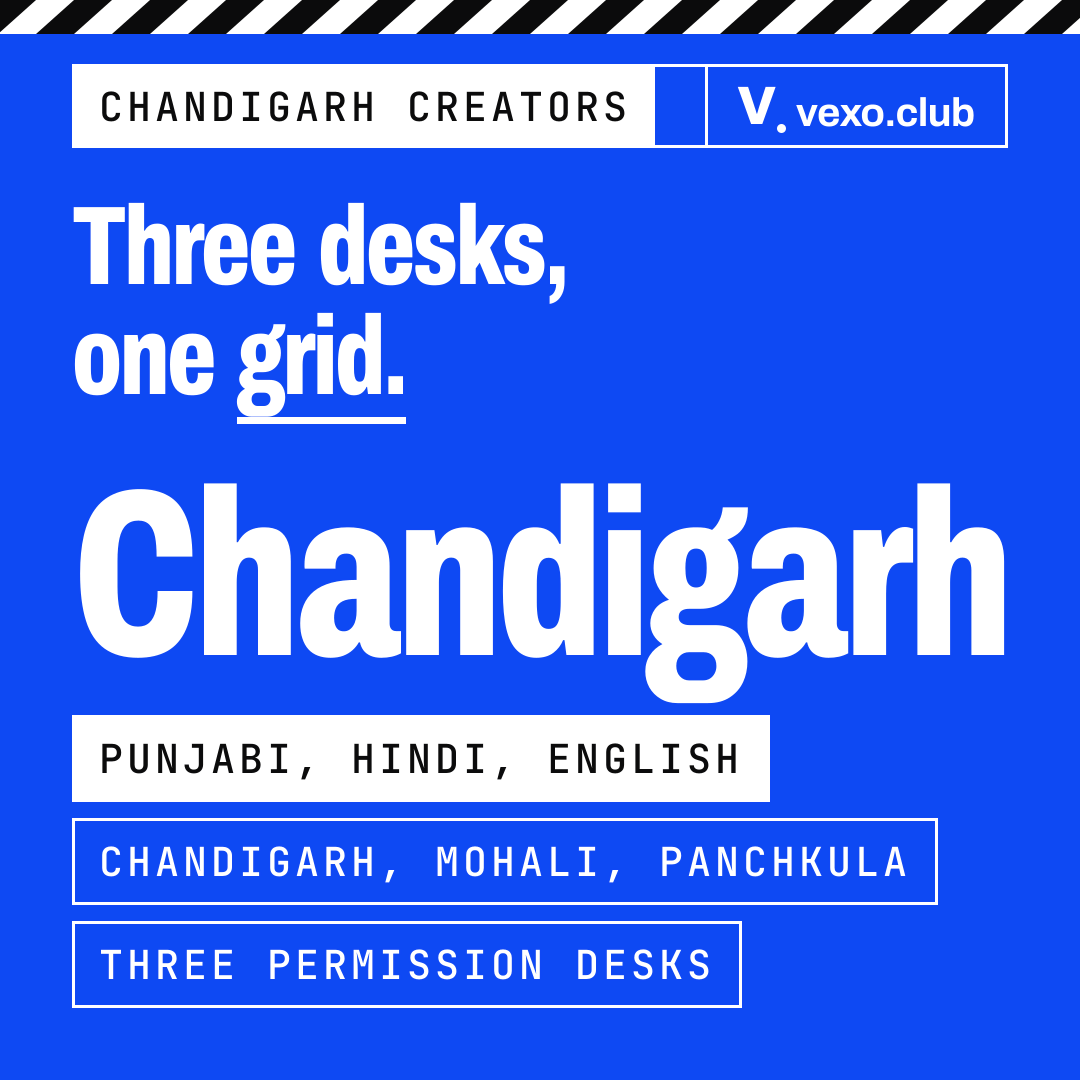
The Chandigarh brief: three desks for one shoot across Mohali and Panchkula
A shoot at Sukhna Lake and one a short drive away in Mohali sit under different governments, and each has its own door. Chandigarh Tourism made shooting permission fully online through its Film Facilitation Cell from 1 April 2022 (Chandigarh Tourism). The conditions on its Capitol Complex permission page tell the police station a day ahead, keep the shoot off traffic at the peak hours of 8 to 11 in the morning and 4 to 7 in the evening, and ask for permission before loud music.
Where a location is cleared in the Tricity
| Where permission is sought | What the published text says | |
|---|---|---|
| Chandigarh (UT) | Tourism Department, Film Facilitation Cell, online since April 2022 | Police told a day ahead; no shoot that blocks traffic at peak hours |
| Mohali (Punjab) | Invest Punjab portal, single-window shooting permission | Press reports of a 2026 film policy; check the policy text itself |
| Panchkula (Haryana) | Haryana Film Promotion Board, online film cell | Policy text: apply a month ahead, decision within thirty days |
The Capitol Complex deserves a separate line. The same page says visitors go in timed batches of up to thirty and carry only a purse, a phone and a camera after screening, which rules out crew kit, a gimbal bag or a tripod case. Whether a commercial shoot is allowed there at all is a question for the Tourism Department. In Punjab, shooting approval runs through the Invest Punjab portal. In Haryana the film policy text says to apply online one month before the schedule, that the board decides within thirty days, and that the authority can decline without giving reasons (Haryana Film & Entertainment Policy).
Drones are the other surprise. From 5 to 8 October 2026 the District Magistrate declared all of the Union Territory a no-flying zone for drones during a VVIP visit (order, Chandigarh Administration), and a similar order was reported in December 2025. Build a ground-camera version of every aerial shot and treat the aerial as a bonus.
The calendar is shorter than Ahmedabad’s but just as fixed. The Rose Festival is held in the last week of February at the Zakir Hussain Rose Garden in Sector 16 and the Leisure Valley, and its 54th edition ran from 20 to 22 February 2026 (Chandigarh Tourism). The North Zone Cultural Centre’s proposed calendar for 2026 to 2027 lists a Chandigarh Carnival at the Leisure Valley in November 2026 and Vaisakhi celebrations at Kalagram in April 2026 (NZCC), both tentative. Add Lohri in January and the wedding months, and wedding-season influencer marketing explains how that spend is timed.
Briefing an agency in Lucknow: government, a craft with a legal label and food
Lucknow is the capital of Uttar Pradesh, so government is the obvious base of its economy. It is also one node of the Uttar Pradesh Defence Industrial Corridor, and a BrahMos integration and testing facility was inaugurated there in May 2025 (New Indian Express). Those are salaried payrolls, not influencer budgets, and a brief that treats Lucknow as an industrial city is mistaken about who buys (an inference, but a safe one).
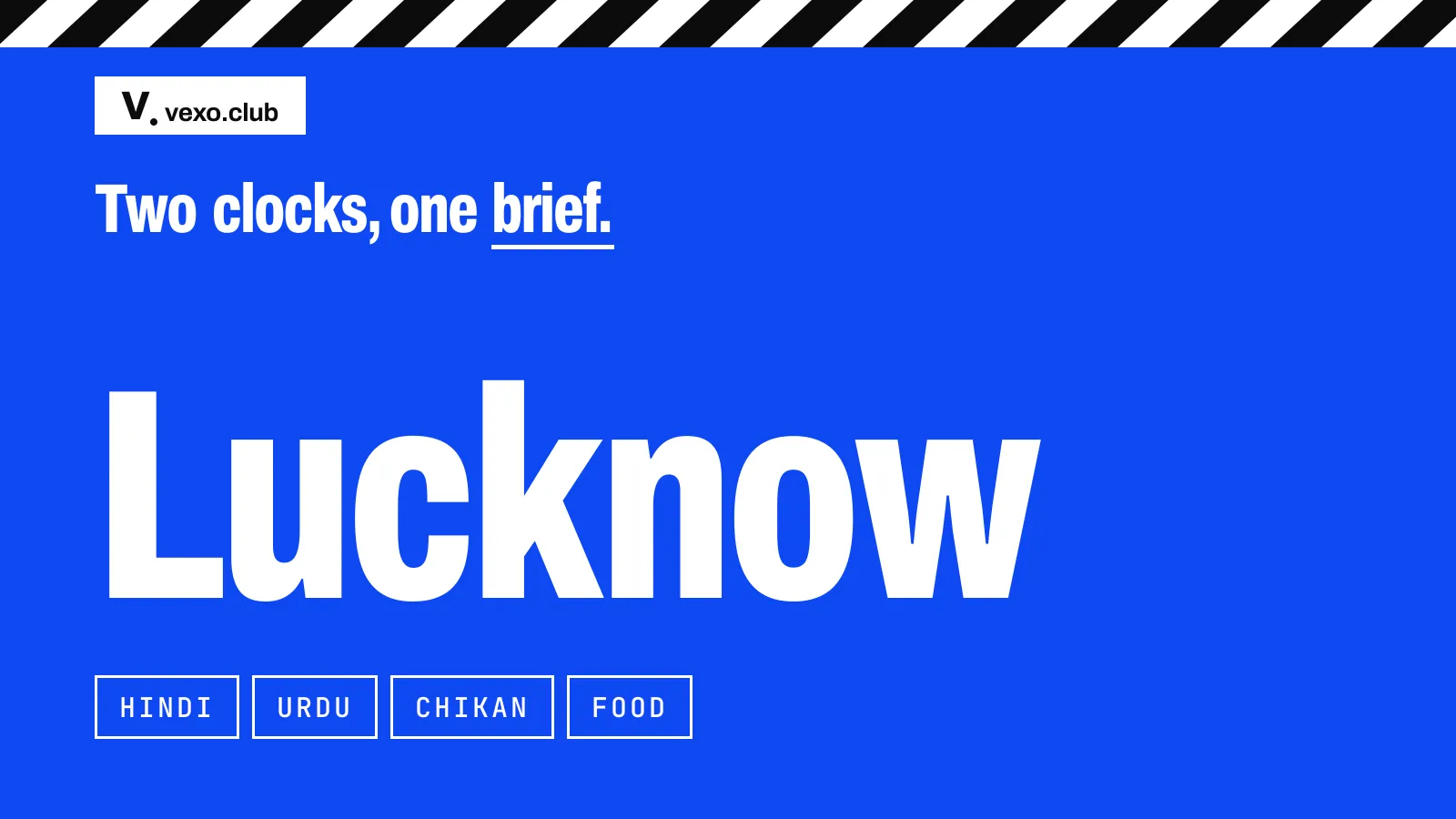
Two Lucknow facts are checkable and commercially useful. Chikankari and zari-zardozi are the district’s One District One Product items, and Lucknow Chikan Craft is GI-tagged, according to the Uttar Pradesh ODOP portal, which also describes a large artisan base and strong domestic and export demand. For a fashion brief, that is a legal label a creator can cite and a sourcing story a brand can be asked to prove (fashion creators). And on 31 October 2025 UNESCO named Lucknow a Creative City of Gastronomy, citing its Awadhi cuisine (UNESCO). Restaurants, packaged food and hospitality can start from that, and food creators shows who works the category.
Retail here splits like Ahmedabad’s, but along a different axis: the newer Gomti Nagar side, with Phoenix Palassio on Amar Shaheed Path and Lulu Mall at Sushant Golf City, against the older core around Hazratganj and Aminabad. Malls set their own filming rules, so ask the centre first.
Hindi, Urdu and the Awadhi trap
Lucknow’s language question is not the one most people expect. Hindi is the largest mother tongue by a wide margin, and Urdu is a sizeable minority, concentrated in the city more than in the district’s villages. Awadhi, the language of the old Awadh region, is counted inside Hindi by the census and was returned by only a few thousand people in the whole district, going by the table as reproduced on Wikipedia. That is a reproduction and not the C-16 table for Uttar Pradesh itself, so check the table before you quote a share.
The practical consequences are three lines in the brief. Write the post in Hindi unless the audience data says otherwise. Decide whether the caption is Devanagari, Roman or Urdu script, because that is a choice a creator makes and a brand rarely specifies. And do not ask for Awadhi voice-over as proof of authenticity: on those census numbers it would reach few of the people you are selling to. Where Urdu matters, ask a creator to show a previous post in the script and have a native reader approve the copy.
Muharram, Mahotsav and Diwali: the Lucknow diary and its filming rules
Lucknow’s diary has two clocks. Hindu festivals and the wedding winter run on one, and the Islamic calendar runs on another that moves roughly eleven days earlier against the Gregorian year each year. A launch that lands during the old city’s Muharram processions, with confetti and a discount code, is a scheduling error. Check the lunar dates when you set a go-live and leave a quiet window around them. That is a judgement, not a rule, and no regulator publishes it. The Lucknow Mahotsav, the city’s winter cultural fair run by Uttar Pradesh Tourism with the district administration, is listed for different weeks in different sources (late November in some, late January or early February for the 2025 edition), so confirm it with UP Tourism rather than a listing site.
On filming, the Husainabad Trust’s own page says any shooting is prohibited inside the Imambara premises and that it can be done on the road outside only with permission from the police, the District Magistrate or the Trust chairman (Husainabad Trust). The same page says Bara Imambara is closed on Fridays from 10 in the morning to 3 in the afternoon. The state’s film policy gives a District Magistrate five days to issue shooting permission under the Uttar Pradesh Janhit Guarantee Act, through the Film Bandhu portal (Uttar Pradesh Film Policy). As in the other two cities, that policy is written for film productions.
What a Lucknow brief starts from
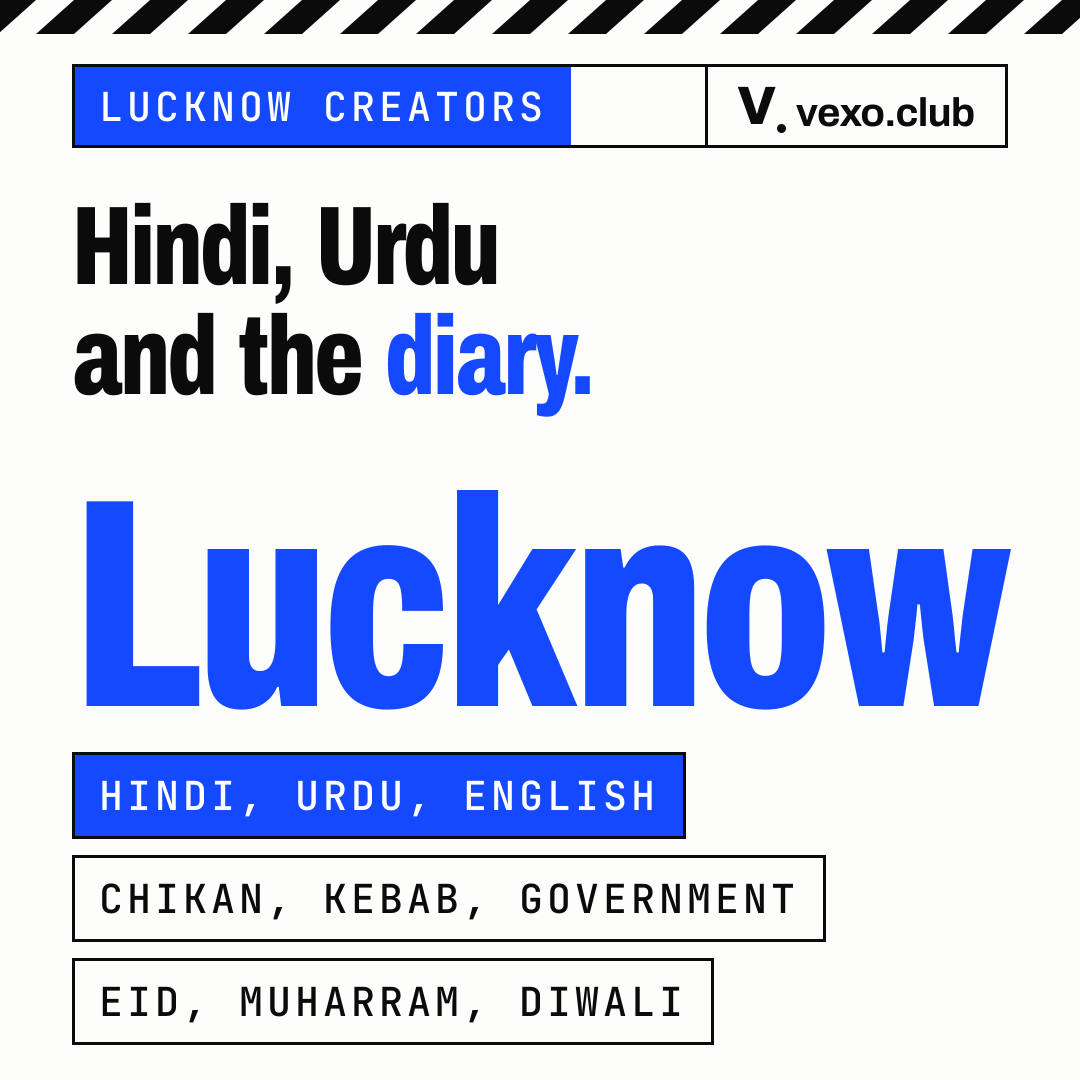
What goes into each city’s brief
The table pulls the three cities together. Under it are three paste-ready paragraphs, each of which changes a different part of a normal brief.
What each city changes in the brief
| Likely buyers | Language call | Calendar anchor | First desk to ask | |
|---|---|---|---|---|
| Ahmedabad | Ethnic wear, jewellery, food, west-side property, consumer health | Gujarati, Hindi or both, in the post and not only the caption | Navratri, Uttarayan, wedding months | Gujarat Tourism film cell |
| Chandigarh | Music and film releases, colleges, IT employers, Mohali property, cafes | Hinglish for the city, Punjabi for the studios and the Punjab side | Rose Festival, Carnival, Vaisakhi, Lohri | Whichever of the three desks holds the location |
| Lucknow | Chikan and zardozi labels, restaurants, malls, hospitality | Hindi first; settle Urdu and the script; skip Awadhi unless asked | Eid, Muharram, Diwali, Mahotsav, winter weddings | Film Bandhu, or the Husainabad Trust for the Imambara road |
Ahmedabad. Audience: Gujarati-speaking viewers in Ahmedabad and Gandhinagar, confirmed with an audience-location export. Language: the post in Gujarati, Hindi or a stated mix. Content: no alcohol or bar scenes. Filming: old-city lanes on weekday daytimes, west-side showrooms by arrangement with the store. Deliverables: Navratri content live before the first night, with casting and samples closed earlier. Permission: Gujarat Tourism film cell, asked in writing whether this shoot needs clearance.
Chandigarh. Audience: name the exact places the product sells, among Chandigarh, Mohali, Zirakpur and Panchkula. Language: Hinglish, Punjabi or both, by place. Filming: state which jurisdiction each location is in before booking, and which desk was asked. No drone as the only version of any shot. Permission: the Chandigarh, Punjab or Haryana desk as the location dictates.
Lucknow. Audience: Hindi-speaking viewers in Lucknow, with Urdu stated as in or out. Language: Hindi post, caption script named. Calendar: no go-live inside Muharram, with Eid and Diwali dates marked. Filming: nothing inside the Imambara premises, roadside only after permission. Permission: Film Bandhu or the District Magistrate’s office, asked in writing.
Fixed anchors in the three-city year
The registered company is Vexocore IT Services Private Limited, CIN U72900RJ2022PTC085082, and the verify page lets you check it.
The clock is the desk’s own: a creator shortlist in 18 hours, contracts and briefing inside a week, and first content live in 10–14 days for most categories.
One rule holds in all three cities and is special to none of them: before you pay for local casting, check the creator’s audience, because where a creator lives is not where the viewers are. ASCI’s disclosure rules apply to every post here as anywhere. vexo.club runs briefs from a desk in Delhi NCR and has no office in Ahmedabad, Chandigarh or Lucknow, so anything that needs a person on location is scoped and quoted before it starts.
Questions brands ask
Do Ahmedabad campaigns need Gujarati-speaking creators? Not always, but the language of the post should be a decision. A heritage or jewellery brief aimed at Gujarati viewers is better made in Gujarati. A national product with Hindi copy may not need it. The audience-location export, not the creator’s bio, decides.
Can we show alcohol or a bar scene in an Ahmedabad shoot? Plan on no. Gujarat has been dry since 1960, and the state’s film resolution says a production needing a prohibition permit must obtain it from the district excise officer. Write the script so the shot is not needed.
When should a Navratri campaign start? Casting and sample delivery should close before the first night, and the nine nights are better used for live posting than for production. Navratri follows the Ashwin fortnight, so the dates change each year.
Is Chandigarh a Punjabi-speaking market? Not in the census sense. Hindi is the largest mother tongue in the Union Territory and Punjabi is a minority whose share has fallen since 1981, but Punjabi is the working language of the music and film business in Mohali. Decide per audience and per place.
Who gives shooting permission in Mohali, Panchkula and Chandigarh? Three different governments. Chandigarh Tourism’s Film Facilitation Cell covers the Union Territory, the Invest Punjab portal covers Mohali and the rest of Punjab, and the Haryana Film Promotion Board covers Panchkula and the rest of Haryana. The policies are written for film productions, so ask each desk in writing whether a creator’s branded reel needs clearance.
Can a creator fly a drone at the Capitol Complex or Sukhna Lake? Do not assume so. The Capitol Complex allows only a purse, phone and camera after screening, and the District Magistrate has declared the whole Union Territory a no-flying zone for drones during VVIP visits, as on 5 to 8 October 2026. Ask the Tourism Department first.
Does a Lucknow brief need Urdu? It needs a decision on Urdu. Urdu is a sizeable minority mother tongue in the city, the census counts Awadhi inside Hindi, and a caption script is a creator’s choice. If Urdu readers are part of the audience, ask for a prior post in the script.
Can a creator film inside the Bara Imambara in Lucknow? The Husainabad Trust’s page says no. Any shooting inside the premises is prohibited, and the road outside needs permission from the police, the District Magistrate or the Trust. Bara Imambara is closed on Fridays from 10 in the morning to 3 in the afternoon.
If you are briefing for any of these cities, send the objective, the exact places the product sells, the language of the post and the launch date through the contact page. The desk will say which of these constraints your brief runs into before anyone is paid. It also keeps a page for Ahmedabad and one for Chandigarh.
Sources
- Times of India (opens in a new tab) timesofindia.indiatimes.com
- the city’s heritage portal (opens in a new tab) heritage.ahmedabadcity.gov.in
- Karnavati University’s account (opens in a new tab) karnavatiuniversity.edu.in
- OurCity (opens in a new tab) ourcity.in
- Ahmedabad profile (opens in a new tab) static.investindia.gov.in
- India Code (opens in a new tab) indiacode.nic.in
- the Gujarat Tourism page (opens in a new tab) gujarattourism.com
- Incredible India (opens in a new tab) incredibleindia.gov.in
- Garba of Gujarat (opens in a new tab) unesco.org
- Gujarat Tourism (opens in a new tab) gujarattourism.com
- Incredible India (opens in a new tab) incredibleindia.gov.in
- India Today’s explainer (opens in a new tab) indiatoday.in
- film resolution (opens in a new tab) gujarattourism.com
- Government of Gujarat, Industries & Mines Department, Cinematic Tourism Policy 2022-2027, security facilities (opens in a new tab) gujarattourism.com
- UNESCO (opens in a new tab) whc.unesco.org
- Chandigarh Administration (opens in a new tab) chandigarh.gov.in
- ThePrint, reporting the reply (opens in a new tab) theprint.in
- a Mohali property guide (opens in a new tab) homziio.com
- Hindustan Times (opens in a new tab) hindustantimes.com
- News On AIR (opens in a new tab) newsonair.gov.in
- The Tribune (opens in a new tab) tribuneindia.com
- C-16 table for Chandigarh (opens in a new tab) censusindia.gov.in
- Chandigarh Tourism (opens in a new tab) chandigarhtourism.gov.in
- Capitol Complex permission page (opens in a new tab) admser.chd.nic.in
- Haryana Film & Entertainment Policy (opens in a new tab) filmcell.prharyana.gov.in
- order, Chandigarh Administration (opens in a new tab) chdpr.gov.in
- Chandigarh Tourism (opens in a new tab) chandigarhtourism.gov.in
- NZCC (opens in a new tab) culturenorthindia.com
- New Indian Express (opens in a new tab) newindianexpress.com
- Uttar Pradesh ODOP portal (opens in a new tab) odopup.in
- UNESCO (opens in a new tab) unesco.org
- Wikipedia (opens in a new tab) en.wikipedia.org
- Husainabad Trust (opens in a new tab) lucknowimambara.com
- Uttar Pradesh Film Policy (opens in a new tab) invest.up.gov.in
Cite this page
Influencer marketing in Ahmedabad, Chandigarh and Lucknow. vexo.club, published 06 Oct 2026, updated 01 Nov 2026. https://vexo.club/blog/influencer-marketing-ahmedabad-chandigarh-lucknow
Influencer marketing across India
Send the desk a brief: it comes back as a shortlist and a directional band, never a public price.
Brief the desk