Food YouTubers in India: home cooks, street-food walks and what brands check
Food YouTubers in India split into home cooking, street-food walks, restaurant reviews and regional-language cooks. How to sort them, and what a food brand checks on FSSAI claims, sampling and restaurant visits.
Benchmarks Updated 13 min read The vexo.club desk
In this article11 sections
Food YouTubers in India work in four formats (home cooking, street-food walks, restaurant reviews and regional-language cooking), and the useful way to sort them for a brand is by format and cuisine, not by a list of the most subscribed. In food, the sensitive part of a brief is not the creator but the claim: what is said about the food, and whether the brand can stand behind it.
The creators named here are public examples; none is a vexo.club creator unless marked as a roster creator.
This guide comes from vexo.club, an influencer marketing agency run from one desk in Delhi NCR. It names a public creator only where their own site says what they do, and it types no subscriber counts, because they move daily; the live figure is on each channel’s own YouTube page. If you searched for Indian cooking bloggers or food bloggers in India, this page sorts them by what they make; for the brand, it covers what to check before booking one.
Food channels in short
- Food YouTubers work in four formats: home cooking, street-food walks, restaurant reviews and regional-language cooking.
- In food the sensitive part of a brief is the claim: what is said about the food, and whether the brand can stand behind it.
- No claim goes into a script unless the brand can point to where the label or the licence supports it.
- A free sample is a material connection, so the post carries the ASCI label even if no fee was paid.
What kinds of food YouTubers and food bloggers are there in India?
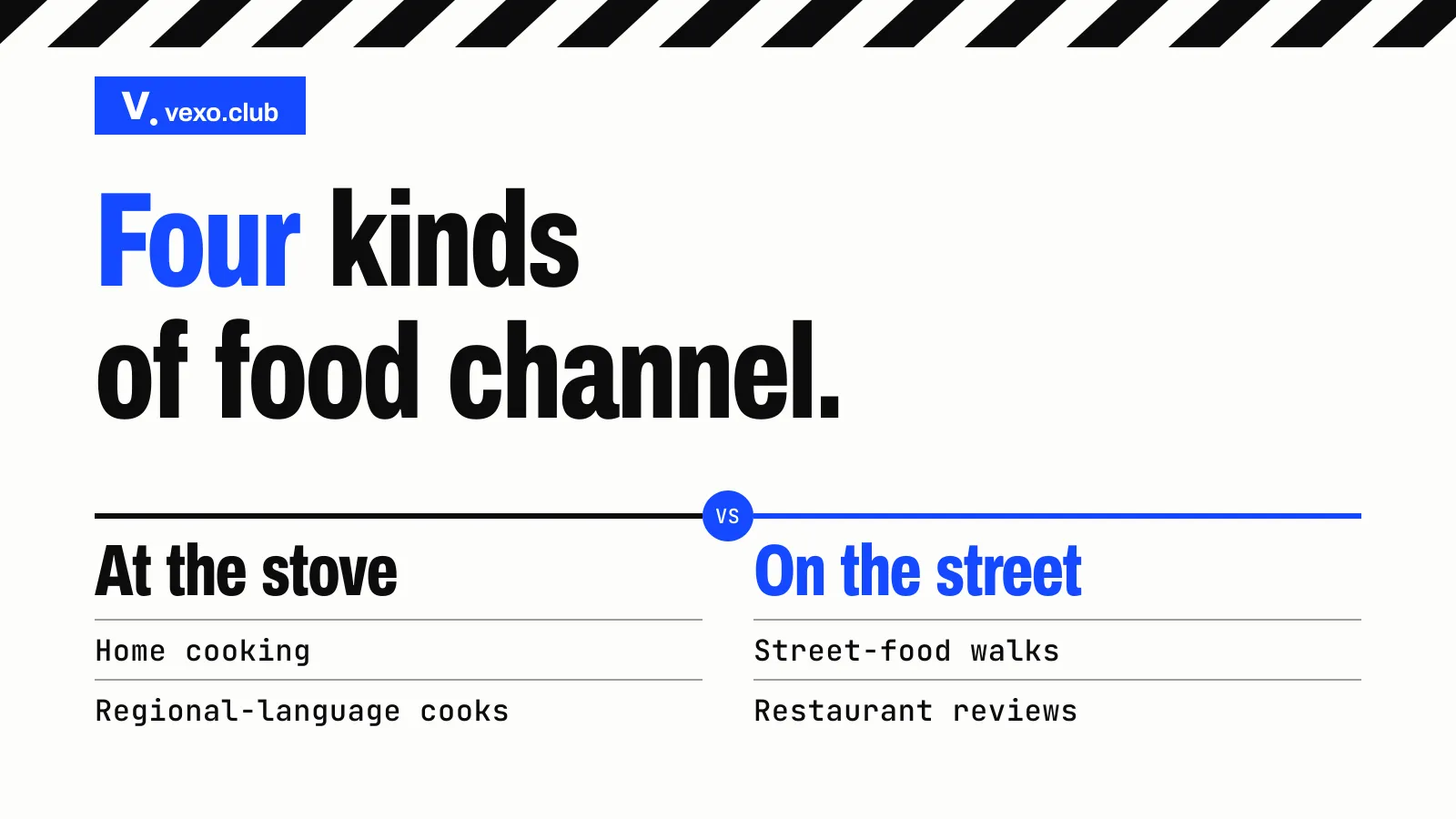
Four, and the format decides what a brand can buy. A home-cooking channel teaches a recipe and sells a product when the product is in the pan. A street-food channel walks a place and eats at stalls; it sells a city and a mood. A restaurant-review channel judges a room and a menu, and sells a booking. A regional-language cook teaches a cuisine in the language it is cooked in, and sells to a household that rarely hears from brands in that language.
Four kinds of food channel, and what each can carry for a brand
| What the video does | What a brand can buy | Main exposure | |
|---|---|---|---|
| Home cooking | Teaches a recipe, start to finish | The product used in the recipe | Ingredient and health claims |
| Street-food walk | Walks stalls and eats on camera | A city, a market or a festival moment | Hygiene, and a stall the brand cannot vouch for |
| Restaurant review | Judges a room, a menu and a bill | A launch, an opening or a menu | An honest review against a paid one |
| Regional-language cook | Cooks a cuisine in its own language | Reach into a household the brand does not usually reach | Translation that shows; claims across languages |
Which food YouTubers and cooking bloggers in India do home cooking?
These are the creators most brands think of first, because a packaged product fits a recipe naturally. Four describe themselves on their own sites.
- Nisha Madhulika. Her site is a recipe blog of Indian vegetarian dishes in Hindi, with an English version, backed by a Nisha Madhulika YouTube channel.
- Hebbars Kitchen. The blog is an Indian vegetarian recipe site in English, Hindi and Kannada, with a YouTube channel linked from every page.
- Kabita’s Kitchen. The site carries Indian curry and everyday recipes, in English with Hindi titles, with a Kabita’s Kitchen YouTube channel.
- Manjula’s Kitchen. The site is run by Manjula Jain, a vegetarian cook from North India who moved to the United States, with English-language recipe videos on YouTube.
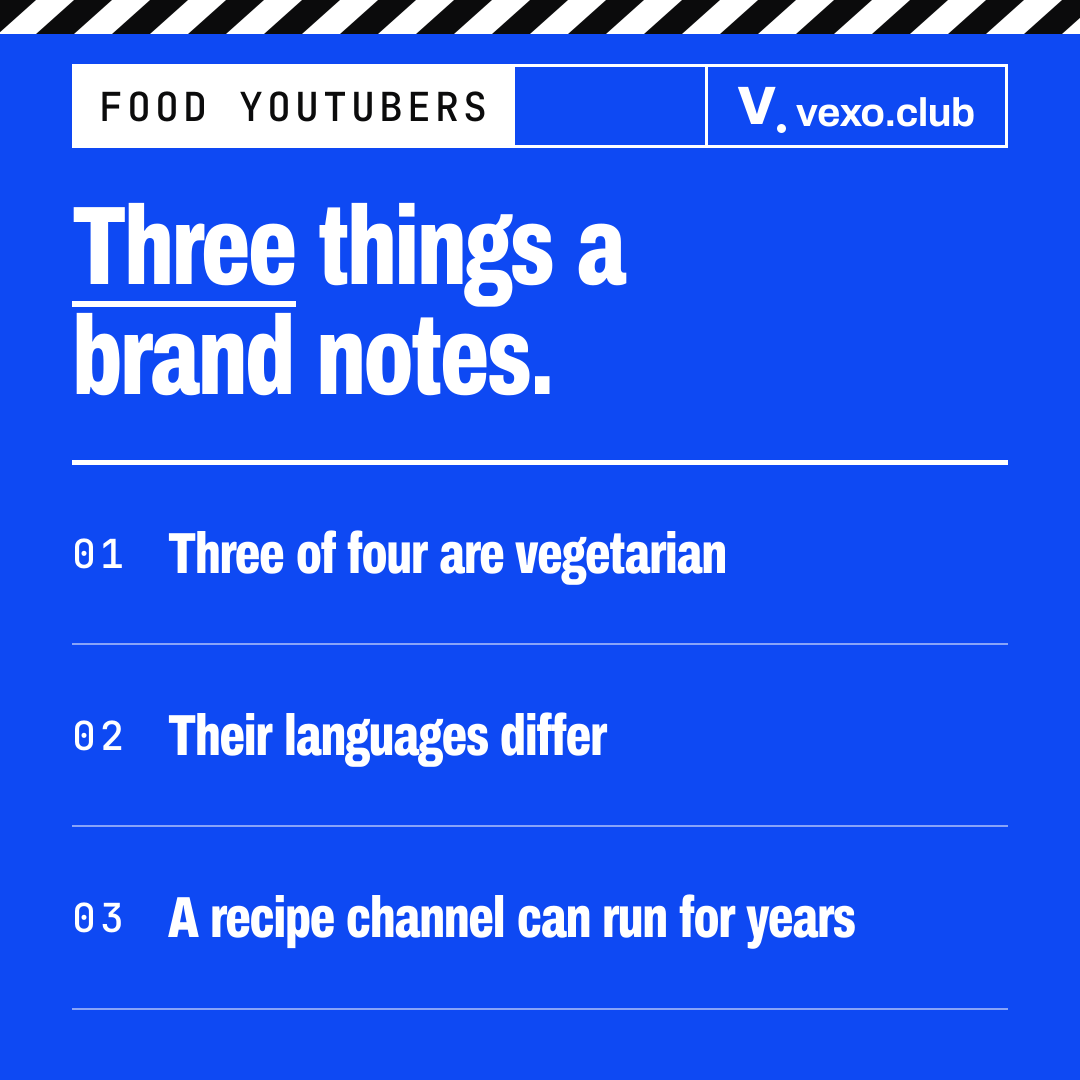
Three things about these four are worth a brand’s attention, and none is a ranking. Three describe their cooking as vegetarian, which matters for a brand whose product is not. Their languages differ, from Hindi to English to Kannada, so the language of the integration is a choice. And a recipe channel can run for years, which is good for an evergreen product and awkward for a time-limited offer.
What a brand notes about home-cooking channels
Who are the regional-language food YouTubers in India?
Regional-language cooks are a separate audience, not a translated one. Madhura’s Recipe describes itself as quick, easy Maharashtrian recipes prepared by Madhura, and the site carries recipe videos in Marathi, Hindi and English. The Marathi videos are on Madhura’s Recipe Marathi on YouTube. Hebbars Kitchen, above, publishes in Kannada as well as English and Hindi.
For Tamil, Telugu, Malayalam and Bengali cooking, the desk names no one on this page, because none of the channels it looked at met both tests: a source the creator controls, and a clean news check. A brand briefing a South Indian cuisine should still cast a cook who works in the language; the desk’s notes on regional launches in four languages and South Indian influencers cover how.
Who are the food bloggers in Delhi, Mumbai and Bangalore?
City food content is its own genre, and it is mostly street-food walks and restaurant reviews. In Delhi, Delhi Food Walks runs guided street-food tours of Old Delhi, designed, the site says, by its foodie-in-chief Anubhav Sapra. Its video is on the Delhi Food Walks YouTube channel, and the site links its Instagram at @delhifoodwalks.
For Mumbai and Bengaluru food blogs, the desk names no one here. City food accounts are mostly on Instagram, many are small and local, and a food-blog name found in a search is not a source. A city brief is better built from the neighbourhood: which stalls, which restaurants, and which audience lives within reach. The desk’s city pages, Delhi, Mumbai and Bengaluru, say how the desk runs a brief in each.
Set side by side, the channels named on this page differ by what they cook, where they work and how a brand would brief them. Each cell is taken from the creator’s own site.
The food channels named on this page, as their own sites describe them
| What it makes | Language | Brief it suits | |
|---|---|---|---|
| Nisha Madhulika | Indian vegetarian recipes | Hindi, with an English version | A pantry product used in a recipe |
| Hebbars Kitchen | Indian vegetarian recipes, regional and street food | English, Hindi, Kannada | A recipe integration in a chosen language |
| Kabita’s Kitchen | Indian curry and everyday recipes | Hindi videos; English site | A cooking ingredient or a ready mix |
| Manjula’s Kitchen | Vegetarian recipes from North India | English | A vegetarian product for an English-speaking audience |
| Madhura’s Recipe | Maharashtrian and regional recipes | Marathi, Hindi and English | A Maharashtrian household product |
| Delhi Food Walks | Guided street-food tours of Old Delhi | English site; tours in Delhi | A city moment, not a packaged product |
The same six channels. Each is named from its own site, and none is a vexo.club creator.
The food channels named in this guide, on YouTube
| Channel | Category |
|---|---|
| Nisha Madhulika | Food |
| Hebbars Kitchen | Food |
| Kabita’s Kitchen | Food |
| Manjula’s Kitchen | Food |
| Madhura’s Recipe | Food |
| Delhi Food Walks | Food |
Does vexo.club have food creators on its roster?
Not today. The roster has no food category, and none of its creators is recorded as a food or cooking creator, so this article names no roster creator as a food creator. A food brief goes to the desk and is cast to the brief; the shortlist comes back with audience fit and a rate card from creators outside the roster. The roster lists what is there now.
What does a food brand check before booking a food YouTuber?
Four checks, in this order. They apply to every format, and the first two finish before any rate is discussed.
- The claim. Everything the creator will say about the food, in writing, against what the label and the licence allow.
- The news. A search for complaints, court orders and any food-safety action, repeated the week the post goes live.
- The audience. Food channels reach whole households, including children; the method is in how to check an influencer’s audience before you pay.
- The label and the rights. The ASCI disclosure, and what the brand may do with the video; see ASCI disclosure for brands and usage rights.
What are FSSAI-sensitive claims, and how should a food brief handle them?
The Food Safety and Standards Authority of India regulates what food advertising may claim, through the Food Safety and Standards (Advertising and Claims) Regulations, 2018, which ask for claims that are truthful, unambiguous and scientifically substantiated. A creator is not a lawyer, and a casual sentence in a recipe video, “this is good for diabetics” or “this builds immunity”, is exactly the kind of line a brand is responsible for. The desk’s rule is that no claim goes into a script unless the brand can point to where the label or the licence supports it. This is a working summary, not legal advice; read the current regulations and the brand’s own label.
Claims to send for review before a food video is filmed
- Health and nutrition claims: “healthy”, “good for the heart”, “diabetic-friendly”, “builds immunity”
- Purity and origin words: “pure”, “natural”, “organic”, “no preservatives”, and any “all natural” or “fully natural” wording
- Comparisons with another brand or with home cooking
- The brand’s FSSAI licence or registration number, where the product carries one
- Allergen and ingredient statements, and the shelf life of a sampled product
- Words for children: no claim aimed at a child that the label does not support
Creators do not need to learn this. A good brief gives them the three lines they may say about the product and the lines they may not, and the desk reads the draft against the list before the brand approves.
The desk’s rule for a food claim
How should a brand run sampling with food creators?
Sampling means sending a product to a creator to cook with or taste before any post. It is the cheapest way to get an honest recipe, and the one that needs the most care. A sample is a material connection, so the post carries the ASCI label even if no fee was paid, and the product has to reach the creator in a state worth filming.
How a food sample goes from the brand to a labelled post
- Brief and product facts Allowed claims, allergens and storage
- Ship with shelf life Dated stock, packed for the route and the season
- Creator cooks and drafts In their own recipe, in their language
- Claim and label check Desk reads the draft; brand reads the claim
- Post and review A check the first day after posting
For a regional cuisine, the sample should match the cuisine. A brand sending a spice mix to a Maharashtrian cook is asking for a Maharashtrian recipe, and should say so in the brief. The wider category notes are on influencer marketing for FMCG brands and for D2C brands.
How do restaurant collaborations with food creators work?
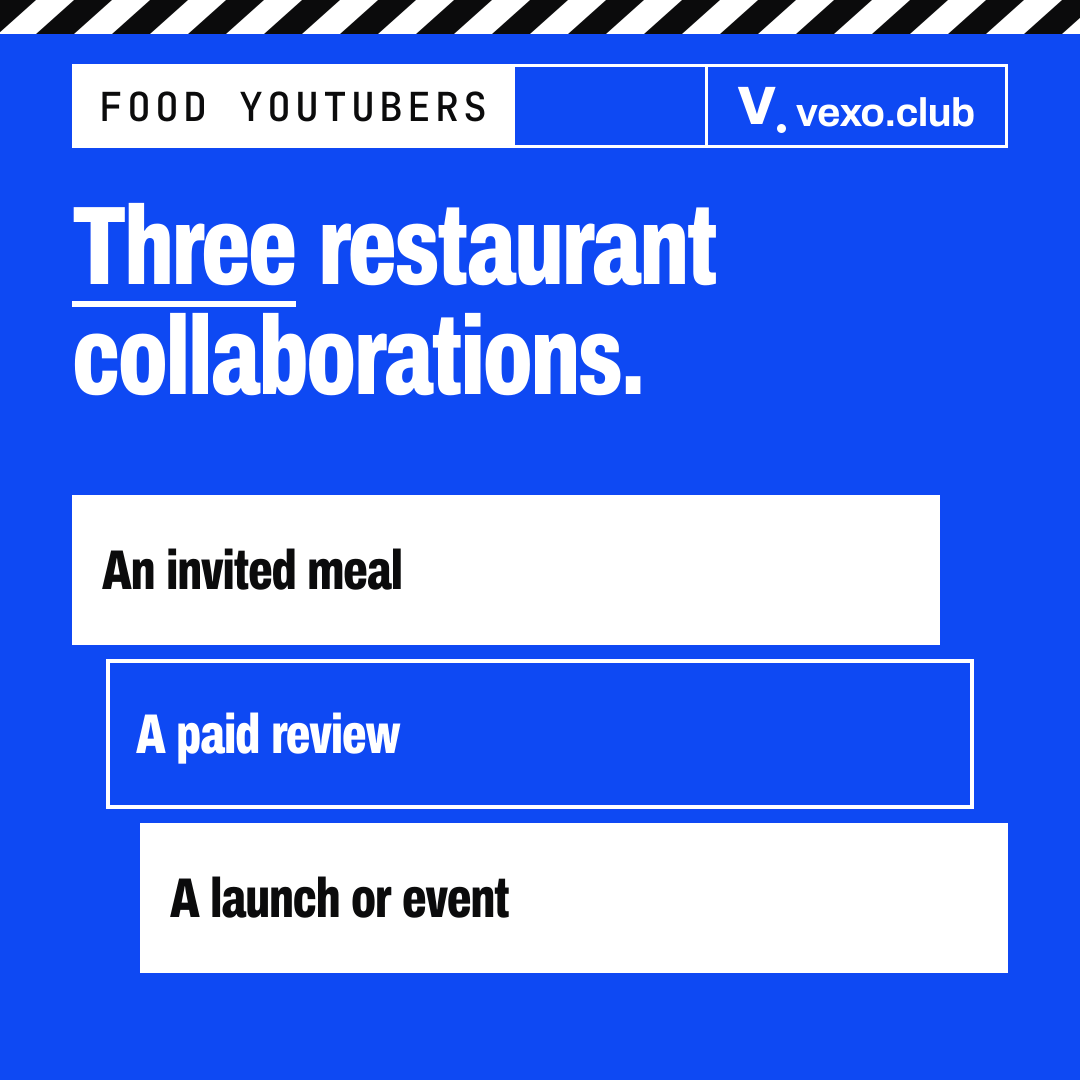
There are three, and the label depends on which. An invited meal, where the restaurant hosts the creator and asks for nothing in writing, is still a material connection and carries the label. A paid review is advertising, and the creator’s opinion is the product. A launch or event is a larger production, with the brand present on the day.
Restaurant collaborations: what a brand gains and what it risks
Advantages
- A creator’s visit is a plain reason for a viewer to book a table
- Menu and room are shown in motion, not described
- A local audience within reach of the restaurant
Disadvantages
- A review that is edited to be flattering is read as an ad, and says so
- The restaurant’s own licence, hygiene and service are on camera
- A free-meal visit still needs the ASCI label
- A viewer outside the city is reach the booking cannot use
The restaurant side has its own checks. The FSSAI licence is displayed, the menu claims are true, and the visit is not scheduled for a day the kitchen is short-staffed. A street-food walk adds a further rule: the brand names stalls only if it can vouch for them.
The three ways a restaurant works with a food creator
How do you name a food channel?
This is the other reader of this page: the creator choosing what to call a channel. Foodie channel names and Indian cooking channel names are among the most searched phrases in the category, and the advice is plain. Pick a name a viewer can say and spell after hearing it once. Put the cuisine or the city in it if it will stay true. Check that the same handle is free on YouTube and Instagram, because a brand will search for both.
Naming a food channel
Do
Pick a name a viewer can say and spell after hearing it once
Don’t
Pick a name that has to be explained
Do
Put the cuisine or the city in it if it will stay true
Don’t
Name a cuisine or a place the channel may outgrow
Do
Check that the same handle is free on YouTube and Instagram
Don’t
Register one without checking the other
A creator who wants brand work should keep the About page accurate: cuisine, language, city and a way to reach a manager. If you want to sign with the desk and link your profile from your bio, the creator page explains how. To brief a food campaign, send it to the desk.
Questions brands ask
Who are the top food YouTubers in India? There is no official ranking, and any list that claims one reflects taste or a count on one day. Live subscriber counts are on each channel’s YouTube page, but a count does not say who watches or who buys. A brief is better answered by format, cuisine and language.
Can a food creator say a product is healthy? Only if the brand can point to where the label or the licence supports the claim. FSSAI’s Advertising and Claims Regulations, 2018, cover what food advertising may claim, and the desk keeps health and nutrition words out of scripts unless they are supported.
Does a free food sample need an ASCI label? Yes. A gifted product is a material connection, whether or not a fee was paid, and the post carries the label. The desk reads each draft for it before the brand approves.
Is a restaurant visit by a food blogger an ad? If the restaurant hosted the meal or paid for the post, yes, and the post is labelled. The creator keeps the right to an honest review, which is what makes the visit worth buying.
Does vexo.club have food creators on its roster? Not today. The roster has no food category, so a food brief is cast to the brief from creators outside it, with the audience check and the claim review done before anything is booked.
Sources
- nishamadhulika.com (opens in a new tab)
- Nisha Madhulika YouTube channel (opens in a new tab) youtube.com
- hebbarskitchen.com (opens in a new tab)
- kabitaskitchen.com (opens in a new tab)
- Kabita’s Kitchen YouTube channel (opens in a new tab) youtube.com
- manjulaskitchen.com/home/about-manjula (opens in a new tab)
- Madhura’s Recipe (opens in a new tab) madhurasrecipe.com
- Madhura’s Recipe Marathi on YouTube (opens in a new tab) youtube.com
- Delhi Food Walks (opens in a new tab) delhifoodwalks.com
- the Delhi Food Walks YouTube channel (opens in a new tab) youtube.com
Cite this page
Food YouTubers in India: home cooks, street-food walks and what brands check. vexo.club, published 09 Oct 2026, updated 01 Nov 2026. https://vexo.club/blog/food-youtubers-india
Influencer marketing across India
Send the desk a brief: it comes back as a shortlist and a directional band, never a public price.
Brief the desk