Influencer marketing for gaming and esports brands in India: a brand playbook
A brand playbook for game studios, telecom and device brands, and esports orgs: streamer integrations, tournament sponsorships, pro-player endorsements and the launch-day activation, set against what the law and ASCI require.
Playbooks 12 min read The vexo.club desk
In this article9 sections
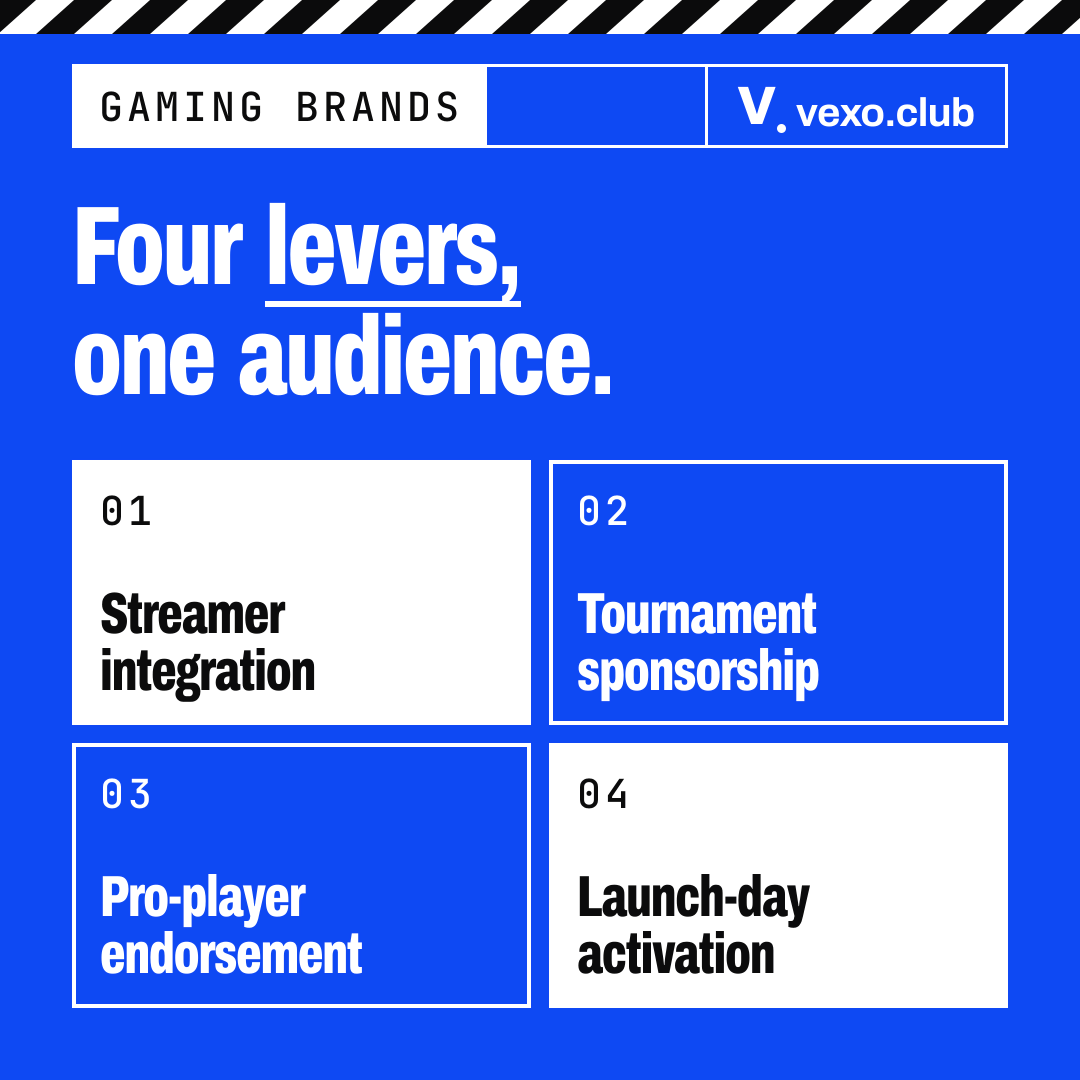
A game studio, a telecom or device brand, and an esports organisation each want something different from a creator and a brief built for one rarely fits the other two. This playbook is written from vexo.club, an influencer marketing agency run from one desk in Delhi NCR, for the brand side of gaming and esports: the studio launching a title, the telecom or device maker sponsoring the audience around it, and the esports org selling a team or a tournament. The creators themselves, named from their own public channels, are covered on a separate page, gaming YouTubers in India; this one does not repeat that list. It sets out the four levers a gaming brief pulls (streamer integration, tournament sponsorship, pro-player endorsement and the launch-day activation), the rights question each one raises, and where the law and ASCI’s disclosure rules draw the line.
It names no rate, no viewership figure and no campaign result, because a public playbook has no record behind any of the three. What it gives instead is the shape of each lever and the checks that sit in front of it.
Gaming and esports influencer marketing, in short
- Four levers cover most gaming and esports briefs: streamer integration, tournament sponsorship, pro-player endorsement and the launch-day activation.
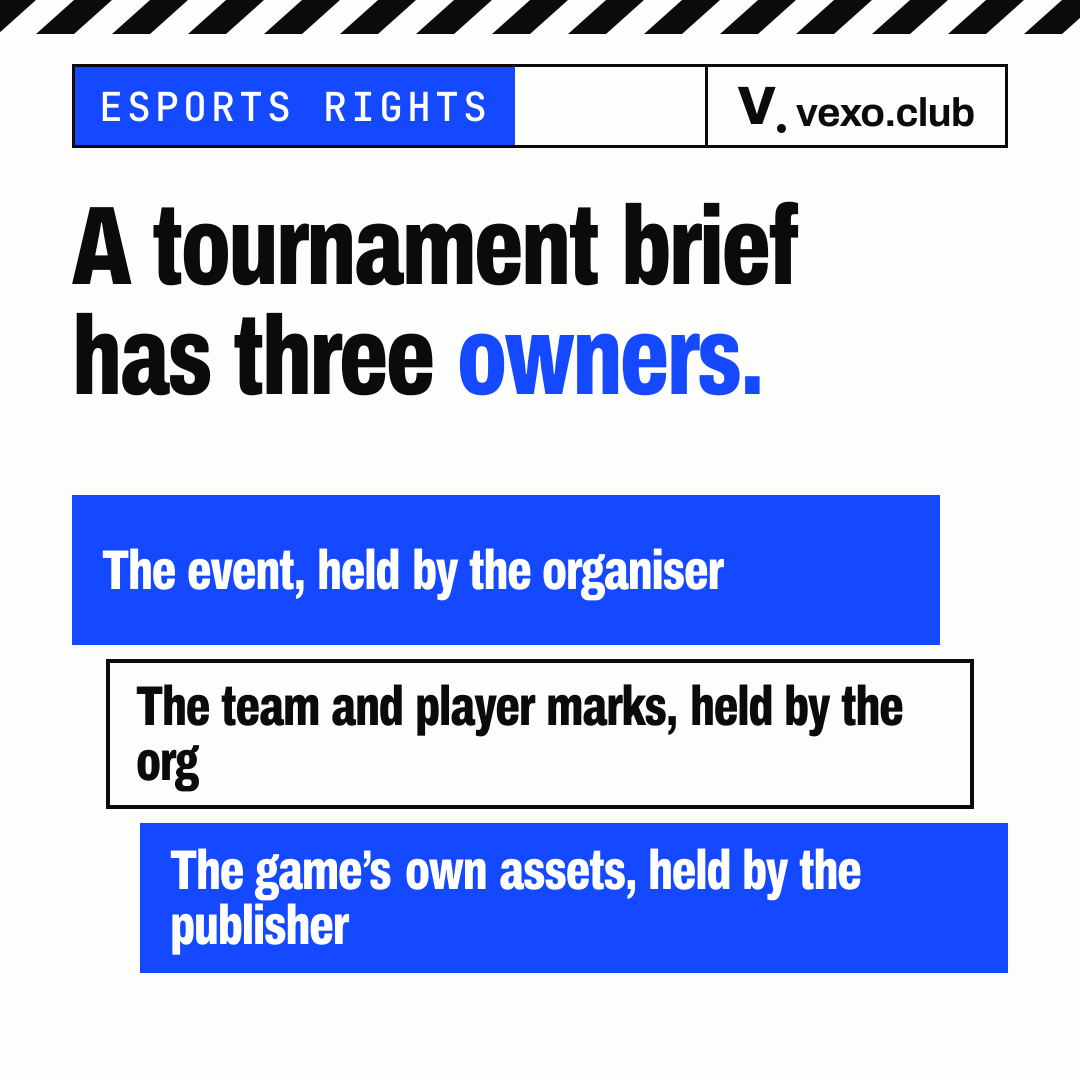
- A tournament or team sponsorship touches three separate rights-holders: the event organiser, the team org and the game’s own publisher.
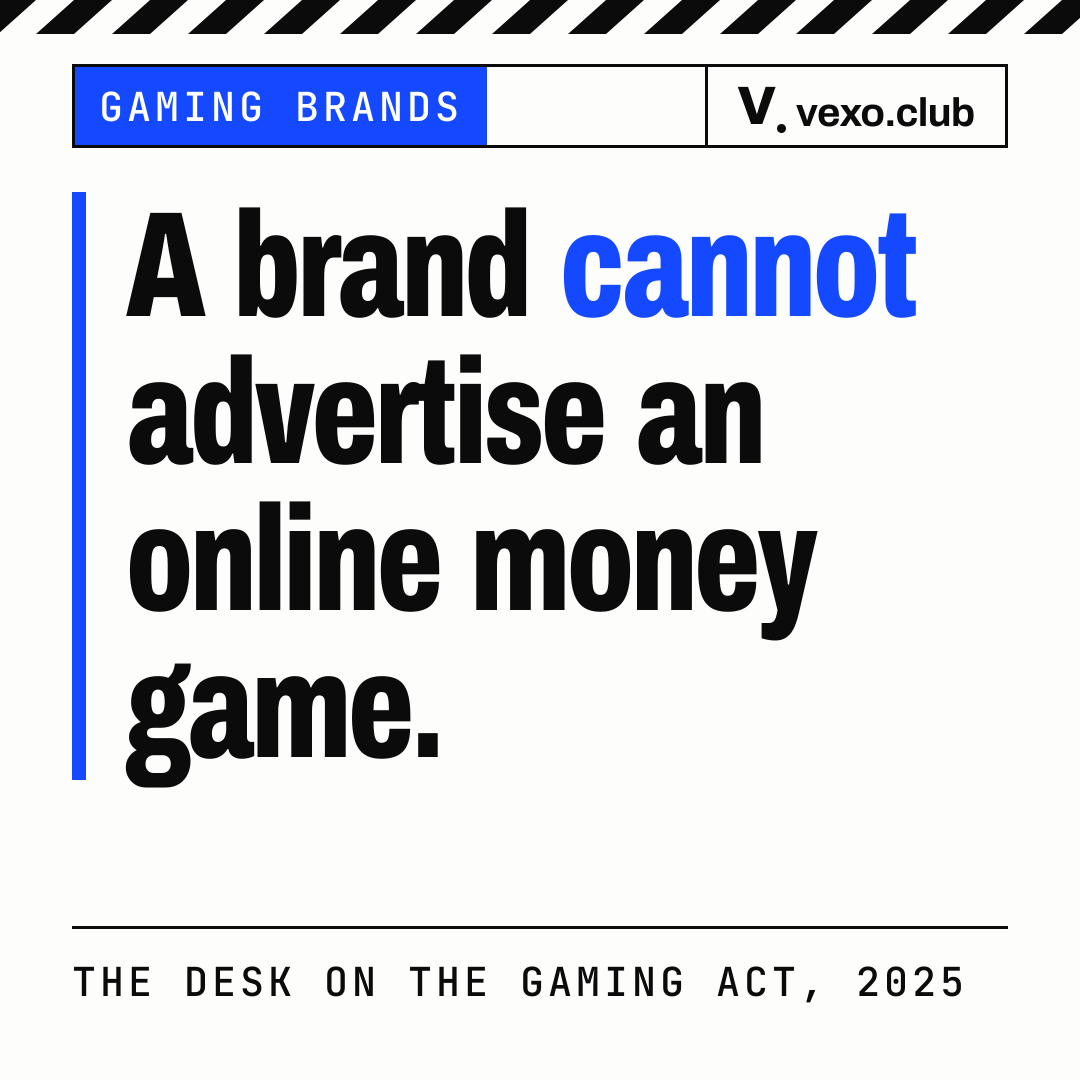
- The Promotion and Regulation of Online Gaming Act, 2025 prohibits advertising an online money game, and the desk does not run that brief regardless of the creator or the platform.
- A paid stream carries its ASCI label at the start and the end, because a live audience joins and leaves throughout.
The four levers a gaming or esports brief pulls
What is a streamer integration, and when does a brand use one?
A streamer integration puts the product inside a session the creator was already going to play and stream, rather than asking for a separate advert. A branded loadout, an in-game item, a peripheral visibly on desk, or a sponsor card shown between matches all count, and the integration works because the audience is watching someone play rather than watching an advert interrupt the play. It suits a product the creator can actually use on stream: a peripheral, a chair, a drink, a data plan, or a game itself. It does not suit a product unconnected to the session, which reads as an advert bolted on and performs like one. Before it is briefed, check that the product can be used during a real session, that the creator’s regular game fits the brand’s category, what else the creator currently promotes, how the mention is labelled, and whether a clip may be reused afterwards.
How does a tournament or team sponsorship work, and who owns what?
A tournament or team sponsorship is not one rights holder but three, and a brief that treats it as one ends up asking for something nobody in the chain can grant. The tournament organiser controls the event itself: its branding, its broadcast and its sponsor slots. The esports organisation controls its team name, its players’ likeness as a team, and its own channels. The game’s publisher controls the game’s own assets (its footage, its characters, its in-game marks), and a clip of the match may need the publisher’s own permission to reuse outside the stream it was shown on. A brand that signs only the org and assumes that covers broadcast rights or in-game footage is often wrong, and the gap surfaces only when the brand tries to cut a highlight reel for its own ads.
Who owns what in an esports sponsorship
The practical fix is to ask the question before the contract rather than after the match: who grants broadcast rights, who grants team and player likeness, and who grants in-game footage, and get each answer in writing from the party that actually holds it. Usage rights and creator whitelisting explained cover the same question for a single creator’s clip; a tournament sponsorship just has three parties asking it instead of one.
Three sponsorship levels, and what each buys
| What it buys | Who signs off on reuse | |
|---|---|---|
| Tournament sponsorship | A branded slot in the event and its broadcast | The tournament organiser |
| Team sponsorship | The team’s name and channels across the season | The esports organisation |
| Player endorsement | One player’s own voice and likeness | The player, through their org or management |
What does a pro-player endorsement add that a team sponsorship does not?
A pro-player endorsement is narrower and more personal than a team deal: it buys one player’s own voice, speaking as themselves rather than as the team’s broadcast channel. It suits a brand that wants a face the audience already follows match to match (a peripheral the player actually competes on, a drink or a diet product, a phone or a chair), and it is weaker where the brand has no real connection to how that player plays or trains, because the audience that follows a pro player follows them for their game, not for an unrelated product read off a script.
A player’s contract with their org usually caps what they can endorse without the org’s sign-off, so a brief that goes straight to the player and skips the org risks a deal the org later blocks. Clear it with the org’s management first, pick a product the player would plausibly use while competing, and set the exclusivity window against the player’s existing sponsors rather than assuming a player with no team sponsor is free of every conflict.
How does a launch-day streaming activation run?
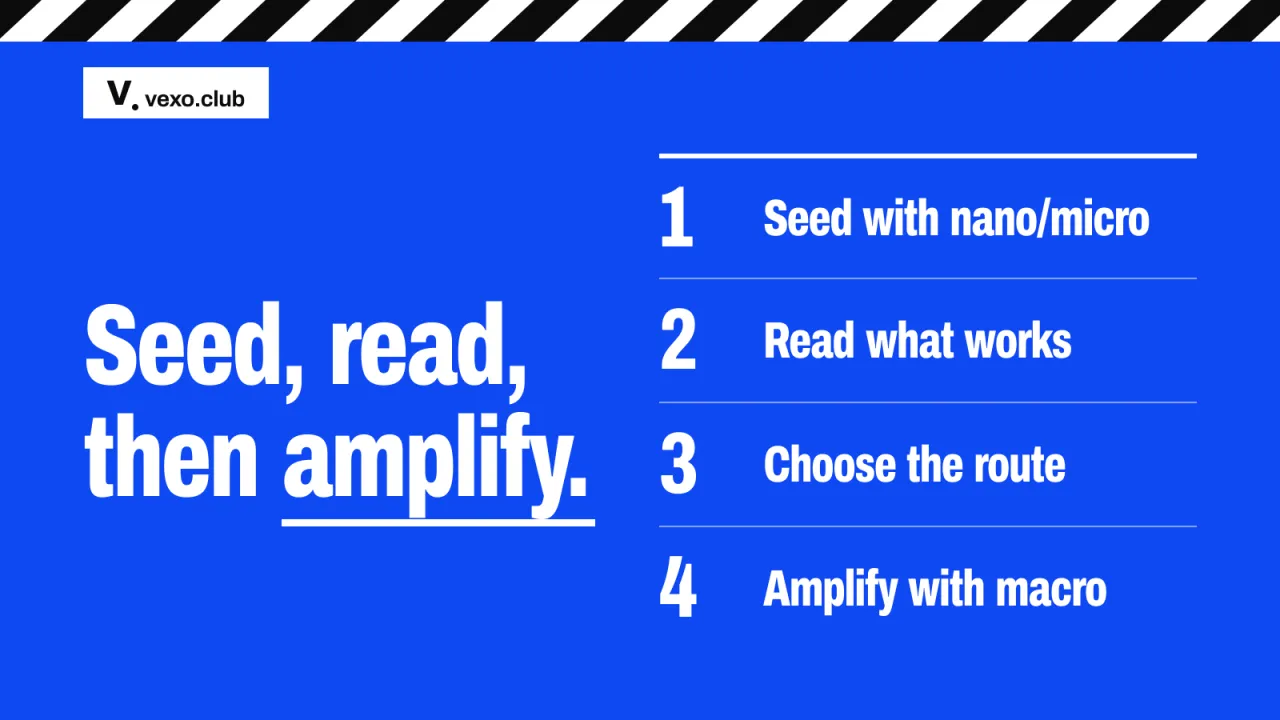
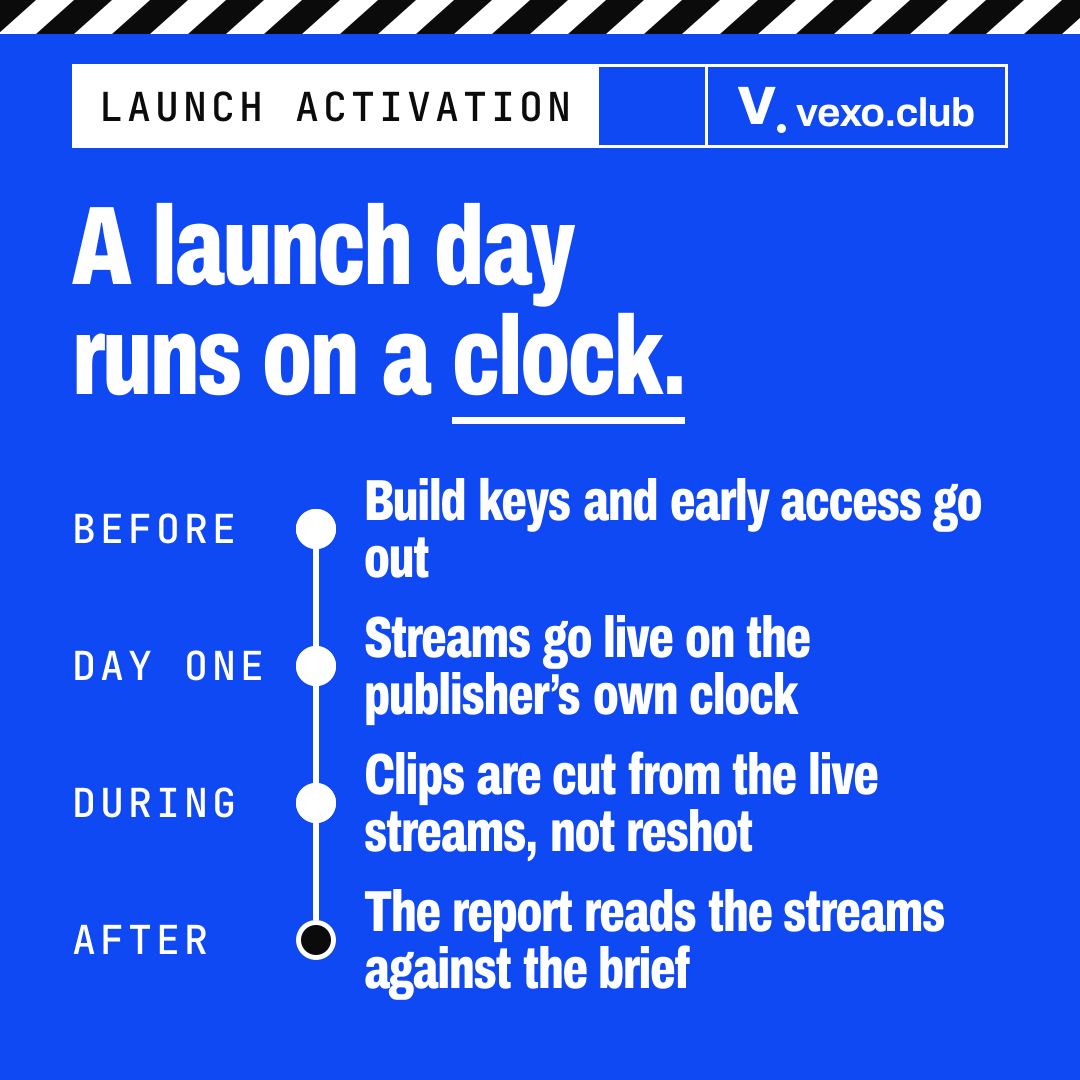
A launch-day activation exists to put a new title in front of streamers’ audiences on the day it goes live, rather than days later once the early reviews have already set opinion. It runs on the publisher’s own clock: early or embargoed keys go out ahead of launch, streams start when the embargo lifts, and the brand’s job in the middle is to brief the facts and the labelling, not to script the play. A streamer playing a new title live, in their own voice, is the point of the format, and a script that reads like an advert undercuts the reason the brand chose a stream over a trailer in the first place.
How a launch-day streaming activation runs
The studio’s own release date sets the whole activation’s shape, so the brief is built backward from that date rather than from a media plan written in isolation. YouTube integration or a dedicated video covers the same choice for a single creator’s upload; a launch-day activation is usually both at once, run across several creators on the same day.
A launch-day streaming activation, step by step
- Build and keys Early or embargoed access sent ahead of the public release
- Embargo set The date and time every stream is cleared to go live
- Brief What the game is, what to avoid spoiling, and the paid-mention label
- Day-one streams Live, on each creator’s own channel, at or after the embargo
- Clip and report Highlights cut from what was actually streamed, read against the brief
Which gaming briefs can a brand run, and which not?
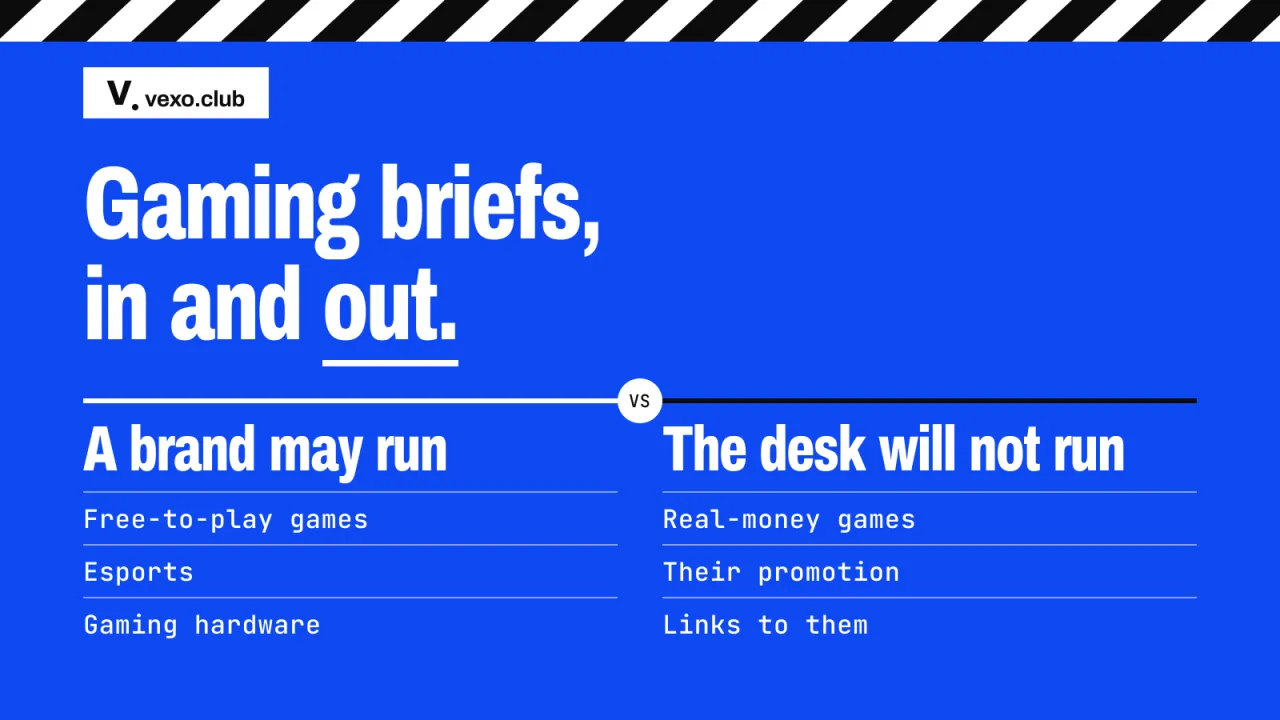
A gaming or esports brand can brief free-to-play and social games, esports tournaments and teams, hardware, and the products a gaming audience buys: peripherals, drinks, phones and data plans. It cannot advertise an online money game. The Promotion and Regulation of Online Gaming Act, 2025 prohibits online money games, whether they rest on chance, skill or both, and prohibits advertising them, as the Press Information Bureau’s summary of the Act sets out. The same Act recognises esports as a competitive sport, which is the distinction a brand brief rests on: a tournament around a skill-based title with no real-money stake is esports, and a brand may sponsor it; a game played for money is an online money game, and no brand may advertise it, whoever is streaming it.
Gaming and esports briefs: in, and out
Briefs a brand may run
- Free-to-play and social games, with the right audience
- Esports tournaments, teams and pro-player endorsements
- Hardware, peripherals and the products a gaming audience buys
Briefs the desk will not run
- Any online game played for money
- A streamer or player promoting one, on stream or off it
- A sponsorship that points an audience to one
The Act’s rules came into force on 1 May 2026, according to All India Radio’s report. Take advice from counsel on a title close to the line, and ask a streamer or org what else they currently carry, since a stream or a team with a money-game sponsor already on it is a poor place to add a clean brand.
The one gaming brief the desk will not run
How does ASCI’s disclosure apply to a streamer, a team or a player?
A paid mention is advertising wherever it sits (an integration inside a stream, a sponsor card on a team’s channel, or a post from an endorsed player), and ASCI’s influencer guidelines apply to a payment, a free product, a commission or an agreement to post, so a branded loadout, a sponsor overlay and a promo code read aloud on stream all count. A live stream is the harder case because people join and leave throughout: the guidelines ask for the label to be announced at the beginning and at the end, and added to the caption if the stream stays up as a video afterwards; repeating it during a long session covers viewers who join late.
Labelling a paid gaming or esports mention
Do
Announce the label at the start and the end of a live stream
Don’t
Leave it where late joiners never see it
Do
Label a sponsor slot on a team’s own channel the same as any paid post
Don’t
Treat a team’s channel as exempt because the org, not a person, posts it
Do
Ask a streamer, org or player what else they currently promote
Don’t
Put a clean brand into a stream or team already carrying a money-game sponsor
ASCI disclosure for brands sets out who labels what and who checks across a brief, and it is read alongside the guidelines themselves before a stream or a tournament sponsorship goes out.
Which format fits which brand?
A game studio most often reaches for the launch-day activation, to get a new title in front of streamers’ audiences on day one. A telecom or device brand more often reaches for a streamer integration or a tournament sponsorship, to put a product or a network in front of an audience already watching play. An esports organisation is usually the seller rather than the buyer: it sells its own team and tournament sponsorships to fund the org through sponsor slots rather than prize money alone. Most brands end up using more than one lever rather than picking a single one.
What should a brand check before booking a streamer, a team or a player?
Check the audience and the current sponsor list before the rate. The audience method is in how to check an influencer’s audience before you pay, and a gaming channel or an esports team’s channel is a good place to apply it, because a gaming audience often skews young and because giveaway-driven viewers can inflate a view count without reflecting who actually buys. Gaming YouTubers in India sets out the audience-age and online-gaming-law checks that apply to any individual creator; a team or tournament sponsorship adds the rights question above on top of those same checks.
Usage matters more than it looks here, because a brand sponsoring a tournament usually wants to cut its own highlight reel afterwards, and a clip of the match may need the publisher’s sign-off as well as the organiser’s and the team’s. Read usage rights before the contract, and ask each of the three rights-holders what it allows, in writing, rather than assuming a broadcast sponsorship covers a social clip. A brief for Delhi NCR starts at the Delhi desk page, and a brief for anywhere can be sent to the desk.
Questions brands ask
Can a brand sponsor an esports tournament in India? Yes. The Promotion and Regulation of Online Gaming Act, 2025 recognises esports as a competitive sport, and the desk runs tournament and team sponsorships for titles with no real-money stake. What it will not run is a sponsorship for a game played for money, regardless of how it is framed.
Who grants the rights to reuse esports footage in a brand’s own ads? It depends on what is being reused. Broadcast and event branding sit with the tournament organiser, the team’s name and channels sit with the esports org, and the game’s own footage and in-game assets sit with the publisher. A brand reusing a clip usually needs more than one of the three signed off, not just the party it has the main contract with.
Does a pro-player endorsement need the player’s team org to sign off? Usually. Most player contracts with an org cap what the player can endorse independently, so clearing the endorsement with the org or the player’s management first avoids a deal the org later blocks.
Does a launch-day streaming activation need a paid-mention label? Yes, the same as any sponsored content. ASCI’s influencer guidelines apply to a payment, a free key or an agreement to stream, and a live session carries the label at the start and the end, repeated during a long stream.
Can a gaming or esports brand advertise a real-money game through a streamer? No. The Promotion and Regulation of Online Gaming Act, 2025 prohibits online money games and advertising them, and the desk does not run that brief for any streamer, team or player, regardless of the platform or the format.
Sources
- Press Information Bureau’s summary of the Act (opens in a new tab) pib.gov.in
- All India Radio’s report (opens in a new tab) newsonair.gov.in
- influencer guidelines (opens in a new tab) ascionline.in
Cite this page
Influencer marketing for gaming and esports brands in India: a brand playbook. vexo.club, published 06 Nov 2026. https://vexo.club/blog/influencer-marketing-gaming-esports-brands-india
Send the desk a brief: it comes back as a shortlist and a directional band, never a public price.
Brief the desk