Influencer marketing budget allocation by goal: how the split should change
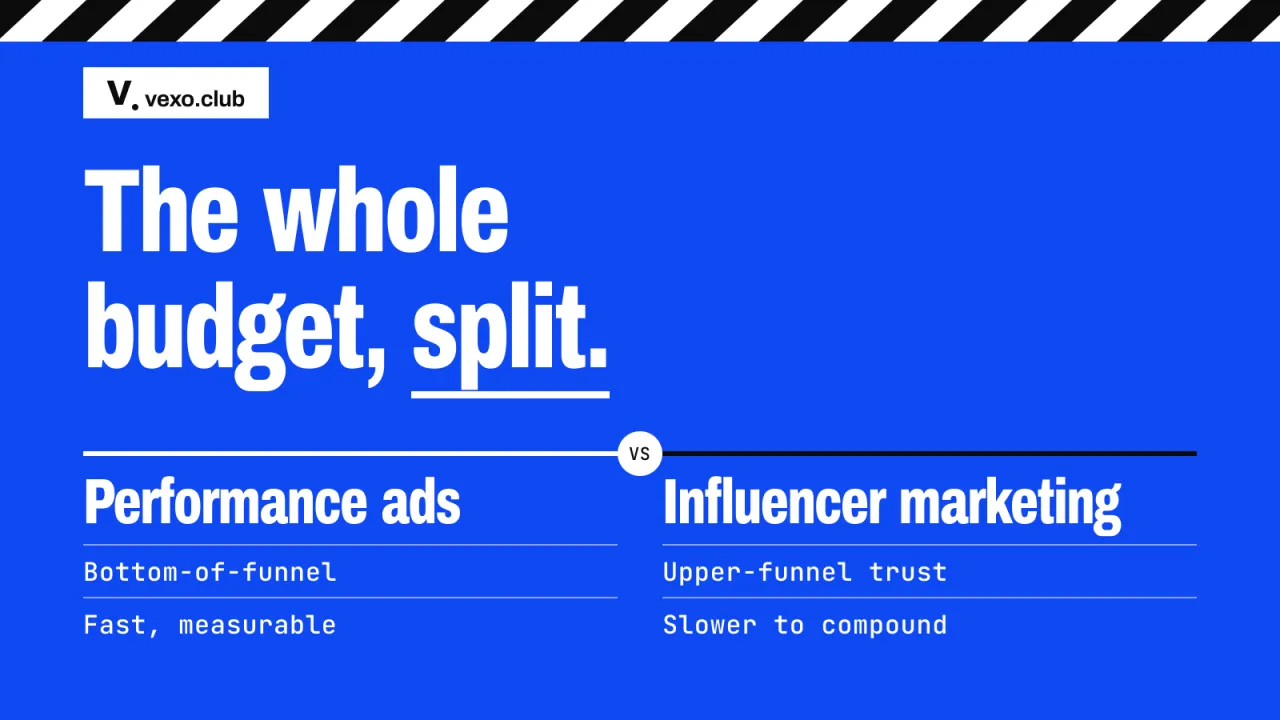
Influencer marketing budget allocation is not one ratio applied to every brief. Awareness, conversion and always-on each pull the creator-tier mix, production spend and paid-amplification share a different way. This is the logic behind that shift, with no percentage or price attached.
Pricing 11 min read The vexo.club desk
In this article8 sections
How to plan an influencer marketing budget in India usually starts at the wrong end: a total is set, creators are picked against it, and only then does someone ask what the plan was for. Influencer marketing budget allocation works better run the other way round. Name the objective first, whether it is awareness, conversion or an always-on programme, because that single choice is what should move the three levers inside any budget: the creator-tier mix, the share spent on production, and the share spent on paid amplification. This is a framework for making that split, not a price list. No line below carries a percentage or a rupee figure, because the right split depends on the brief, the category and what the last cycle already showed, not on a rule that applies to every brand the same way.
Influencer marketing budget allocation by goal, in short
- The split is a function of the stated objective, not a fixed ratio. Awareness, conversion and always-on pull the creator-tier mix, production spend and paid-amplification share in different directions.
- Awareness widens the tier mix toward reach-at-scale names and concentrates spend into one or two heavier studio assets.
- Conversion narrows the tier mix toward creators close to the sale, keeps production light and native, and concentrates paid amplification into whitelisting the posts that already work.
- Always-on treats the tier mix and production as a fixed, repeatable shape and keeps paid amplification as a steady baseline rather than a spike.
- What stays fixed regardless of goal: the objective is named before the split is discussed, usage rights are written in before the shoot, and the report is read against the goal it was built for.
Why does the objective decide the split, and not the other way round?
A budget set before the objective tends to get spent on whichever creators happen to be available, at whatever tier a rate card makes convenient, with production and paid amplification added as afterthoughts. That order answers the question “what can we spend”, not “what does this campaign need to do”. The three levers inside any influencer budget each answer a different piece of that second question. The creator-tier mix answers how far the message needs to travel and how close it needs to sit to the sale. Production spend answers how much the content itself has to carry the message on its own, without other copy around it. Paid-amplification share answers whether the plan is buying reach, buying a trace to a result, or buying steady presence over time. Naming the objective first is what lets each lever be set on purpose instead of by habit.
How should the creator-tier mix shift by objective?
The roster’s own tiers, from Micro to Celebrity, are a size, not a strategy, and the objective decides how that size should be weighted inside a brief.
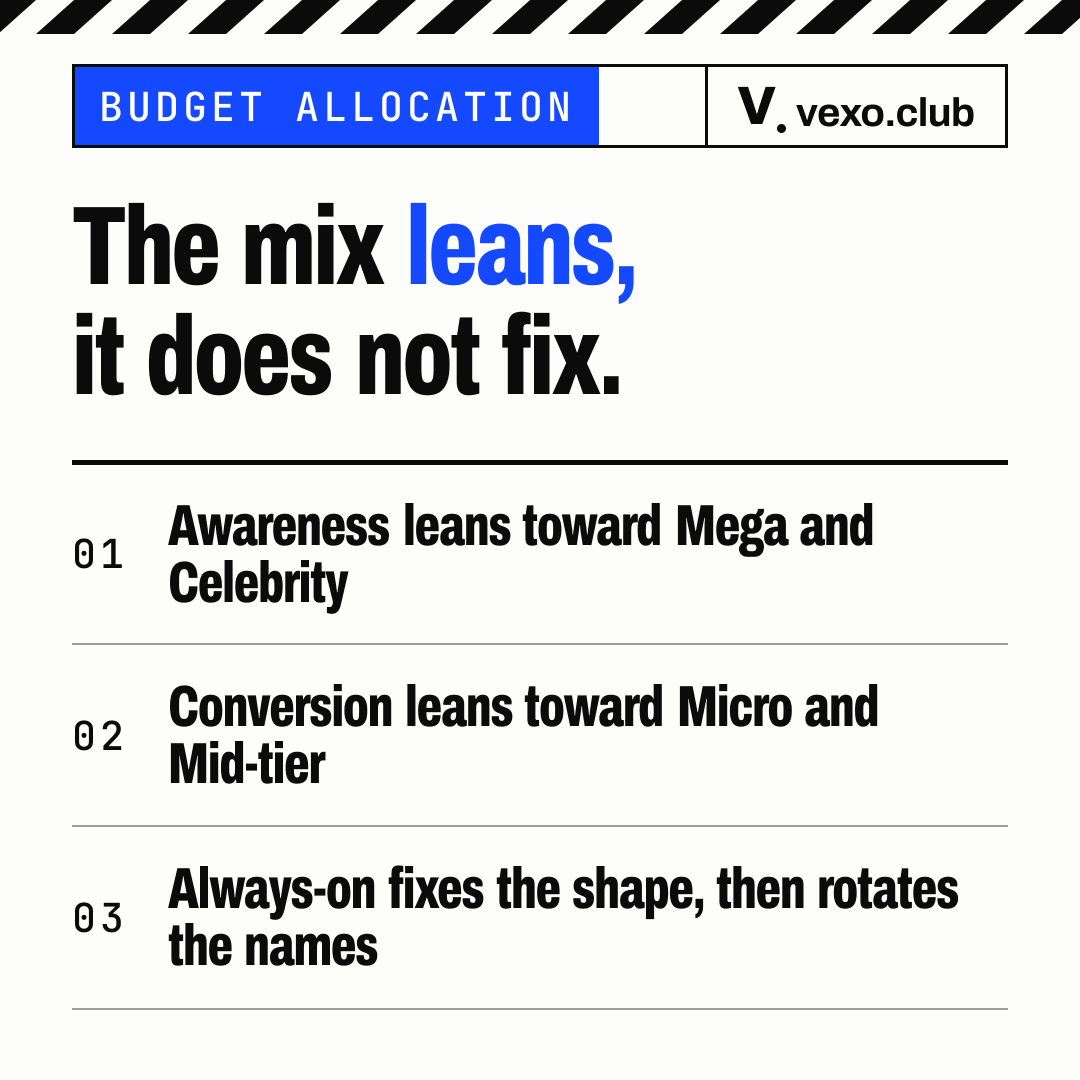
- Awareness. The mix leans toward Mega and Celebrity, because the job is reach at scale: a wider, more mixed audience that a handful of large names can reach faster than many small ones. A thin layer of Micro creators still sits underneath for authenticity cover, but the weight of the budget sits with fewer, bigger names rather than a long tail of small ones.
- Conversion. The mix narrows toward Micro and Mid-tier, because the job is proximity to the sale: creators whose audience trusts a code, a link or a direct recommendation, and whose followers overlap closely with who actually buys. A Mega or Celebrity name plays a smaller, later role here, usually as a trust co-sign rather than the main spend.
- Always-on. The mix stops chasing a single result and becomes a fixed bench, mostly Micro and Mid-tier, set once per cycle and rotated for fatigue rather than reshaped every month. A larger name is added only around a seasonal spike, not as the standing shape of the roster.
How the objective moves the tier mix
- Name the one objective Awareness, conversion or always-on, stated before any tier is picked.
- Read what it needs from reach A wider, mixed audience calls for larger tiers; a narrower one calls for tiers close to the sale.
- Set the shape of the mix How many creators sit at each tier, not a single name chosen on its own.
- Hold the mix against the report The next cycle’s mix answers what the last one showed, not a fixed preference.
How the tier mix leans by objective
How should production spend shift by objective?
Production is the lever most briefs set once and forget, when it should move with the objective as much as casting does.
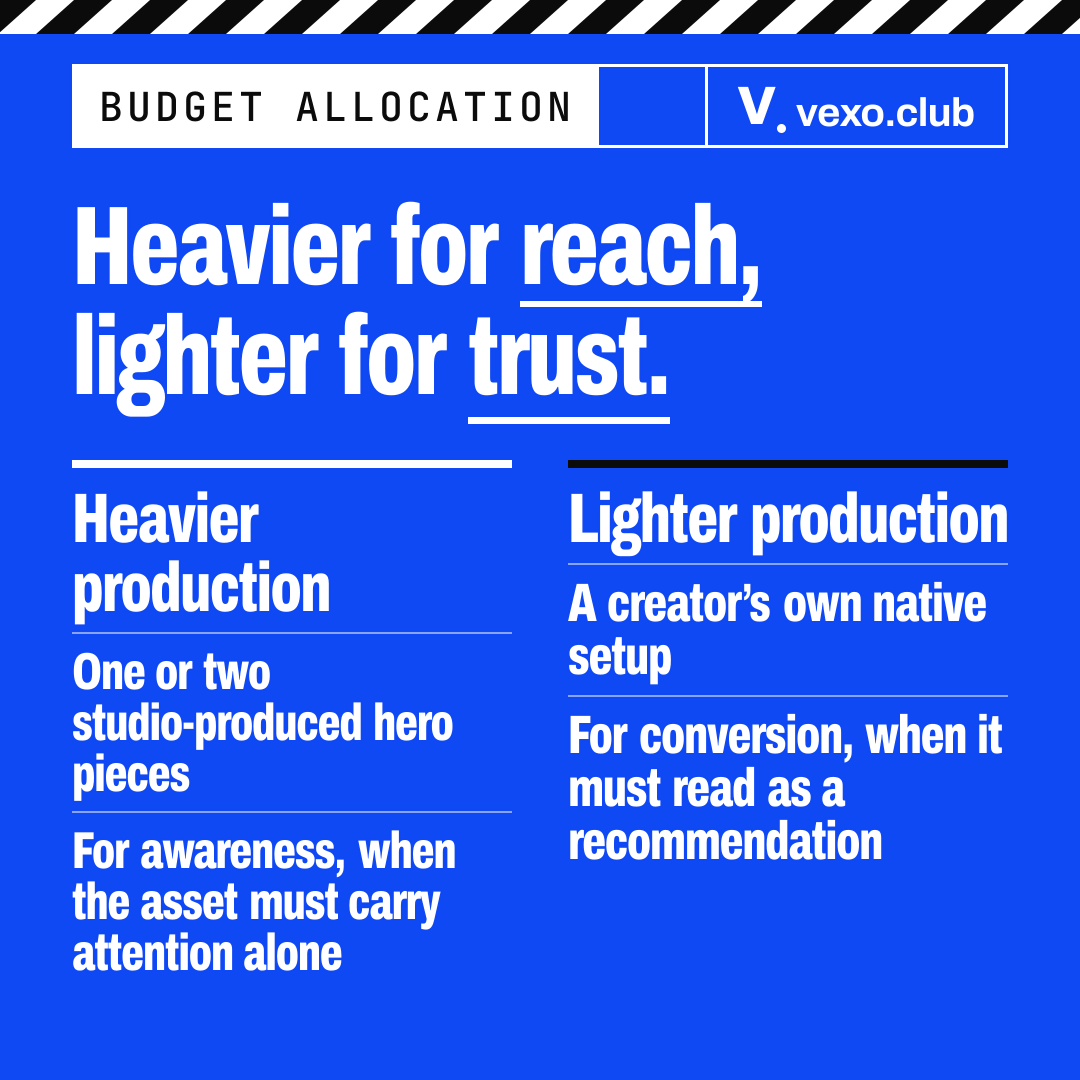
- Awareness. Production spend concentrates into one or two studio-produced hero pieces, because the asset has to carry attention on its own, with no sale copy or code sitting beside it to do part of the work. This is the shoot where an in-house studio, scripted and edited properly, earns its place in the plan.
- Conversion. Production spend spreads thin and stays light, because a creator’s own native setup reads as an honest recommendation in a way an overproduced piece does not. What spend there is goes toward testing several creative routes side by side, not polishing one.
- Always-on. Production becomes a repeatable batch, scoped once per rotation rather than planned fresh for every push. The cost of a cycle’s production is known in advance because the batch looks the same cycle to cycle, with only the creators and the brief rotating.
Where production spend goes, by what it buys
- A studio-produced hero asset Scripted, shot and edited for reach, the heaviest end, for when the message must carry attention alone.
- A creator’s own native setup Lighter, because it has to read as the creator’s own recommendation and not an ad.
- Several creative routes tested side by side More light versions rather than one heavy one, when the plan needs to find what converts.
- A repeatable studio batch per rotation Scoped once and run each cycle, for an always-on roster.
Heavier production for reach, lighter for trust
How should the paid-amplification share shift by objective?
Paid amplification, including whitelisting a creator’s own post as a paid ad, is the lever that moves fastest inside a cycle, and it should move differently depending on what the budget is trying to prove.
- Awareness. Amplification spend boosts the organic reach of the hero creators’ posts broadly, pushing impressions past what organic alone would reach, without needing a tracked conversion event to justify the spend.
- Conversion. Amplification spend concentrates into whitelisting a handful of posts that already show they work, running them as paid ads from the creator’s own handle. The spend follows the post that performs rather than being committed evenly upfront, which is also why whitelisting rights need their own line and window agreed before the shoot.
- Always-on. Amplification spend sits at a steady baseline that reinforces each cycle’s organic reach without large spikes, so the roster builds a reputation over time instead of resetting it with every push.
The three levers, by objective
| Awareness | Conversion | Always-on | |
|---|---|---|---|
| Creator-tier mix | Weighted toward Mega and Celebrity, for reach at scale | Weighted toward Micro and Mid-tier, close to the sale | A fixed bench, mostly Micro and Mid-tier, rotated for fatigue |
| Production spend | Concentrated in one or two studio-produced hero pieces | Spread thin across native, creator-shot formats | A repeatable batch, scoped to each rotation |
| Paid-amplification share | Boosts organic reach of the hero posts broadly | Concentrated in whitelisting the posts that already perform | A steady baseline, reinforcing each cycle without spikes |
| What decides the spend | How far the message needs to travel | Which post has earned the right to be amplified | How long the roster needs to hold its shape |
Test, scale, sustain: how the split moves over a cycle
How does the split move across a single campaign?
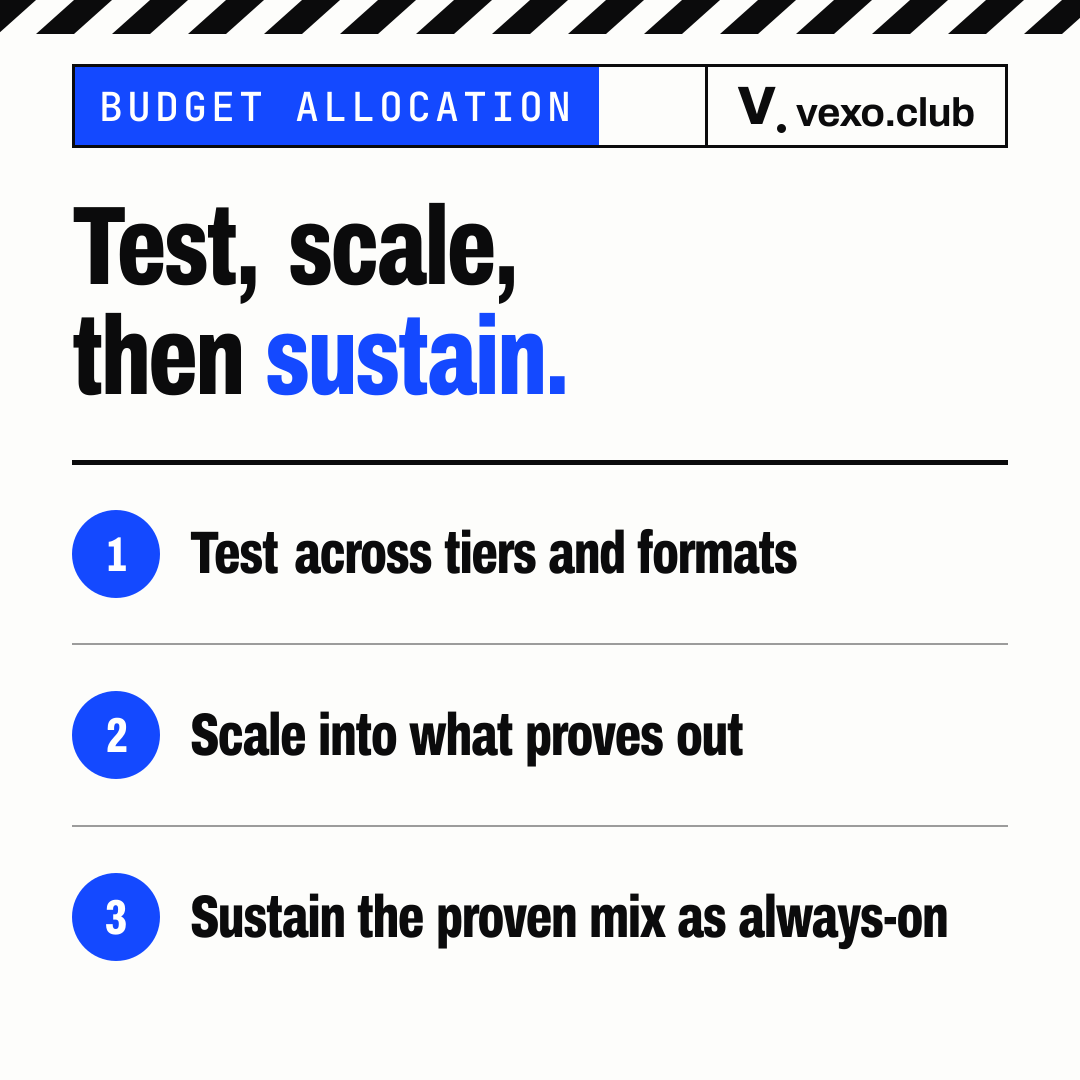
Few brands run one objective in isolation for a full year, and the three objectives above are often phases of the same budget rather than three separate buckets. A launch tests broad, a proven route scales, and what scales becomes the shape of an always-on programme.
How the split moves across a cycle
- Early Test Spread thin across tiers and formats, before committing the rest of the amplification budget.
- Once a post proves out Scale Amplification concentrates into whitelisting it, and the tier mix narrows to what worked.
- Ongoing Sustain The proven mix becomes the always-on shape: tier mix and production fixed, amplification steady.
Read this way, awareness and conversion are not competing claims on the same rupee so much as the first two phases of a plan, and an always-on programme is what a brand runs once it has already paid for the test. A brief that tries to buy all three outcomes from the first rupee, before anything has proven out, is usually the brief where the split gets guessed rather than set.
What should never move, whatever the objective is?
The objective changes the mix, the production and the amplification. It should not change a shorter list of things that hold regardless of what the budget is trying to do.
- Name the objective before the split. A split decided first and justified afterward is a guess wearing a plan’s clothes.
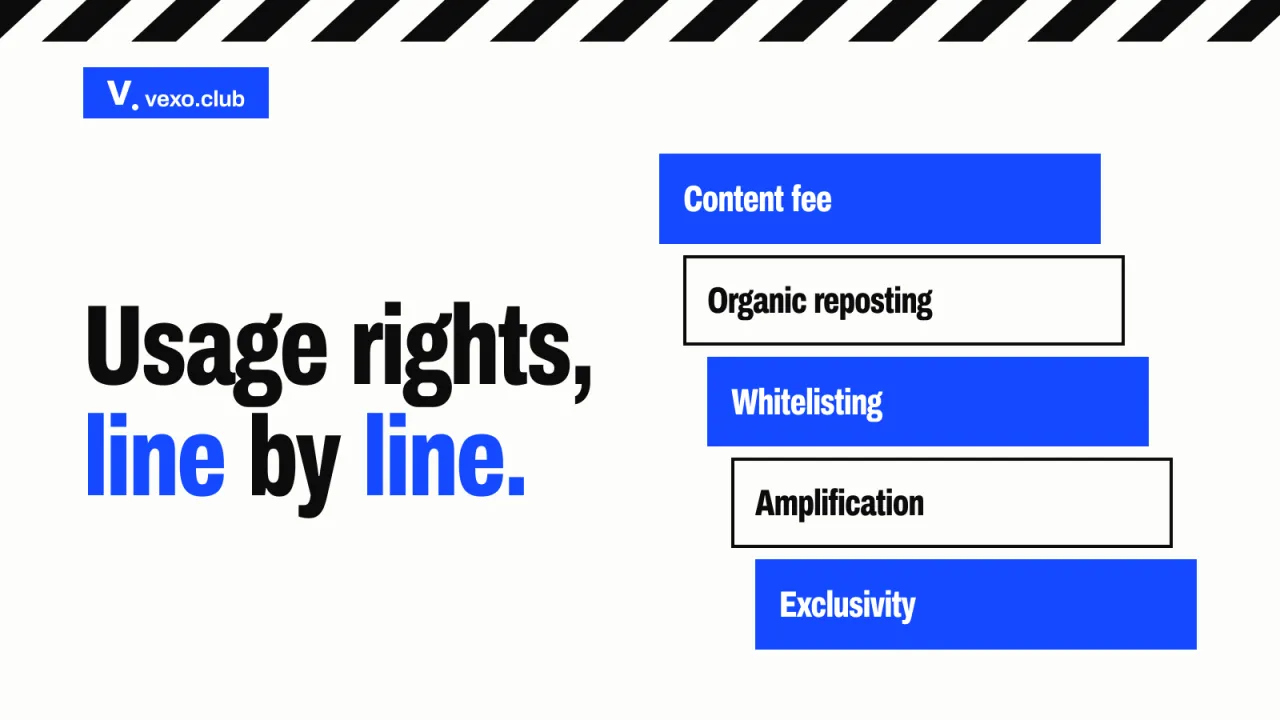
- Write amplification rights in before the shoot. Usage, whitelisting and exclusivity are agreed per deliverable up front, not added once a post already proves out.
- Report the metric that matches the goal. Reach and impressions for awareness, cost per action for conversion, rotation health for always-on, never totalled together in one column.
- Keep fees on their own lines. Creator fees, production, amplification and the agency’s own fee stay visible as separate lines whatever the objective is; what a package should break into is a different question from this one, and the two should not be confused.
- Revisit the split each cycle. The report decides whether next cycle’s mix stays the same or moves, not a preference set once and left alone.
What the objective should never change
Do
Name the objective before discussing the split.
Don’t
Split the budget first and look for an objective that fits it.
Do
Write amplification and usage rights in before the shoot.
Don’t
Add whitelisting rights after a post already proves out.
Do
Report the metric that matches the stated goal.
Don’t
Total reach and conversion figures in the same column.
Do
Keep creator fees and the agency’s fee on separate lines.
Don’t
Let a change in objective hide where the money goes.
How does the desk approach this?
The desk asks for the objective in the first line of a brief, before a budget band or a market, because the objective is what the rest of the plan is built against. How to brief an influencer marketing agency sets out what the rest of that brief should carry. Once the objective is named, the tier mix, production and amplification share are proposed against it, each as its own line, in the way a scoped proposal is built rather than a package: what a package should contain and what moves a quote cover that separately and are not repeated here. Each cycle closes against the weekly report, in the format set out in the report template, and the next cycle’s split is read from it rather than carried over by habit.
To start, send the desk a brief naming the objective, the market and a budget band. The shortlist and the proposed split, with the lines shown rather than bundled, come back from there.
Questions brands ask
How should an influencer marketing budget be split between awareness and conversion? Not by a fixed ratio. Awareness pulls the creator-tier mix toward reach-at-scale names and concentrates production into a heavier hero asset. Conversion pulls the mix toward creators close to the sale, keeps production light and native, and concentrates paid amplification into whitelisting the posts that already perform.
What creator-tier mix suits an awareness campaign versus a conversion campaign? An awareness mix leans toward Mega and Celebrity creators for reach at scale, with a thin layer of Micro underneath for authenticity. A conversion mix leans toward Micro and Mid-tier creators whose audience sits close to the sale, with a larger name playing a smaller, later role if it appears at all.
How much of an influencer marketing budget should go to production? This site publishes no percentage, because the right share depends on the brief. The logic is directional: production spend concentrates when a single asset has to carry the message alone, as in most awareness work, and spreads thin when the content needs to read as a creator’s own native recommendation, as in most conversion work.
Should paid amplification be budgeted the same way for every goal? No. Awareness amplification boosts the organic reach of hero posts broadly. Conversion amplification concentrates into whitelisting the specific posts that already prove out. An always-on programme keeps amplification at a steady baseline rather than spiking it for either goal.
How does an always-on influencer programme change the split? It turns the tier mix and the production plan into a fixed, repeatable shape, set once per cycle and rotated for fatigue rather than redesigned for every push, while paid amplification holds at a steady baseline so the roster’s reach accrues over time instead of resetting with each campaign.
Cite this page
Influencer marketing budget allocation by goal: how the split should change. vexo.club, published 07 Nov 2026. https://vexo.club/blog/influencer-marketing-budget-allocation-by-goal
Influencer marketing across India
Send the desk a brief: it comes back as a shortlist and a directional band, never a public price.
Brief the desk