Performance ads vs influencer marketing budget split: how the total should move
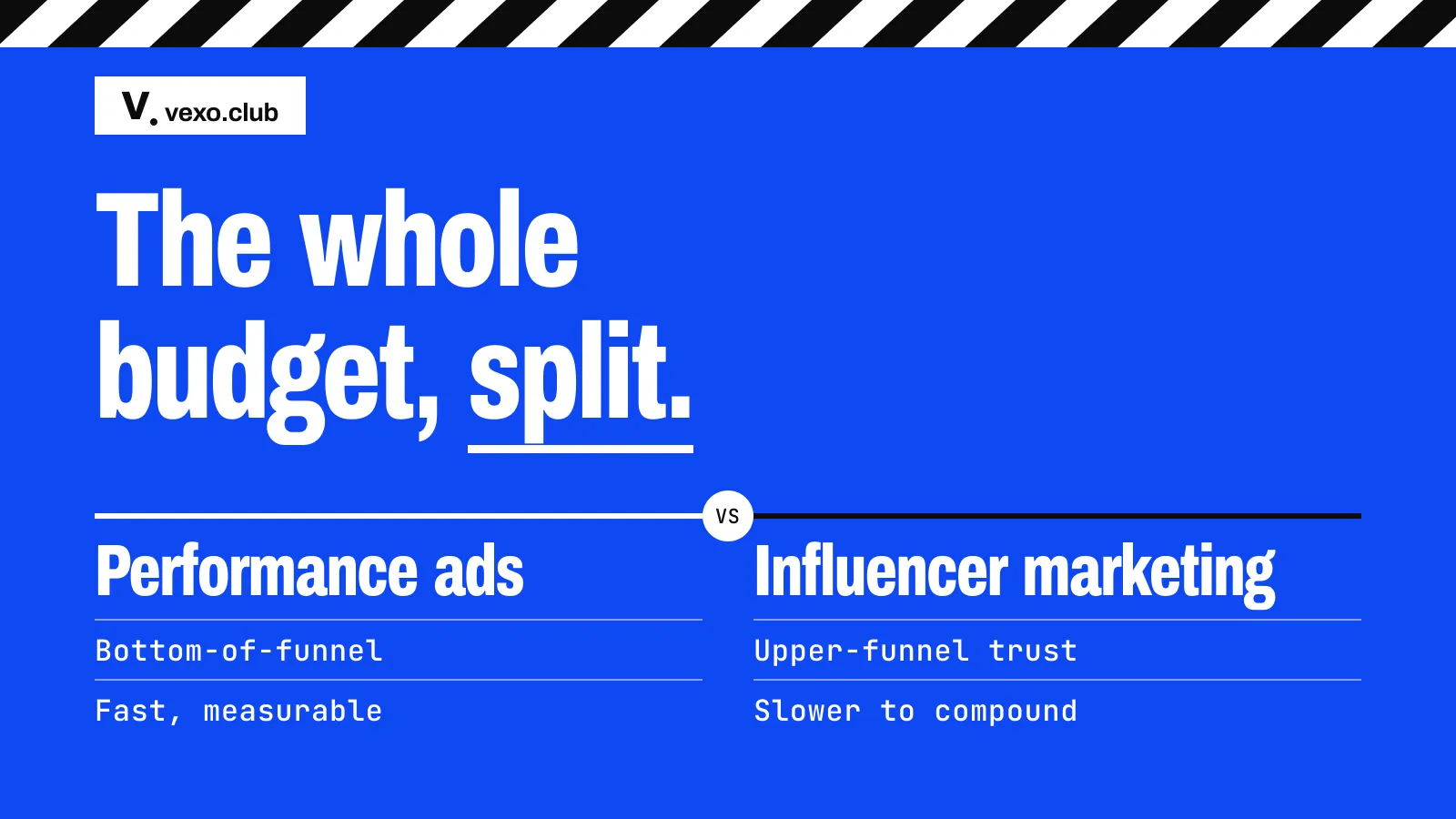
Influencer marketing vs paid ads budget is not one ratio decided once a year. Funnel stage and category each pull a total marketing budget toward one channel or the other, and this is the logic behind that lean, with no percentage or rupee figure attached to it.
Benchmarks 12 min read The vexo.club desk
In this article8 sections
Performance ads vs influencer marketing budget is usually treated as one fight settled by a single ratio decided once and left alone. The sharper question is narrower and it repeats: given a total marketing budget, how much should sit with paid performance ads bought directly on a platform’s own system, and how much should sit with influencer marketing bought through creators. The honest answer moves with two things only: where the money is meant to act in the funnel, and what the category sells on. This is a framework for reading that lean, not a number to apply. It carries no percentage and no rupee figure, because the right marketing budget split between influencer and ads depends on the brief in front of you, not a rule written for every brand at once.
Performance ads vs influencer marketing budget split, in short
- The split is a function of funnel stage and category, not a fixed ratio applied to the whole budget at once.
- Awareness and discovery lean the total toward paid reach and influencer marketing together, because neither alone carries an unfamiliar audience far enough.
- Consideration and conversion lean the total toward paid performance ads, run against the proof an influencer post has already produced.
- Trust-led categories such as beauty, fashion and wellness carry more of the total toward influencer marketing than spec-led categories such as fintech or SaaS, which lean toward paid.
- What stays fixed regardless of the lean: tracking exists before either channel spends, and the next cycle’s split is read from the report rather than carried over by habit.
Why doesn’t one ratio apply to the whole marketing budget?
A fixed split, whatever it is, answers a question nobody actually asked: how has this budget always been divided. It ignores that a launch and a renewal need different things from the same rupee, and that a category which sells on demonstration needs a different channel than one that sells on a tracked click. Paid performance ads and influencer marketing are not substitutes for each other inside a budget. They buy different things: a paid ad buys an impression or a click on a schedule the brand controls, and an influencer post buys attention borrowed from an audience that already trusts the person carrying the message. A plan that treats the two as the same spend measured in the same column tends to end up over-indexed on whichever channel is easiest to report, not whichever channel the stage and the category actually call for.
How should the influencer marketing vs paid ads budget split lean by funnel stage?
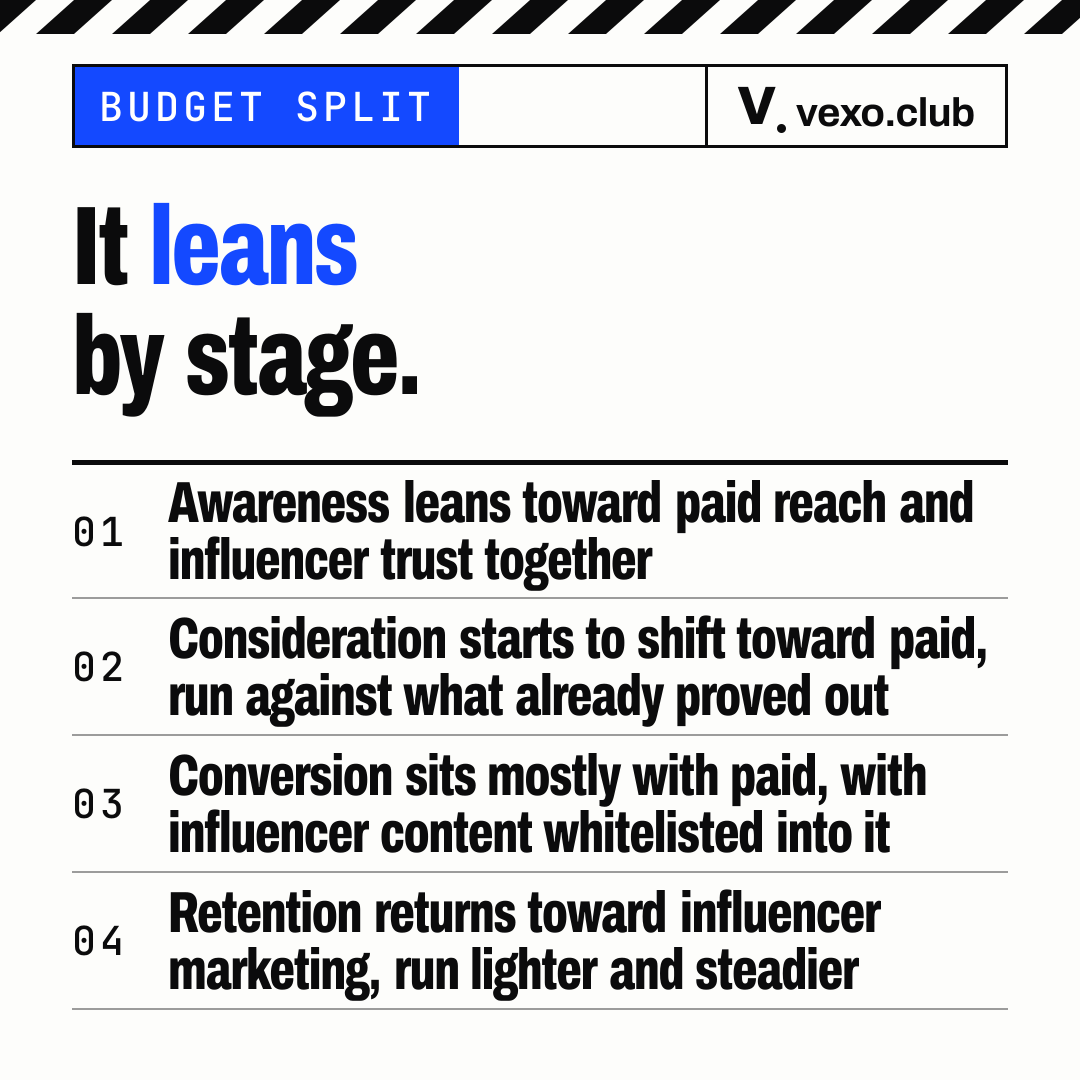
Four stages pull the total in different directions, and a brand running more than one of them at once is really running several smaller splits inside the same budget, not a single ratio.
- Awareness. The total leans toward both channels together rather than either alone. Influencer marketing carries the message into an audience that does not yet know the brand, and paid reach pushes the resulting posts past what organic alone would travel. Neither does the other’s job well by itself at this stage.
- Consideration. The lean starts to shift toward paid, run against whatever an influencer post has already shown works. A post that earns real attention becomes the creative a performance campaign retargets around, rather than a fresh ad built from nothing.
- Conversion. The lean sits mostly with paid performance ads, because the job is a tracked action on a schedule the brand can tune. Influencer marketing still has a role through whitelisting, where a creator’s own post runs as a paid ad from their handle, but the spend itself is a paid line by this point.
- Retention. The lean returns toward influencer marketing, run lighter and steadier, because a known audience responds to a familiar face more than to another paid impression. Paid spend at this stage is usually a smaller, defensive line rather than the main one.
How the total moves through the funnel
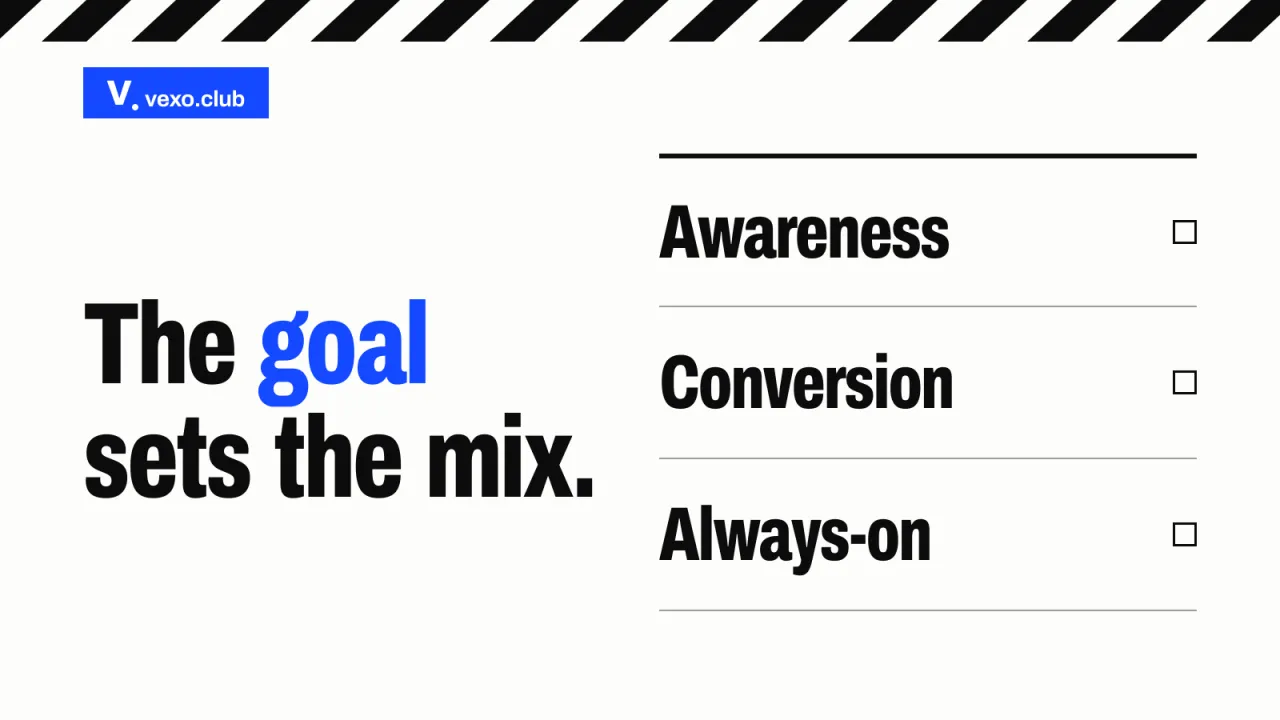
- Name the stage the spend is for Awareness, consideration, conversion or retention, before either channel gets a line.
- Read what the stage needs An unfamiliar wide audience calls for both channels; a tracked action calls for paid alone.
- Set the lean, not a fixed split How much of the total sits with each channel at this stage, not a ratio carried over from the last one.
- Hold the lean against the report The next stage’s lean answers what the last one showed.
How the total leans by funnel stage
How should the category shift the starting lean?
Funnel stage sets the first lean. The category a brand sells in moves it again, because some categories sell on trust and demonstration and others sell on a feature or a price that a tracked ad can state directly.
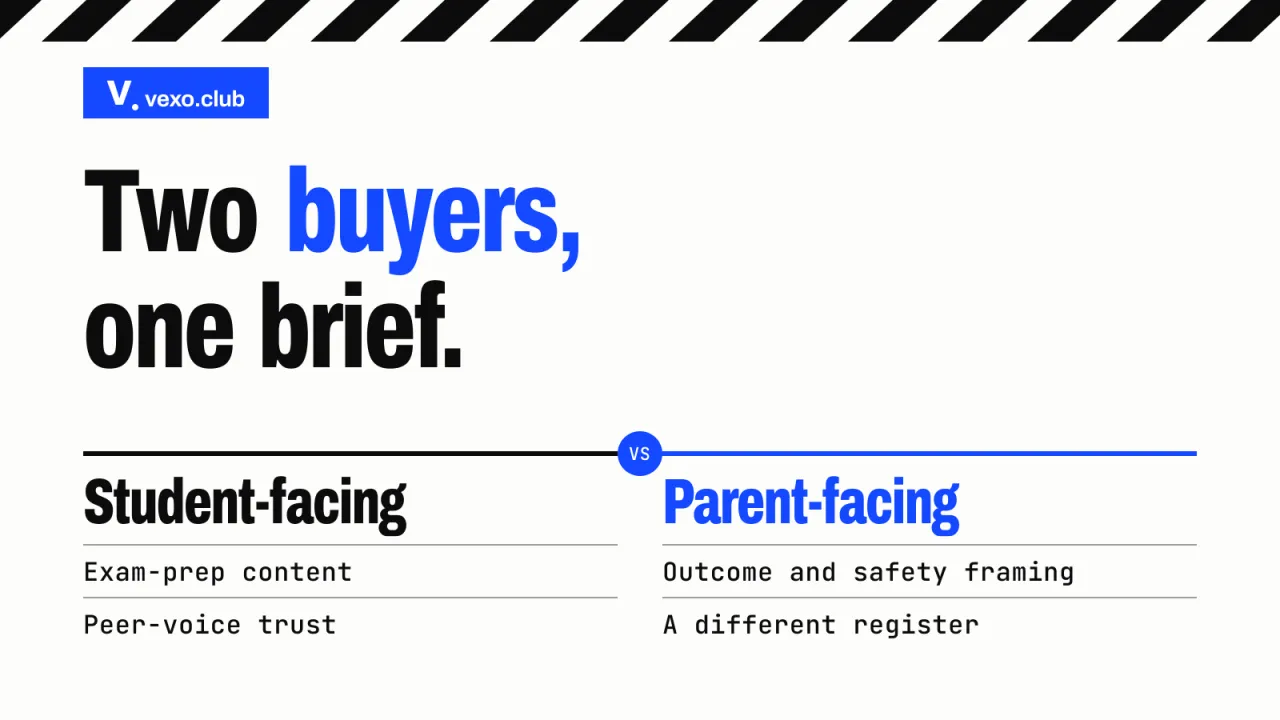
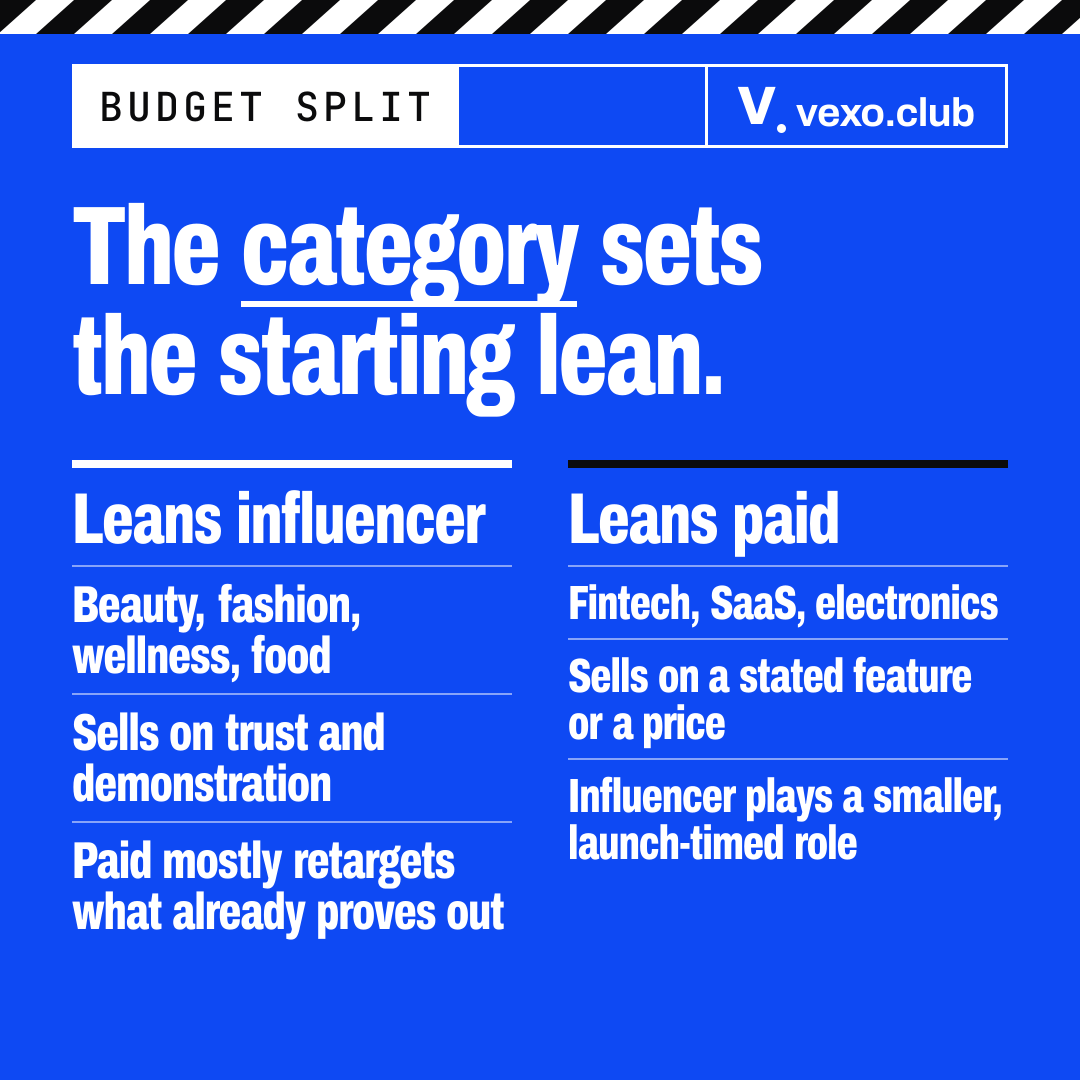
- Trust-led categories. Beauty, fashion, wellness and food carry more of the total toward influencer marketing throughout the funnel, because a recommendation from someone the audience already follows does more of the selling than a static ad unit can. Paid spend here mostly retargets around the posts that already prove out.
- Spec-led categories. Fintech, SaaS, electronics and other categories that sell on a stated feature or a price point carry more of the total toward paid performance ads, because a tracked click answers the buying question directly. Influencer marketing still has a role, usually around a launch or wherever the category needs explaining, but it is not the main line.
- Hybrid categories. D2C categories that sell a physical product on both feel and function, such as skincare devices or nutrition, often need both channels close to evenly across the funnel, and the category’s own calendar (a launch, a sale period or a steady season) decides which one leads in a given stretch.
Where the category moves the starting lean
Leans influencer
- Beauty, fashion, wellness, food
- Sells on trust and demonstration
- Paid spend mostly retargets what already proves out
Leans paid
- Fintech, SaaS, electronics
- Sells on a stated feature or a price
- Influencer marketing plays a smaller, launch-timed role
How the category shifts the starting lean
Where does paid performance advertising fit against influencer marketing, job for job?
The clearest way to set a split is to stop asking which channel is better and ask what job each one is actually built to do. The table below reads the two side by side on the questions that matter at the point of planning a budget, not after it is already spent.
Performance ads and influencer marketing, by the job each does
| Paid performance ads | Influencer marketing | |
|---|---|---|
| What it buys | An impression or a click, on a schedule the brand controls | Attention borrowed from an audience that already trusts the creator |
| Funnel stage it suits best | Consideration and conversion, where a tracked action can be acted on | Awareness and retention, where a recommendation carries more than an ad unit |
| What it needs in place first | A pixel, a catalogue feed or a tracked landing page | A vetted creator, a contract and a disclosure label |
| How quickly it can start | Can go live once the creative and targeting are ready | Needs a shortlist, a brief and content turnaround before anything posts |
| Category it tends to suit | Spec-led categories such as fintech, SaaS or electronics | Trust-led categories such as beauty, fashion or wellness |
| Where it sits in an always-on budget | A steady baseline, tuned against the numbers it produces | A rotating roster, reset for fatigue rather than retuned daily |
| Best for | A tracked, bottom-of-funnel push | A trust-building or discovery push |
How does the split move across a single budget cycle?
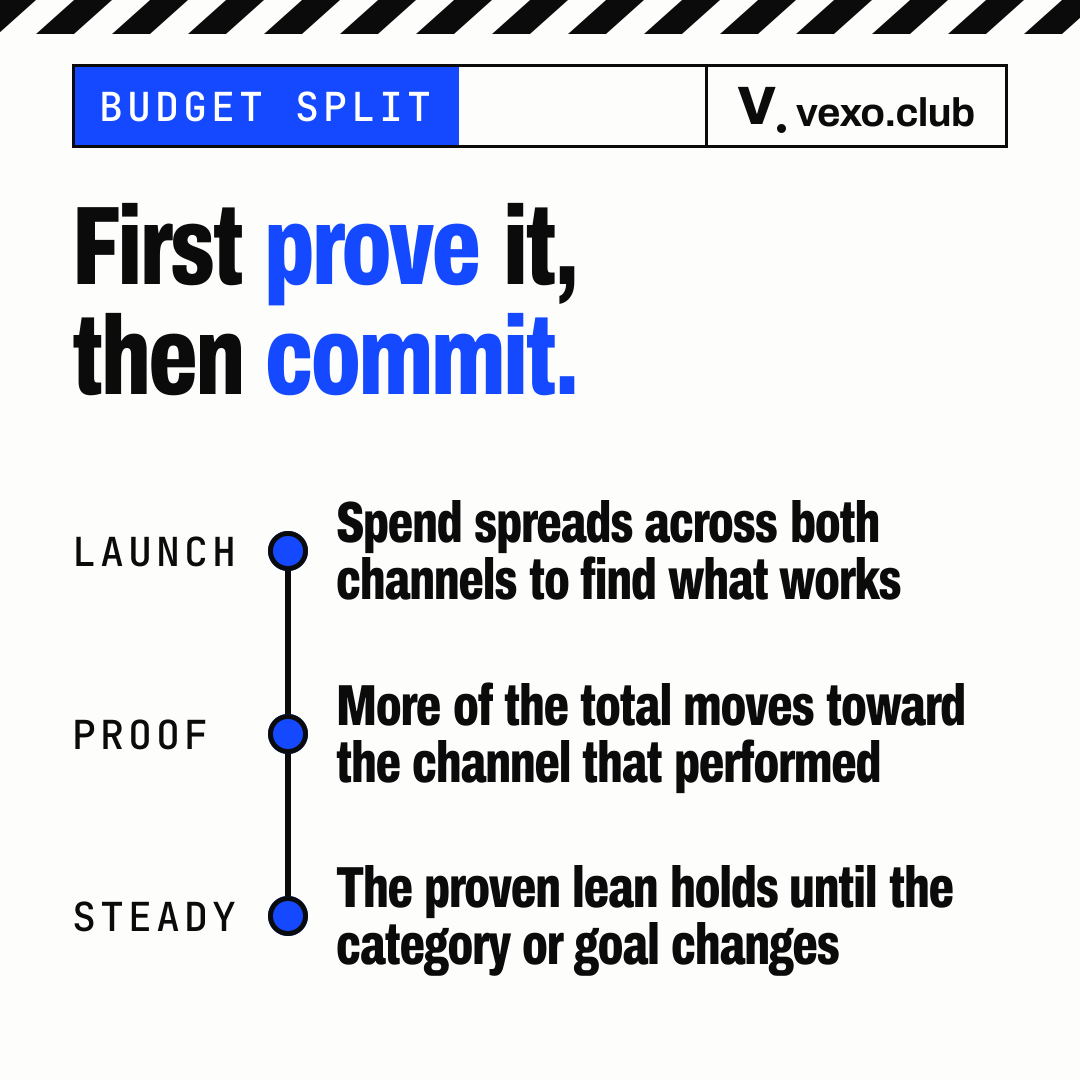
Few brands run one funnel stage in isolation for a full year, and the stages above are usually phases of the same cycle rather than separate buckets of money. A launch tests broad across both channels, a proven combination scales, and what scales becomes the shape of a steady, always-on split.
How the split moves across a cycle
- Early Launch Spend spreads across both channels to find what the audience actually responds to.
- Once a channel or a post shows it works Proof More of the total moves toward whichever channel produced the result, and paid starts retargeting around it.
- Ongoing Steady state The proven lean becomes the standing split, reset only when the category or the objective changes.
How the split moves across a budget cycle
Read this way, the split is less a number fixed at the start of the year and more a position the budget holds until the report says otherwise.
What should never move, whatever the split is?
The stage and the category change the lean. They should not change a shorter list of things that hold regardless of where the money sits.
- Track before either channel spends. A pixel, a tagged link or a coded offer exists before the first rupee goes out, on paid or on influencer, so the next lean can be read from a result rather than a guess.
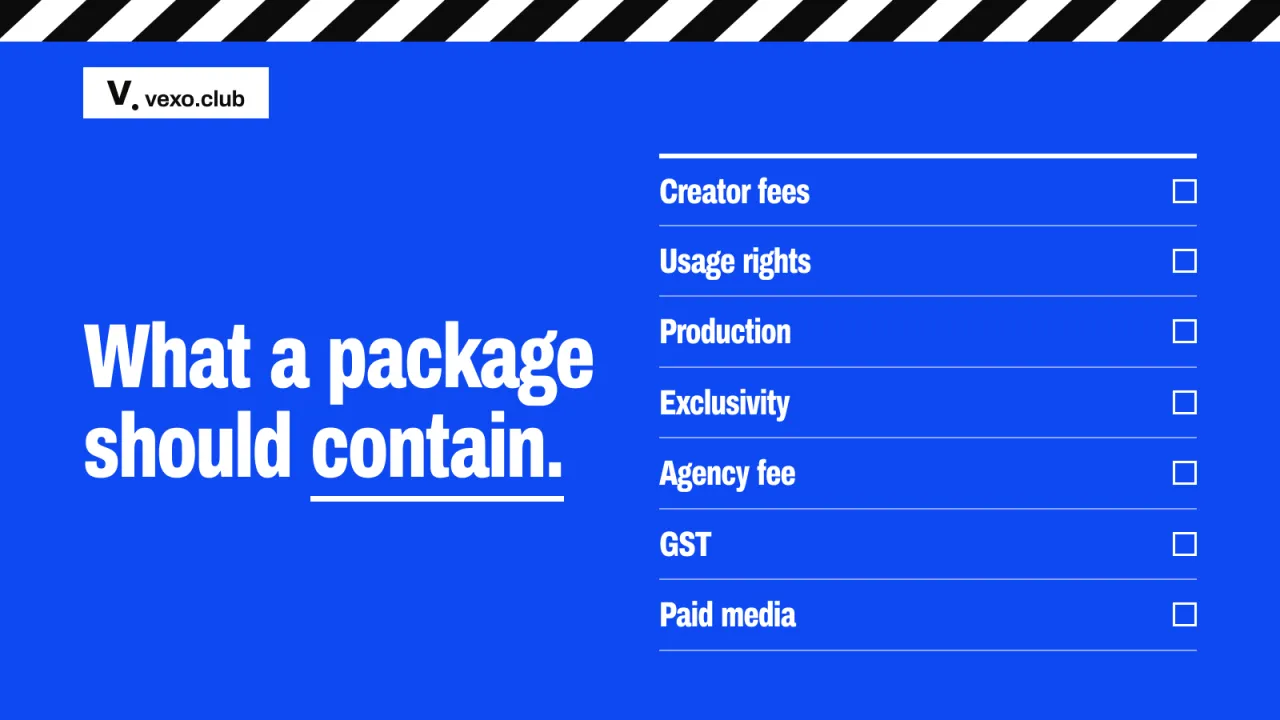
- Keep the two channels on separate lines. Creator fees, production, paid media and the agency’s own fee stay visible as their own entries whatever the lean is; what moves a quote and what a package should contain cover that separately from this question.
- Write whitelisting and usage rights in before the shoot, not after a post already proves out, because a conversion-stage lean depends on being able to run the creator’s own content as a paid ad.
- Report each channel against the goal it was bought for. Reach for awareness, cost per action for conversion, never totalled into one blended column that hides which channel actually did the work.
- Revisit the lean each cycle. The report decides whether next cycle’s split stays or moves, not a preference carried over from the last one.
What should never move with the lean
Do
Track every channel before it spends.
Don’t
Decide the split first and look for a result that justifies it.
Do
Keep paid media and creator fees on separate lines.
Don’t
Blend the two into one marketing line that hides which channel earned its share.
Do
Agree whitelisting and usage rights before the shoot.
Don’t
Add paid-amplification rights after a post already proves out.
Do
Report each channel against its own stage goal.
Don’t
Total reach and conversion figures into one column.
How does the desk approach this?
The desk asks for the objective and the category in the first line of a brief, before a budget figure, because both decide more of the split than the total itself does. Where the brief is about the influencer side of that total once it is set, how an influencer budget should split by goal covers the tier mix, production and amplification inside it; this page is about the line above that, between the two channels. Each cycle closes against the report in the format set out in the report template, read next to whatever the paid dashboards show for the same stage, and reading the result beyond vanity metrics sets out what that reading should and should not include.
To start, send the desk a brief naming the objective, the category and a budget band. The proposed lean, shown as its own line rather than bundled into one number, comes back from there.
Questions brands ask
How should a marketing budget be split between influencer marketing and paid ads? Not by a fixed ratio. The lean follows the funnel stage the money is meant to act at and the category the brand sells in: awareness and discovery lean toward both channels together, conversion leans toward paid, and trust-led categories carry more of the total toward influencer marketing than spec-led ones do.
Should paid ads or influencer marketing get more budget for a new brand? Early awareness usually leans toward running both together rather than choosing one, because an unfamiliar audience needs the reach paid buys and the trust an influencer post carries. Once a post or a channel proves out, the lean shifts toward whichever produced the result.
Does the category change how an influencer marketing vs paid ads budget should split? Yes. Categories that sell on trust and demonstration, such as beauty, fashion and wellness, tend to carry more of the total toward influencer marketing throughout the funnel. Categories that sell on a stated feature or a price, such as fintech or SaaS, tend to carry more toward paid performance ads, with influencer marketing playing a smaller, launch-timed role.
How does whitelisting change the split at the conversion stage? It lets the budget keep an influencer’s content active as a paid line rather than treating the two channels as separate buckets. The creator’s own post runs as a paid ad from their handle, so what began as influencer spend becomes part of the paid plan once it has proven out, and the rights to do this need to be agreed before the shoot.
Should the split be fixed for a year or revisited more often? Revisited each cycle. The report from the last cycle, read by stage and by channel, decides whether the next cycle’s lean holds or moves, rather than a ratio set once at the start of the year and left alone.
Cite this page
Performance ads vs influencer marketing budget split: how the total should move. vexo.club, published 08 Nov 2026. https://vexo.club/blog/performance-ads-vs-influencer-marketing-budget-split
Influencer marketing across India
Send the desk a brief: it comes back as a shortlist and a directional band, never a public price.
Brief the desk