Sustainability influencers in India: the niche, and how brands work with it
Sustainability influencers in India work across thrifting, zero-waste living, slow fashion and eco product reviews, mostly on Instagram. What the niche looks like, who is public in it, and what eco-friendly influencer marketing in India checks before a brief goes out.
Playbooks 9 min read The vexo.club desk
In this article8 sections
A sustainability or eco-conscious creator in India makes content around living and buying with a lighter footprint: thrifting instead of buying new, cutting plastic and food waste at home, choosing slow fashion over a fast drop, or reviewing the eco-labelled products that promise to help. A brand working with this niche is buying into an audience that reads claims closely, so the checks that matter are whether a claim can be backed and whether the product fits a life already being lived more carefully.
This guide comes from vexo.club: an influencer marketing agency run from one desk in Delhi NCR (see who runs the desk). It sorts the niche by what the content actually does rather than by a single label, names a public creator only where independent coverage confirms the work and not only the creator’s own bio, and carries no follower or view count, because neither number says whether an audience buys differently after watching.
Sustainability creators in short
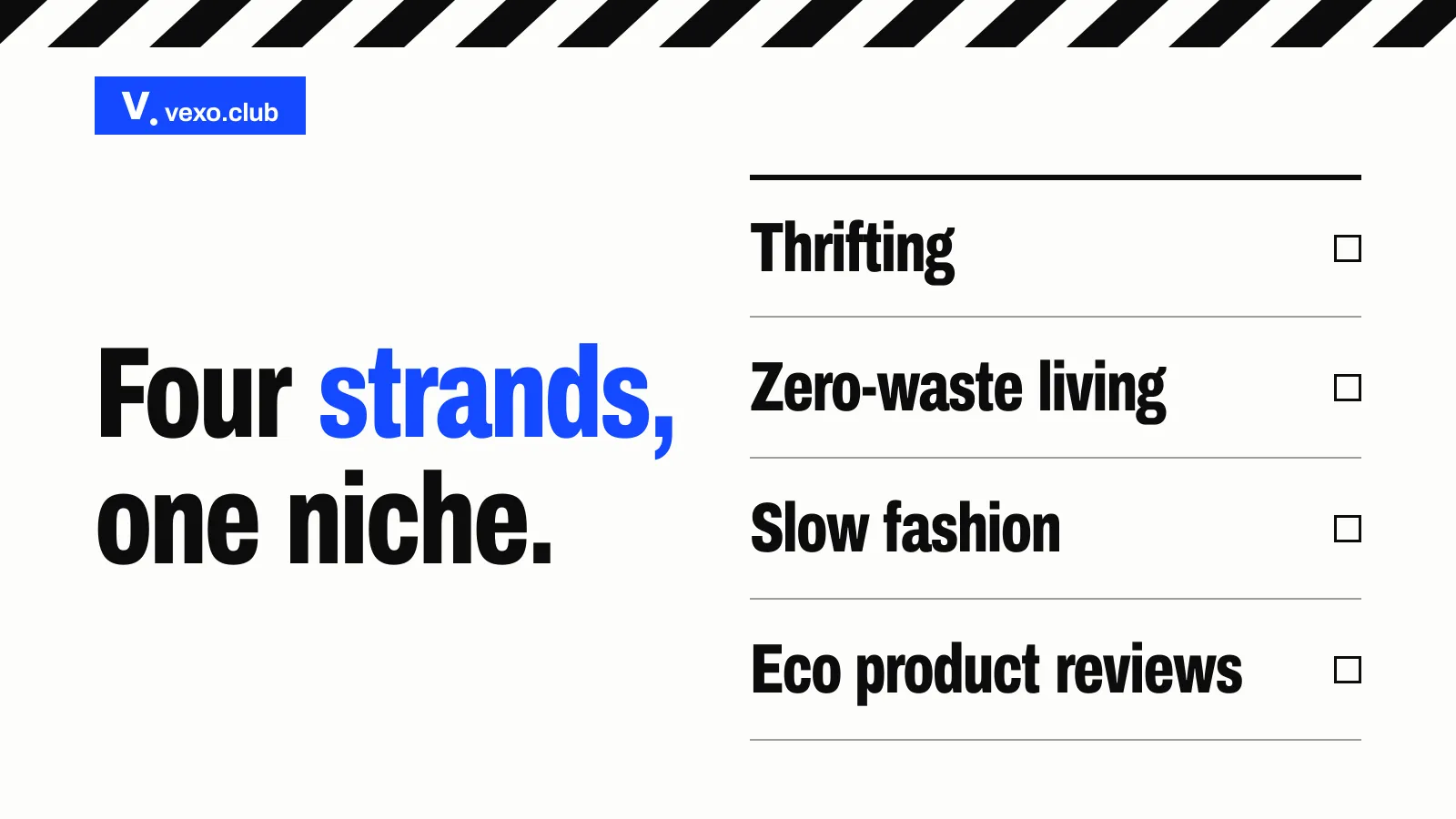
- The niche covers four overlapping strands: thrifting, zero-waste or low-waste living, slow and sustainable fashion, and eco product reviews.
- Most of the content runs on Instagram as Reels and carousels, with a smaller set of creators building long-form guides on YouTube.
- The audience in this niche is specifically alert to greenwashing, so an overstated claim costs more here than in most categories.
- A gifted or paid product still needs the standard disclosure label, and an environmental claim needs the brand’s own evidence behind it.
What does the sustainability niche in India look like?
It is less one audience than four that overlap. A thrift creator builds a haul or a styling video around second-hand or resale pieces. A zero-waste or low-waste creator documents the home changes: composting, plastic swaps, repair over replacement. A slow-fashion creator explains fabric, origin and care, and argues for buying less and buying better. An eco product reviewer opens and judges the products that carry a green claim or a certification. The same creator often works across two or three of these, so a brief should name the strand it needs rather than asking for sustainability content in general.
Four strands of the sustainability niche, and what each suits
| What they make | Suits | Brief rule | |
|---|---|---|---|
| Thrifting and resale | Second-hand hauls, styling thrifted pieces, resale-platform tours | Resale marketplaces, vintage and thrift platforms | Agree what is thrifted versus gifted new, and label each as it is |
| Zero-waste and low-waste living | Composting, plastic swaps, home audits, low-waste routines | Home and personal-care brands, reusable products | A claim checked against what the product actually replaces |
| Slow and sustainable fashion | Fabric and origin explainers, slow-fashion hauls, care and repair guides | Apparel brands making a material or sourcing claim | Material and sourcing claims supplied by the brand, not guessed |
| Eco product reviews | Unboxings and verdicts on eco-labelled products | D2C eco brands, certification-led products | The certification shown on camera, not described from memory |
Which public creators work in this niche?
A small set of creators in India work in this niche in the open, confirmed by independent coverage rather than only by their own page. The names below are examples of the kind of work, not a ranking, and none of them works with vexo.club.
- Pankti Pandey posts as Zero Waste Adda on Instagram, where her content covers composting, cutting plastic and everyday zero-waste swaps.
- Nayana Premnath makes videos across Instagram and YouTube on zero-waste living, thrift shopping and mindful buying.
- Anuj Ramatri, who posts as An EcoFreak, makes short-form content on low-waste swaps and everyday green living, and runs a separate eco-products marketplace.
None of the three carries a count worth quoting here. A profile’s own number changes by the week, and two creators with the same count can speak to audiences living very differently, so a brief is built on the strand a creator actually makes rather than on a figure read off a profile.
What a sustainability creator’s following actually says
Is this niche driven by brands or by the creator’s own choices?
Mostly by the creator’s own choices, which is what makes it work for a brand at all. An audience that follows a zero-waste or thrift account is there because the creator already lives the behaviour, and a sponsored post that contradicts that behaviour reads as exactly that: contradiction, not content. The claims are where a brief most often goes wrong. The Central Consumer Protection Authority’s Guidelines for Prevention and Regulation of Greenwashing or Misleading Environmental Claims, 2024, ask for words such as eco-friendly, green and sustainable to be backed by adequate, accessible substantiation, and ASCI’s influencer guidelines treat a gifted or paid product the way they treat any other material connection: disclosed, even when the creator’s opinion is their own.
Claims in a sustainability brief
Do
Take the approved wording for “eco-friendly”, “sustainable” or “biodegradable” from the brand
Don’t
Let the creator describe a material or process from memory
Do
Back any certification shown on camera with the document behind it
Don’t
Show a label or certification mark the brand cannot produce on request
Do
Separate a thrifted find from a gifted or sponsored one, and label each as it is
Don’t
Let a sponsored product read as a personal thrift find
The creator is expected to check before posting too. ASCI’s guidelines ask an influencer to satisfy themselves that the advertiser can substantiate a claim, which in this niche usually means a certificate, a lab result or a supply-chain document the brand hands over with the brief rather than after a comment section asks for it.
When does content in this niche get made and seen?
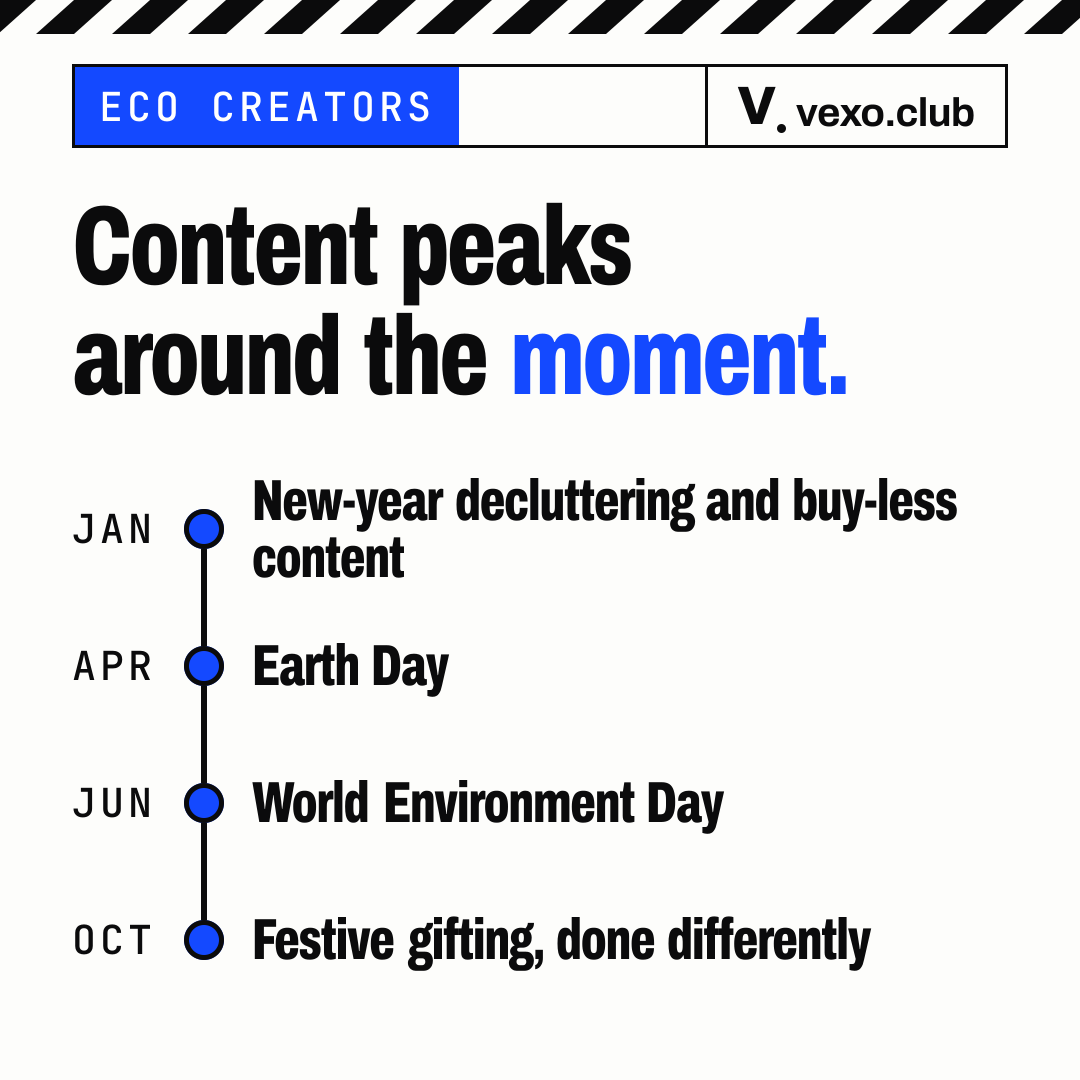
Around a handful of fixed moments rather than one season. The new year brings decluttering and buy-less content. Earth Day and World Environment Day are the two points the niche returns to every year, and the festive months carry a second kind of content: gifting done differently, and the case against a one-time outfit. None of these moments belongs only to this niche, so a brief that wants to be heard goes in ahead of the date rather than on it.
The moments that drive sustainability content in India
How does a sustainability or eco brief run?
It runs on the evidence first and the camera second. A claim typed into a brief with no document behind it is a claim the creator cannot stand behind on screen, and a certification mentioned but never shown reads as empty.
How a sustainability or eco brief runs
- Brief Product or theme, audience and the claims the brand can support
- Evidence Certification or sourcing document shared before filming
- Content Made with the approved wording; the label shot into the frame
- Approval Claim and label both checked before sign-off
- Live and review Posted, labelled, and read again after posting
What should a brand check before booking a creator in this niche?
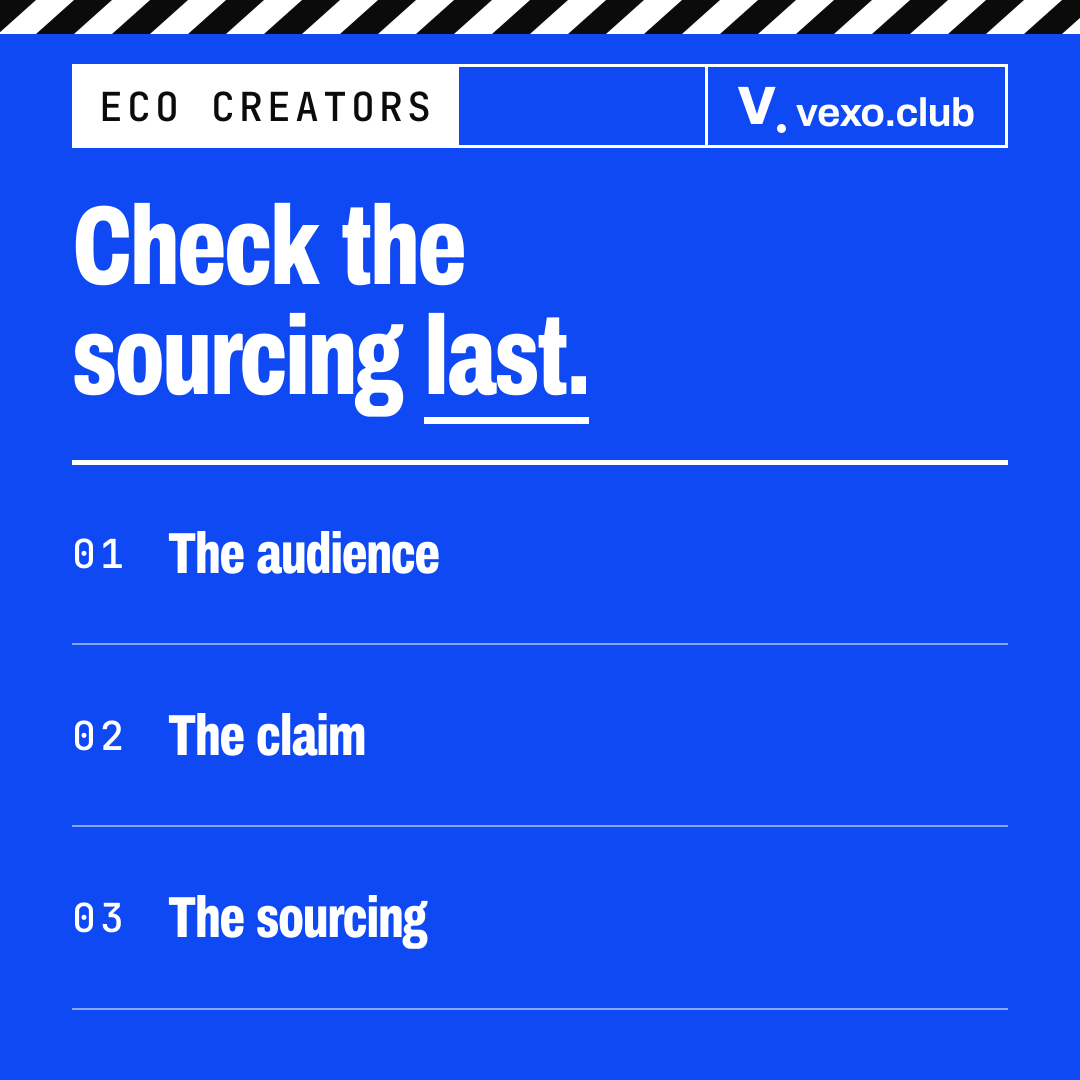
It should check the claim before it checks the content. A creator can make an honest-looking video from a brief that is not honest, and the brand carries the claim once the post is live.
Before booking a sustainability creator
- Does the creator’s audience match where the product is sold or shipped?
- Is every environmental or material claim backed by the brand’s own evidence?
- Is a thrifted, gifted or paid product labelled as what it actually is?
- Is the certification shown on camera one the brand can produce on request?
- Does the contract set how long the content may be reused, and where?
- Is there a takedown step if a claim or a certification later changes?
What a brand checks before the sourcing claim
Should a brand book directly or through an agency?
A brand can brief these creators directly, through a creator’s manager, or through an agency, and each route can work. What an agency adds here is a second reader who checks a claim against its evidence before the draft goes out, and who tells a thrifted find apart from a gifted one before a viewer has to. At vexo.club every paid post is checked for its disclosure before sign-off, and a brief for this niche is cast to the work rather than to a fixed roster category, because sustainability and eco content is not yet a listed niche on the roster.
For the wider rules on claims and disclosure, see ASCI disclosure for brands. To start a brief, send it to the desk.
Questions brands ask
Who are the top sustainability influencers in India? No ranking holds across briefs, and the desk does not publish one. The niche runs across thrifting, zero-waste living, slow fashion and eco reviews, so the useful list is by strand, and the useful check is whether a claim can be backed.
Does a gifted eco product need a disclosure label? Yes. ASCI’s influencer guidelines treat a free or discounted product as a material connection and require disclosure even when the creator’s opinion is their own. The label goes upfront and prominent, not only in a caption’s last line.
What counts as greenwashing in an influencer post? A word such as eco-friendly, green, sustainable or biodegradable used with no evidence behind it. The Central Consumer Protection Authority’s 2024 greenwashing guidelines ask for adequate, accessible substantiation for words of this kind, and the brand is the one that holds the evidence.
Does vexo.club have creators on its roster for this niche? Not under a named sustainability category today. A brief in this space is cast to the work, matching the strand needed against creators who make it, rather than against a fixed list.
Does this content run mainly on Instagram or on YouTube? Mostly Instagram, as Reels and carousels for hauls, swaps and reviews. A smaller set of creators also build longer explainers on YouTube, usually for fabric, sourcing or certification detail that a short video cannot carry.
Sources
- influencer guidelines (opens in a new tab) ascionline.in
Cite this page
Sustainability influencers in India: the niche, and how brands work with it. vexo.club, published 01 Nov 2026. https://vexo.club/blog/sustainability-eco-influencers-india
Send the desk a brief: it comes back as a shortlist and a directional band, never a public price.
Brief the desk