Influencer marketing vs affiliate, UGC and celebrity endorsement: which one a brief needs
How influencer marketing differs from affiliate, UGC and celebrity endorsement: who makes the content, whose audience sees it, and which a brief needs.
Playbooks Updated 22 min read The operators’ desk
In this article11 sections
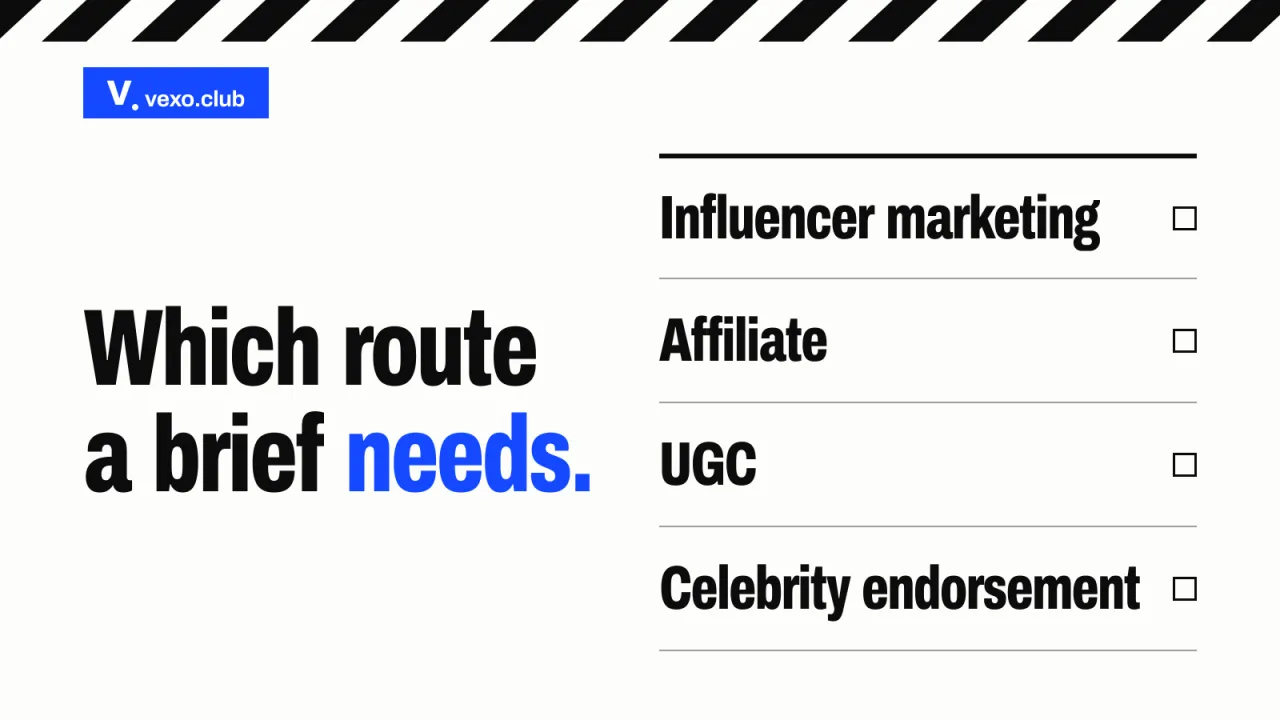
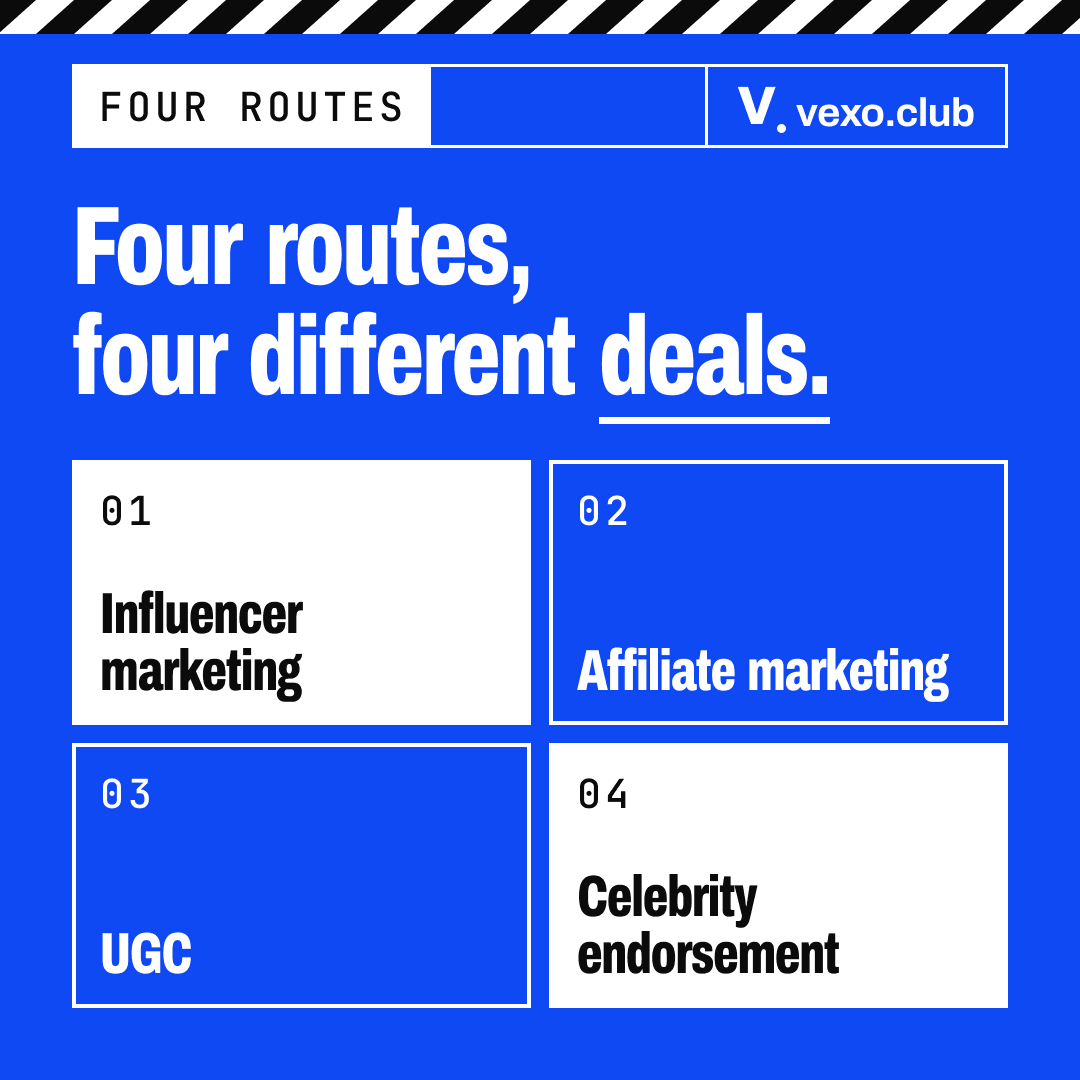
Influencer marketing pays a creator to post to their own audience, labelled as an ad. Affiliate marketing pays a commission on each sale a link or code brings in. UGC, or user-generated content, buys the content alone, for the brand to post or run as ads. A celebrity endorsement rents a famous name for the brand’s own advertising.
Which one a brief needs depends on what it has to move: an audience’s trust, a tracked sale, a supply of ads, or recognition across the country. This guide comes from vexo.club, an influencer marketing agency run from one desk in Delhi NCR, so it has a stake in the answer and says so first. It explains all four, including those the desk does not sell, prints no rate, market size or result, and links each rule where it quotes it.
Four routes, in short
- Influencer marketing buys a creator’s post to their own audience. The audience, the voice and the label are the creator’s.
- Affiliate marketing pays for the sale, not the post. The link or the code is the record, and the payment follows it.
- UGC buys the content, not the audience. The brand posts it or runs it as an ad, so the usage right is the deal.
- A celebrity endorsement buys a famous name for the brand’s own advertising. It carries recognition, and the brand’s media plan carries the reach.
- Many briefs combine two of them in one contract, and every paid post on a creator’s or a celebrity’s own handle carries a label.
What is the difference between influencer marketing, affiliate marketing, UGC and celebrity endorsement?
What separates the four routes is not the person but the deal: who makes the content, whose audience sees it, what the brand pays for, and what it reads afterwards to decide whether it worked. The four are easy to blur because one person can do all of them: a creator can publish a paid reel to their followers one week, add an affiliate link to their bio the next, and license a clip to a brand as an ad after that. The table sets the four against those questions.
Influencer marketing, affiliate, UGC and celebrity endorsement, side by side
| Influencer marketing | Affiliate marketing | UGC | Celebrity endorsement | |
|---|---|---|---|---|
| What it is | A creator’s paid post to their own audience | A commission on sales from a link or a code | Content made for the brand to post or run as ads | A famous person’s name and face in the brand’s ads |
| Who makes the content | The creator, in their own voice | The creator or publisher, in their usual format | A creator, to the brand’s brief | Usually the brand’s own agency and crew |
| Who carries the audience | The creator’s followers | The creator’s or publisher’s readers | The brand’s own channels and paid media | The brand’s media plan, sometimes the star’s own handle |
| How it is paid | A fee for each deliverable | A share of each qualifying sale | A fee for each asset, plus the usage right | A fee for the name, the shoot days and the term |
| How it is measured | Reach, engagement and the brand’s own link or code | Tracked sales, net of returns | As ad creative: cost per acquisition and CPM | Awareness and recall, read over the whole campaign |
| Who answers for the claims | The brand and the creator: ASCI puts the content and the label on both | The brand and the affiliate, as for any paid post | The brand, as its own ad (and the creator, if ASCI counts them a celebrity) | The brand, and the celebrity, who must do due diligence |
| Best for | Trust in a niche, a city or a language | Sales a link or a code can count | A steady supply of ads to test | Recognition across the country, quickly |
Two questions decide most briefs: whose audience will see the content, and whether the fee follows the post or the sale. The sections below take influencer marketing against each of the other routes in turn.
Four routes, and the deal each one is
Influencer marketing vs affiliate marketing: paying for the post or for the sale
In influencer marketing the brand pays for the work: a reel, a video or a set of stories, delivered and posted on agreed dates. The fee is owed whether the post sells or not, because what is bought is the creator’s time, voice and audience. In affiliate marketing the brand pays for the outcome: the creator or publisher earns a share of each sale that comes through their link or code, and nothing for a post that sells nothing. Amazon’s Associates programme in India publishes its terms, so it shows the model plainly. Its advertising fee schedule for India, read on 18 October 2026, pays an advertising fee on qualifying purchases. Most fees are a share of qualifying revenues that varies by product category, and Amazon may also pay fixed bounties for actions such as a Prime sign-up. Qualifying revenues leave out shipping, handling, gift-wrapping, taxes and service charges, and are reduced by returns, rebates, card-processing fees and bad debt.
Paying for the post, or paying for the sale
Influencer marketing
- A fee for each deliverable
- Owed once the post is live
- Read by reach, engagement and the brand’s own tracking
- Suits a launch, a new market or a new language
Affiliate marketing
- A share of each tracked sale
- Owed only when a sale is counted
- Read in the affiliate report, net of returns
- Suits a product people already look for
The difference moves the risk. Under a fee, the brand carries it: a post that misses still costs what was agreed. Under a commission, the creator carries it, which is why a creator whose audience trusts them may ask for a fee instead, and why affiliate suits products that already sell well online: a known name, a clear price, a reason to buy now. Affiliate is also weak at the job influencer marketing is built for, which is introducing something new to people who were not looking for it. A commission follows the link that closed the sale, and the first conversation about a new product rarely closes one.
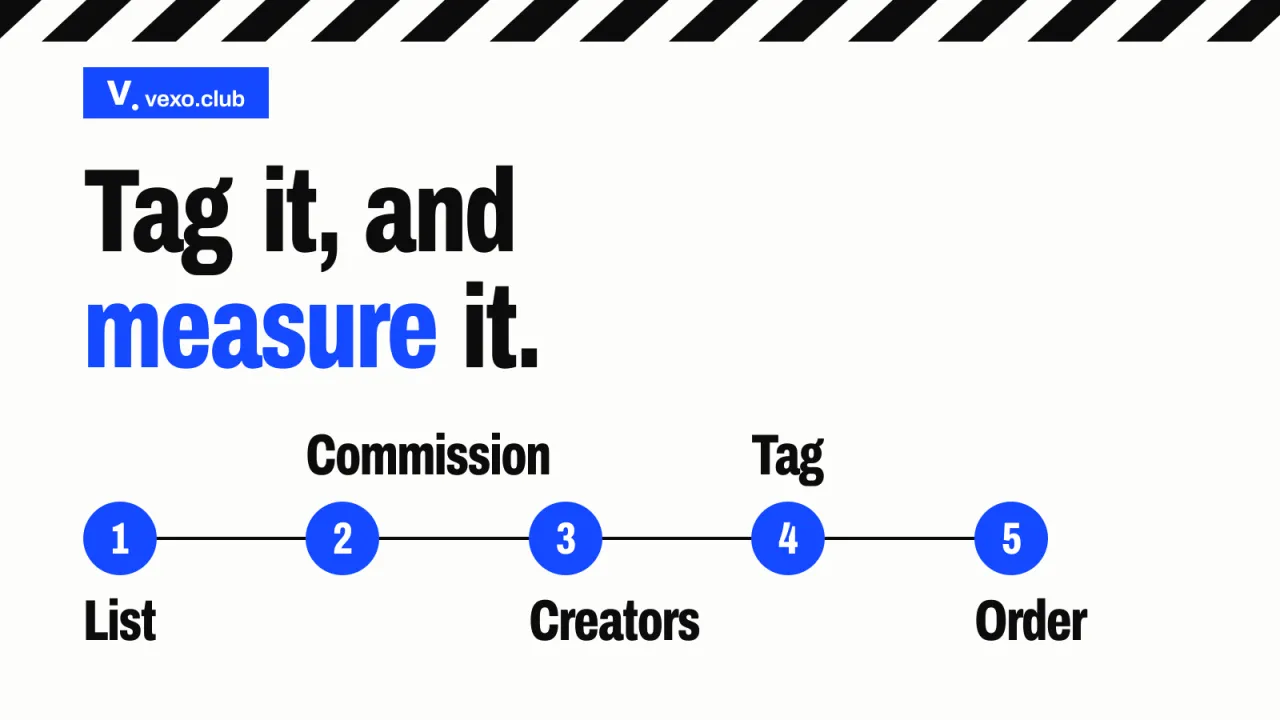
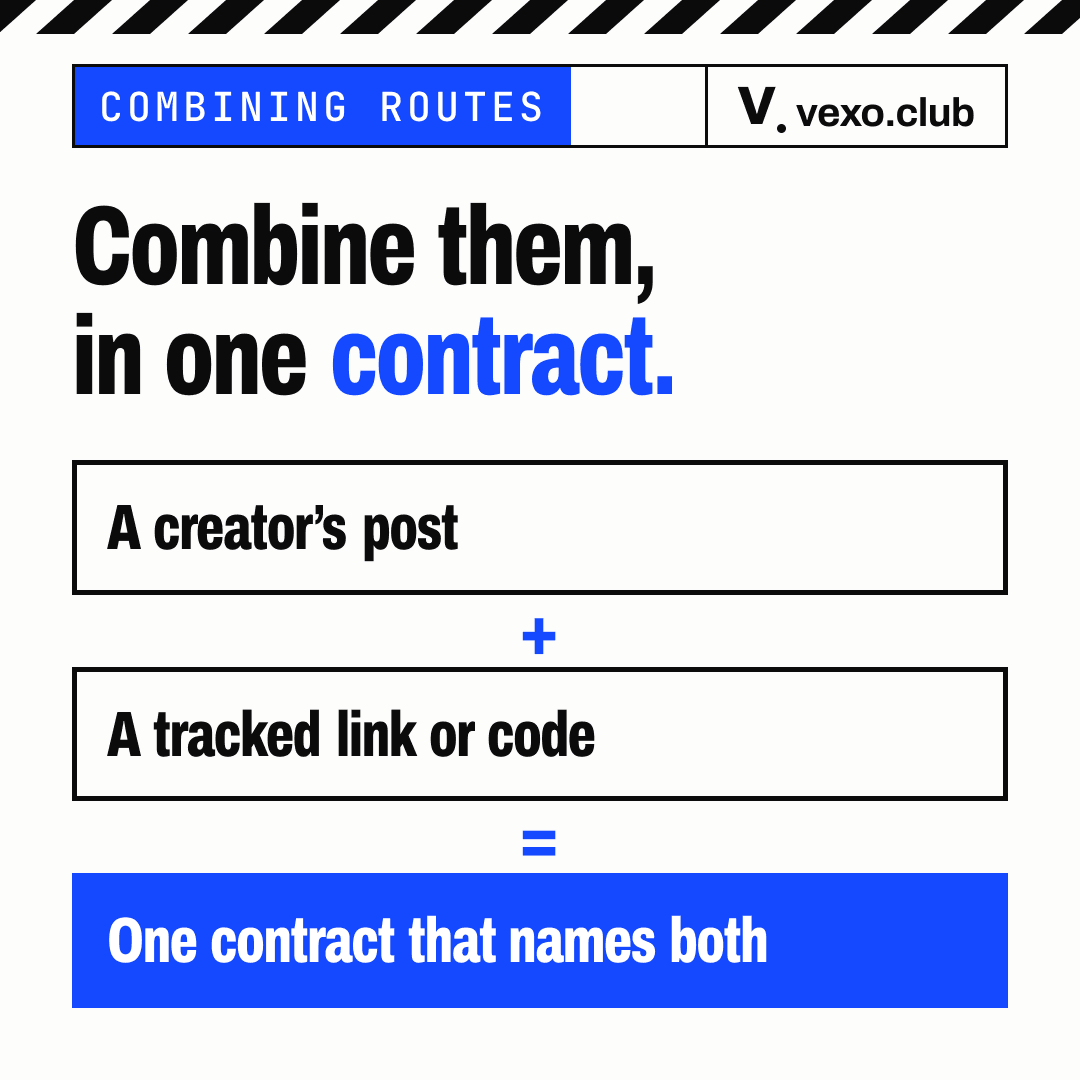
The two mix well. A brand can pay a creator a fee for the post and add a code or a tracked link, so the sale is counted even though the fee does not depend on it. The contract then says which part is the fee, which part is the commission, and which report settles the commission: the brand’s own orders, the retailer’s affiliate dashboard or the code. Social commerce in India sets out where each kind of sale closes, and how to pick the measurement method before launch has a post of its own. Platforms run affiliate programmes too. YouTube Help, read on 18 October 2026, says its Shopping affiliate programme is “currently available for eligible creators in” a list of countries that includes India, and how a brand uses it has a guide of its own.
Both are advertising under India’s rules. ASCI’s influencer guidelines (the PDF ASCI’s guidelines page links today, an April 2025 file) define a material connection as any connection between an advertiser and an influencer that may affect the weight or credibility of the representation made by the influencer, and its examples include monetary or other compensation. A commission is compensation. Under clause 1.3, Affiliate is on ASCI’s list of permitted labels, beside Ad, Sponsored, Collaboration and Partnership, so an affiliate post carries a label just as a paid post does.
How does UGC differ: buying the content, not the audience
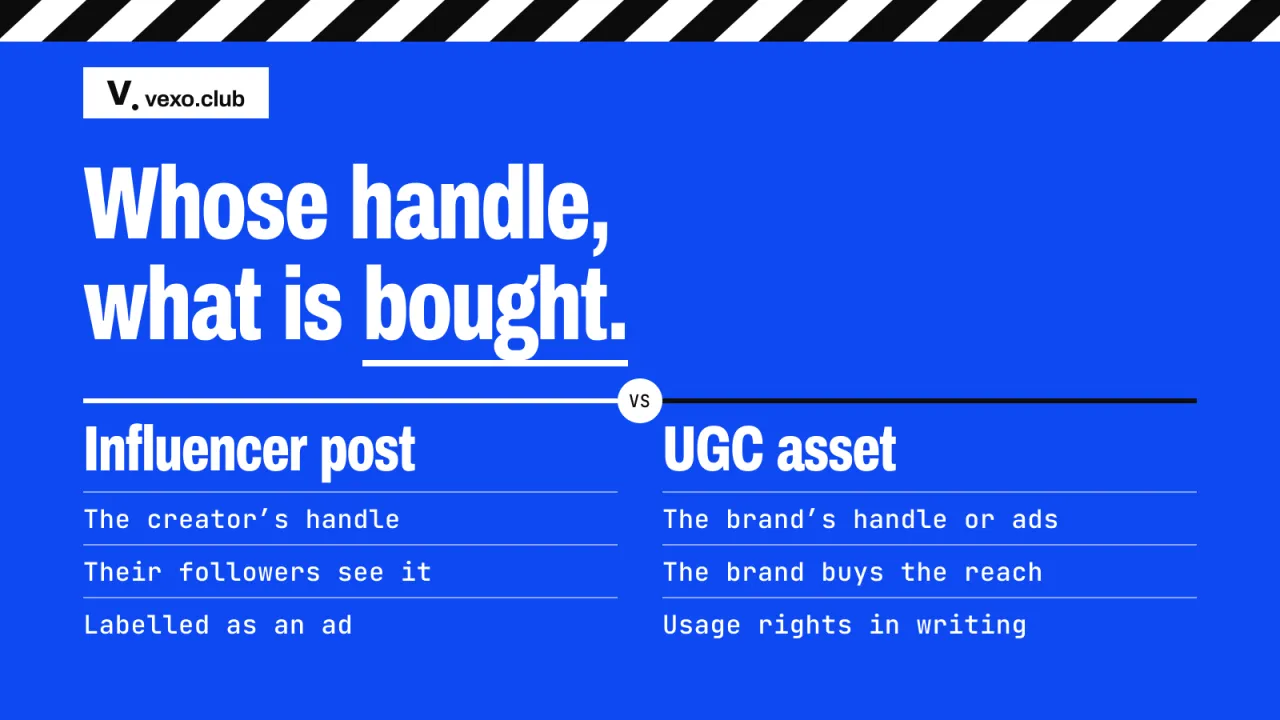
The difference is what the brand buys: UGC buys the content alone, where influencer marketing buys the post and the creator’s audience together. UGC began as a name for content that customers made unasked: a review, an unboxing, a photo of the product in use. In a brief today it usually means something narrower: content a creator is paid to make in that unpolished, first-person style, for the brand to publish itself. The creator may never post it. It goes on the brand’s handle, its product pages or its ads, and the creator’s own audience is not part of the deal.
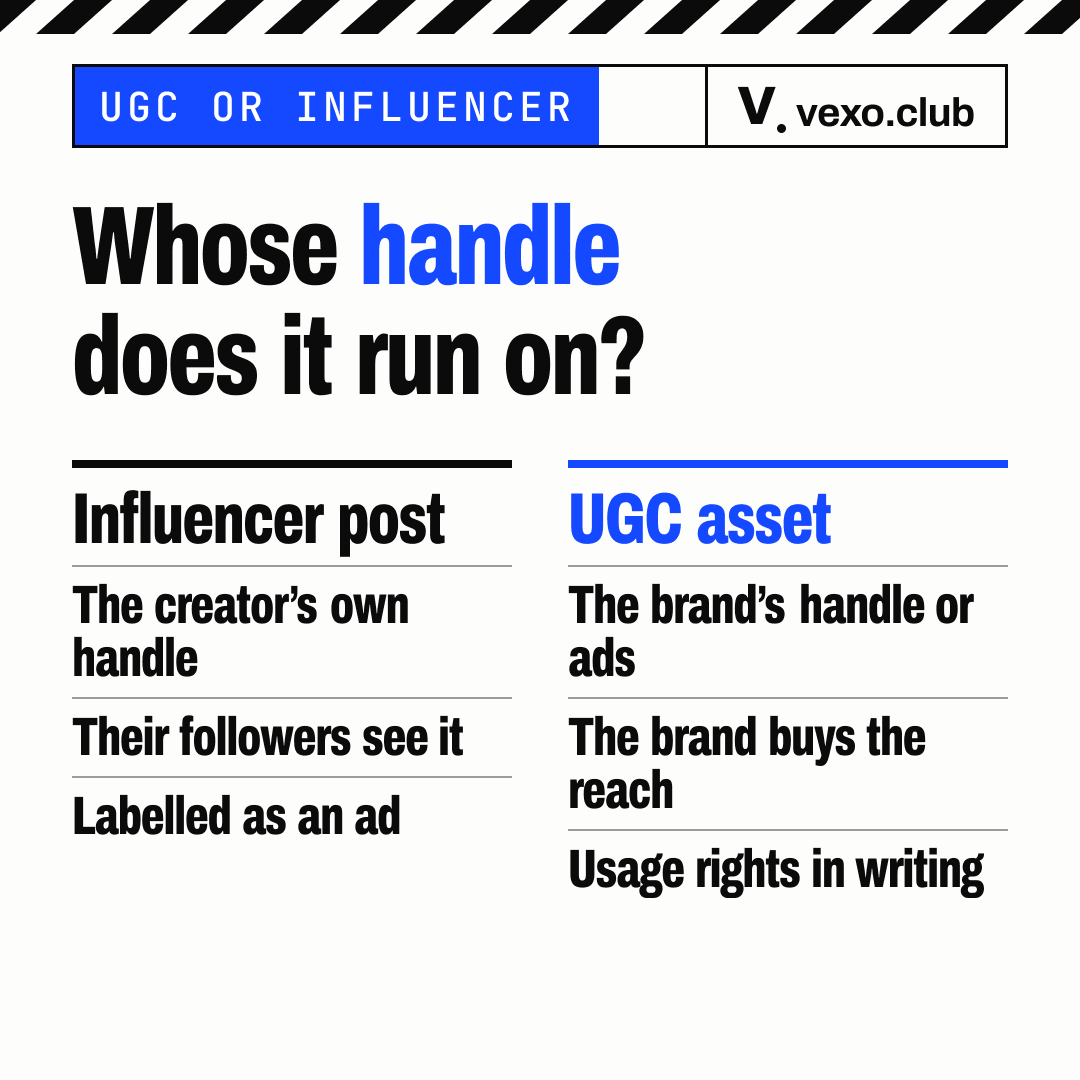
An influencer post is bought for the audience as much as for the content: the creator’s followers see it, from someone they chose to follow, labelled as an ad. A UGC asset is bought for the content alone, and the brand supplies the audience with its own channels and its own media spend. So an influencer post is read by who saw it and what they did next, and a UGC asset like any other ad creative: how it performs when the brand pays to show it, against the other creatives in the same account.
How a UGC asset is made and used
- Brief The claim, the product facts, the formats and the ratios
- Shoot The creator films in their own style
- Approve The brand checks the claim before anything runs
- Publish On the brand’s handle, product pages or ads
- Read As ad creative, against the other assets
- Window ends The asset comes down, or the right is renewed
The usage right is the deal. Because the brand will run the asset from its own accounts, the contract has to say where it may run, in which formats, with or without paid media behind it, and for how long. Usage rights are where budgets quietly break sets out those lines, and UGC vs influencer marketing takes the two routes apart on their own. There is a middle route as well: the creator posts the content to their own followers, and the brand then runs that post as an ad from the creator’s handle. That is whitelisting, a separate right, covered in whitelisting, explained for brand teams.
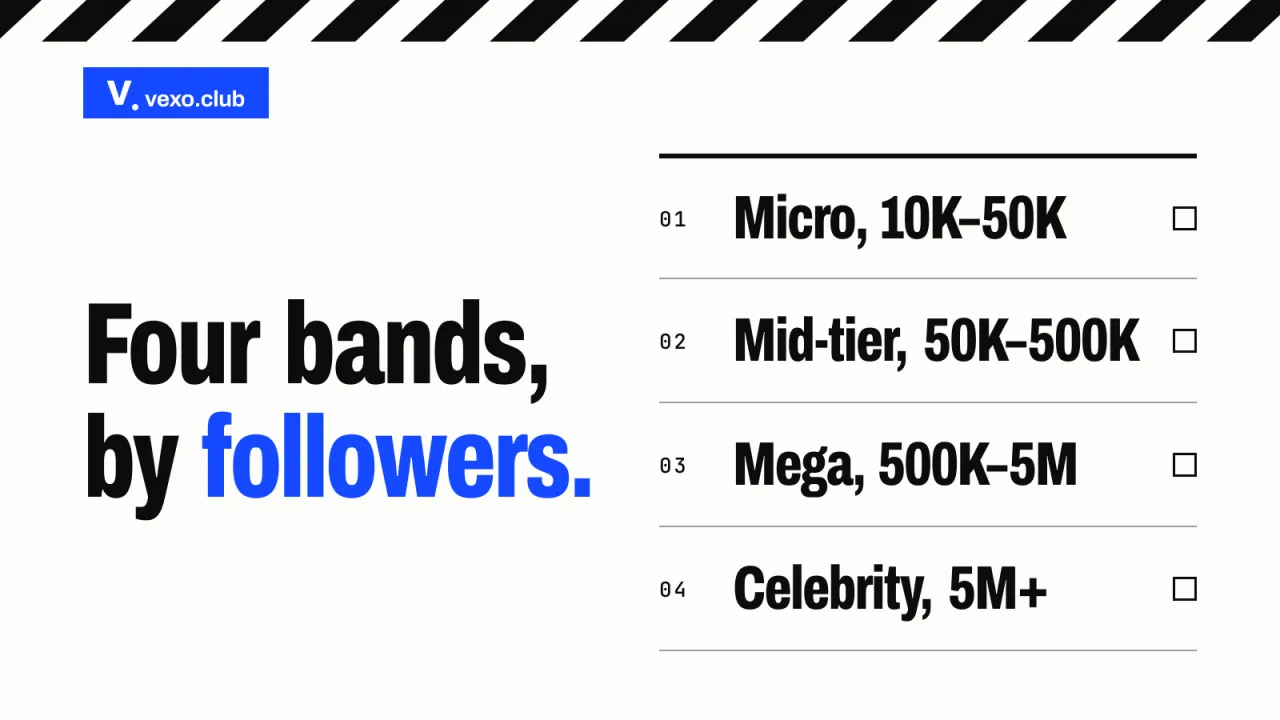
The rules follow the handle. ASCI’s disclosure rule (clause 1 of its influencer guidelines) covers advertisements that influencers, or their representatives, publish on the influencers’ own accounts: each must carry a label that identifies it as an advertisement. A UGC asset the brand runs from its own handle is the brand’s own advertisement, so the claims in it are the brand’s to stand behind. If the creator in it is one ASCI counts as a celebrity, its guidelines for celebrities in advertising apply to the creator as well; they name a social media followership of 500,000 or more on any single handle as one test (read on 18 October 2026).
An influencer post or a UGC asset: whose handle it runs on
Celebrity endorsement vs influencer marketing: a famous name or a trusted voice
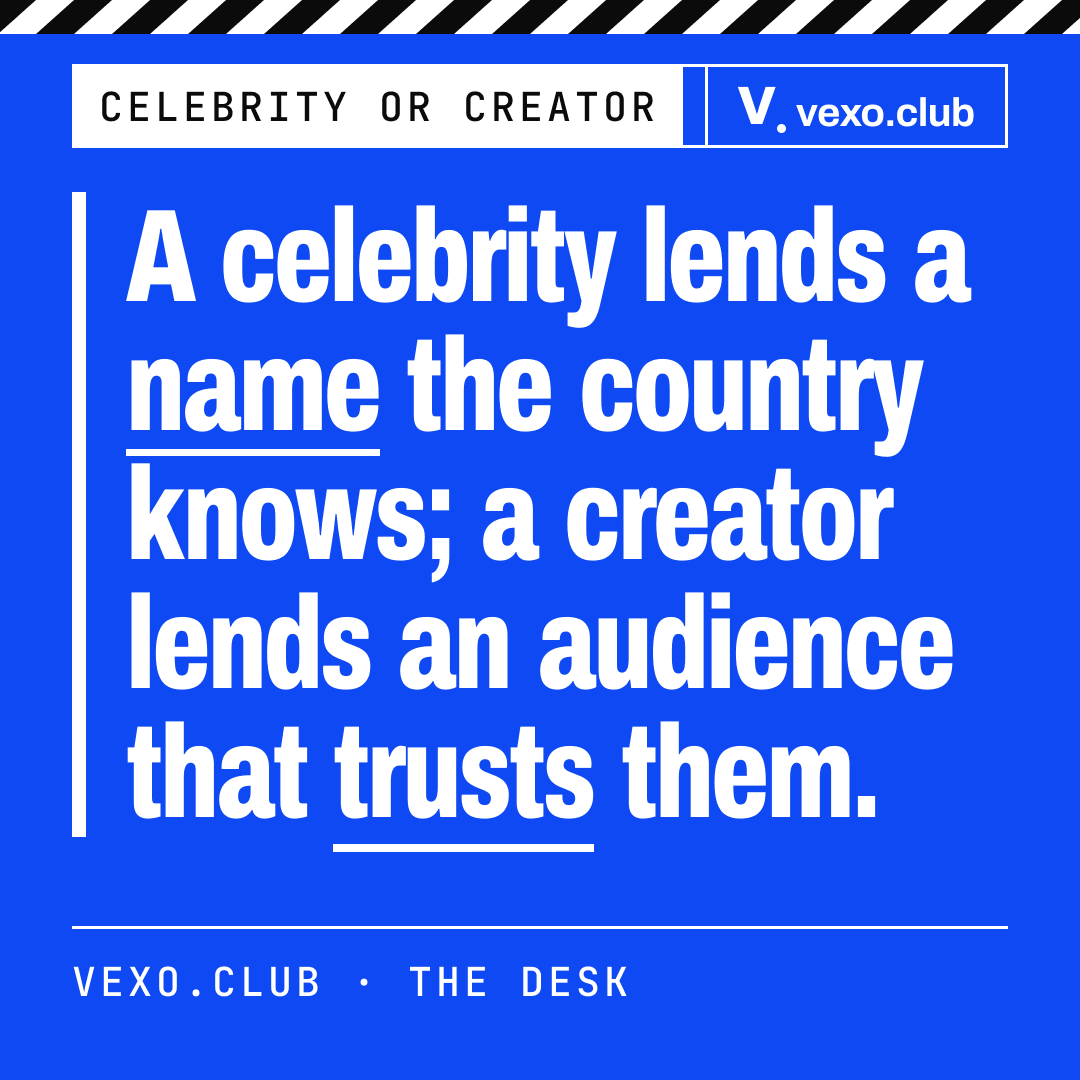
A celebrity endorsement rents a name the country knows for the brand’s own advertising; influencer marketing buys a creator’s voice, on the creator’s own handle, for an audience that chose to follow them. The celebrity is a person famous for something else (film, sport, music, television), placed in the brand’s own advertising. The brand’s agency usually writes the film, a production crew shoots it, and the brand’s media plan decides where it runs: television, outdoor, digital video, the brand’s social handles. What the celebrity lends is recognition: a face much of the country already knows, attached to the product quickly.
Influencer marketing works the other way round. The creator is known for the content itself, in a niche, a city or a language, and the audience follows them for it. The creator writes and films in their own voice and posts it to their own followers. What they lend is trust within that audience, not fame across the country. One sells breadth and the other depth, and the brief decides which matters more.
Where the audience for each route comes from
The brand’s own channels and media The creator’s own followers
- UGC The brand posts it and pays to show it. At The brand’s own channels and media
- Celebrity endorsement The brand’s media plan, sometimes the star’s own handle too. Leans The brand’s own channels and media
- Affiliate marketing The creator’s or publisher’s readers, counted at the sale. Leans The creator’s own followers
- Influencer marketing The creator’s followers, from someone they chose to follow. At The creator’s own followers
The line has blurred, because many celebrities now post as creators. A film star’s paid post on their own Instagram is influencer marketing in format, whatever the fee, and it is read the same way: who saw it, and what they did. Influencers in marketing, by tier covers celebrity and mega creators as creators, and how they sit beside micro and mid-tier creators in one plan.
Both routes carry duties in India, in different rulebooks. For a celebrity in the brand’s own advertising, the rulebook is ASCI’s guidelines for celebrities in advertising, signed 13 July 2023 and read on 18 October 2026. They apply to advertisements “featuring celebrities or involving celebrity endorsements”. A famous and well-known person counts as a celebrity if paid above a set annual sum for appearing in advertisements, or if they have a “social media followership of 500,000 or more on any single social media handle”, so a large creator can fall under them as well as a film or sport star.
The duties are specific. ASCI’s celebrity guidelines say: “Testimonials, endorsements or representations of opinions or preference of celebrities must reflect genuine, reasonably current opinion of the individual(s) making such representations, and must be based upon adequate information about, or experience with, the product or service being advertised.” The celebrity “should do due diligence to ensure that all description, claims and comparisons made in the advertisements they appear in, or endorse, are capable of being objectively ascertained and capable of substantiation”, and the celebrity or their agent or manager “must give a duly signed written confirmation to ASCI” that this was done.
For a creator posting on their own account, the Department of Consumer Affairs’ press release of 20 January 2023, on its endorsement guide, says that any celebrity, influencer or virtual influencer who has access to an audience and can influence its purchasing decisions or opinions must disclose any material connection with the advertiser. It adds that endorsements must be made in simple, clear language, and that endorsers should not endorse a product or service they have not personally used or experienced. ASCI’s influencer guidelines (section 2, Due Diligence) likewise advise influencers to satisfy themselves that the advertiser can substantiate the claims in the ad.
For a brand the consequence is the same on both routes: every claim in the script has to be one the brand can prove, and the person saying it should have used the product. The release says the guide was released in alignment with the Consumer Protection Act of 2019, and notes that the Department published its Guidelines for Prevention of Misleading Advertisements and Endorsements for Misleading Advertisements, 2022 on 9 June 2022. This is a reading of ASCI’s guidelines and the Department’s press release as published on 18 October 2026, not legal advice; have a lawyer read the script and the contract before a claim in a regulated category goes out.
What a celebrity lends, and what a creator lends
Is influencer marketing part of digital marketing?
Yes. Digital marketing is the whole set of channels a brand uses online: search, paid social, display, email, its own site and content, marketplaces, and creators. Influencer marketing is one channel inside it, the one where a person the audience follows carries the message. When people set “influencer marketing vs digital marketing” side by side, they usually mean creators against the brand’s own paid ads, and the two work together. A creator’s post that performs can run as an ad, and the ad account’s targeting carries it past the creator’s own followers. That is why vexo.club’s services put creators beside search and paid media, so creator content does not sit in a silo.
How is each one measured?
Each route answers a different question, so each is read against a different record, and the record is chosen before launch. Influencer marketing is read by reach, the engagement rate and whatever the brand can trace: a code, a tracked link or a lift in its own orders. Reach counts the accounts that saw the post at least once, not the accounts that follow the creator, and what we count when we count reach explains the difference. The table above gives the record for each of the other three routes.
Before launch, settle how each route will be read
- Influencer: reach, engagement and the code or link the brand can trace
- Affiliate: the report that settles the commission, net of returns
- UGC: the ad account the asset runs in, and what it is compared with
- Celebrity: the awareness or recall measure, and when it is read
- All of them: who reads the report, and on which day
The mistake to avoid is reading one route by another’s record. A celebrity film judged by tracked sales looks like a failure, and an affiliate link judged by reach looks like a waste. The weekly influencer report, column by column shows how the desk keeps each column honest, and marks a figure it cannot verify instead of totalling it.
Which does my brief need?
Start from what the brief has to move, not from the route. The grid below is a starting point for a first call; most briefs land on one row and borrow from a second.
Which route a brief points to
| Route | Why | Check first | |
|---|---|---|---|
| Introduce a new product to a niche | Influencer marketing | Trust from an audience that chose the creator | The audience, from the creator’s own exports |
| Launch in a new city or language | Influencer marketing | A voice in the city or language the brief needs | The language of the comments, not the postcode |
| Sell a product people already look for | Affiliate, or a fee plus a code | The sale is the outcome, and a link can count it | Which report counts the sale, net of returns |
| Feed ads with many creative versions | UGC | The brand supplies the audience; the asset is the deal | Where it runs, in what formats, and for how long |
| Be known across the country, quickly | Celebrity endorsement | Recognition, attached to the product quickly | Proof for every claim, and the term |
| Give a good creator post more reach | Influencer marketing plus whitelisting | The post earns trust; the ad account adds reach | The whitelisting window and whose ad account |
India makes the language row common. The same claim may need creators who speak to their audiences in Hindi, Tamil and Bengali, and one creator rarely speaks to all three. Running a regional launch in four languages sets out casting, scripting and approvals when one claim has to survive translation. And before any route is chosen, read the creator’s audience from their own exports; how to check an influencer’s audience before you pay sets out the method.
Can a brand combine them?
Yes, and many briefs do. A launch might open with a celebrity film for recognition, carry consideration through creators in the cities and languages where the product sells, and close with codes and tracked links that count the sales. A creator’s post that performs can then run as an ad from their handle, and the clips they shot can be licensed as assets for the brand’s own ads. Each of those is a separate right, a separate fee line and a separate thing to measure.
What keeps a combined brief honest is one contract per creator that names every part, including the whitelisting window and the ad account. The influencer contract clauses that change the price covers each line, and a step-by-step guide to hiring creators walks the process from the first brief to the report.
A post and a tracked link in one contract
What should the contract say on each route?
Each contract names what its route buys: the post and its date, the commission and the report that settles it, the usage right and its window, or the celebrity’s claims, due diligence and term. Disputes tend to start where a brief bought one thing and the contract described another. These are the lines that differ, and the one that does not.
Contract lines that differ by route
Do
Name every deliverable and its posting date for an influencer post
Don’t
Pay a fee with no posting date in writing
Do
Name the report that settles an affiliate commission, net of returns
Don’t
Leave the report unnamed, with returns counted as sales
Do
Write the placements and the window for a UGC asset
Don’t
Treat a delivered file as a licence to run it for ever
Do
Get the celebrity’s written due-diligence confirmation, as ASCI’s celebrity guidelines ask, and check every claim against the brand’s own proof
Don’t
Script a claim the brand cannot substantiate
Do
Agree the label for each post before anyone films
Don’t
Leave the label to the creator on the day
The same on every route that posts to a creator’s own audience.
The label is the line that does not change. Under clause 1.5 of its influencer guidelines, ASCI puts responsibility for the disclosure, and for the content of the ad, on the advertiser as well as the influencer, and says the advertiser shall, where needed, ask the influencer to edit or delete the post or its label. ASCI disclosure for brands sets out who labels what, on each format, and who checks it before the post goes live.
Where vexo.club fits
vexo.club runs the influencer route end to end: a shortlist in 18 hours with audience-fit data, contracts with the usage rights written in, the ASCI label on every paid post, and a report every Monday. Creator whitelisting and paid media sit on its services list beside the creator work, and its studio makes content in house. UGC is a service too: creators film videos and photos to the brief and the brand uses them in its own ads, as UGC agency in India sets out. Affiliate programmes are not a service it lists. Where a brief needs a right to run a creator’s work as an ad, that right goes into the creator’s contract with its window, like every other usage term.
How the desk runs a brief, stage by stage (scope, cast, produce, amplify, report), is set out under how a brief runs, and the creators it works with are on the roster. If you are weighing a self-serve tool against a desk, the comparison of software and a desk sets out what each does. A brand that knows which route it needs, or wants help deciding, can send the desk a brief, or write to mail@vexo.club, with the objective, the budget band, the market and the timeline.
Questions brands ask
What is the difference between influencer marketing and affiliate marketing? Influencer marketing pays a creator a fee to make content and post it to their own audience, owed once the post is live. Affiliate marketing pays a commission on each sale that comes through the creator’s link or code, and nothing for a post that sells nothing. Many briefs combine the two: a fee for the post, and a code that counts the sales.
Is UGC the same as influencer marketing? No. UGC buys the content alone: a creator films it to the brand’s brief, and the brand posts it on its own handle or runs it as an ad. Influencer marketing buys the post and the audience together, on the creator’s own handle. In a UGC deal, the usage right is what the brand is paying for.
Is celebrity endorsement a kind of influencer marketing? Not in the usual sense. A celebrity endorsement puts a famous name into the brand’s own advertising, usually made by the brand’s agency. When a celebrity publishes a paid post on their own social handle, that post works as influencer marketing, and the Department of Consumer Affairs’ endorsement guide, as its press release of 20 January 2023 describes it, asks for the material connection to be disclosed.
Which works better, a celebrity or an influencer? Neither, in general. A celebrity carries recognition across the country; a creator carries trust within an audience that chose to follow them. A national launch may want the first; a niche, a city or a language usually wants the second; and many plans use both, each read by its own measure.
Does an affiliate post need an ASCI label? Yes. “Affiliate” is one of the labels ASCI’s influencer guidelines permit (clause 1.3), and ASCI warns that a disclosure placed only in a bio or profile is likely to be missed (clause 1.2). The label belongs on the post itself.
Does vexo.club run affiliate or UGC campaigns? It makes UGC: creators film videos and photos to the brand’s brief, and the brand uses them in its own ads, as UGC agency in India sets out. Affiliate programmes are not on its list of services. A brief can still carry a creator code or a tracked link that counts the sales, with the fee fixed in the contract. When a brief needs the right to run a creator’s work as an ad, that right is written into the creator’s contract.
Sources
- advertising fee schedule for India (opens in a new tab) affiliate-program.amazon.in
- Shopping affiliate programme (opens in a new tab) support.google.com
- influencer guidelines (opens in a new tab) ascionline.in
- guidelines for celebrities in advertising (opens in a new tab) ascionline.in
- press release (opens in a new tab) pib.gov.in
Cite this page
Influencer marketing vs affiliate, UGC and celebrity endorsement: which one a brief needs. vexo.club, published 21 Oct 2026, updated 28 Oct 2026. https://vexo.club/blog/influencer-marketing-vs-affiliate-ugc-and-celebrity-endorsement
Send the desk a brief: it comes back as a shortlist and a directional band, never a public price.
Brief the desk