Social commerce in India: shoppable video, creator storefronts and live shopping for brands
Social commerce is selling through the platforms where people already watch creators. In India it runs on shoppable video, creator storefronts, live shopping and chat catalogues, and a brand sets how it is counted first.
Playbooks 13 min read The operators’ desk
In this article9 sections
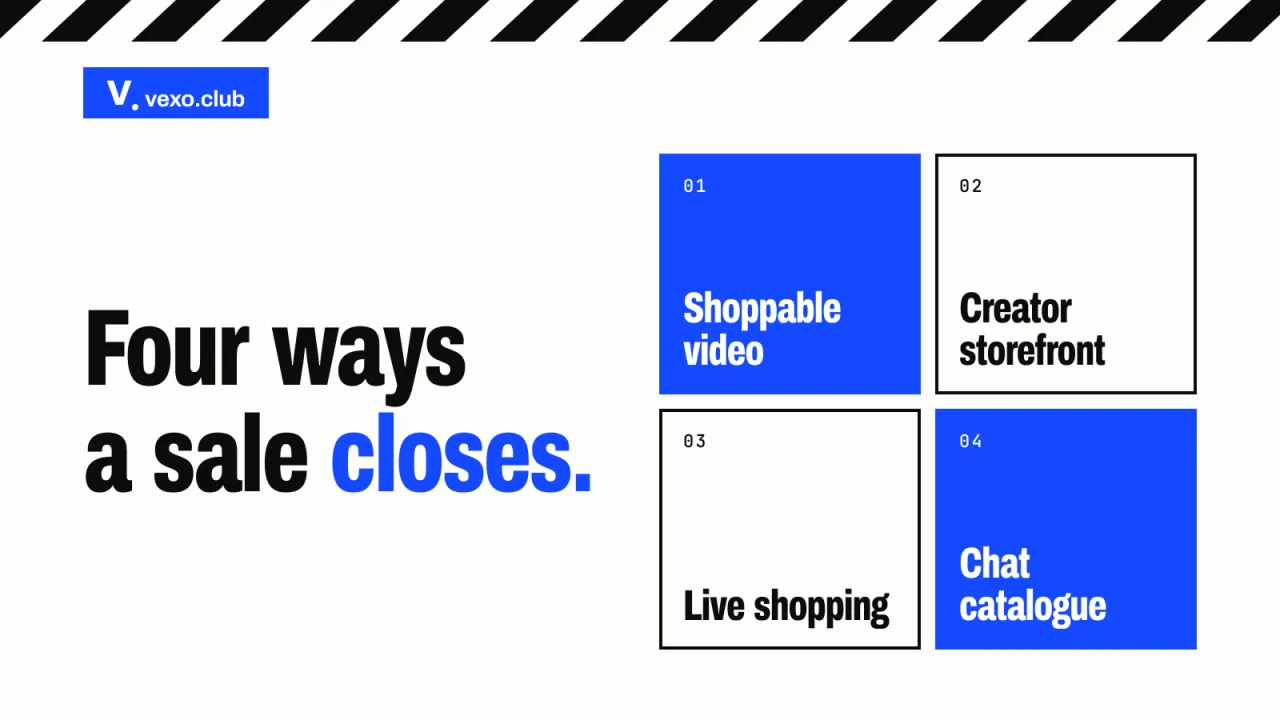
Social commerce is selling through the social platforms where people already watch creators: a viewer sees a product in a video, a post or a live stream and buys it there, or one tap away. In India it mostly runs on four things — shoppable video, creator storefronts, live shopping and chat catalogues — and a brand decides where the sale closes, and how it will be counted, before it briefs a single creator.
This guide comes from vexo.club — an influencer marketing agency run from one desk in Delhi NCR. It describes each model from the platform’s own documentation, links what it cites, and prints no market-size figure, no commission rate and no result, because a number that cannot be traced to a named source does not belong in a brief.
Social commerce for a brand, in short
- The viewer starts with content, not a search, and the sale often closes on a retailer’s page one tap later rather than inside the app.
- Four models cover most of it: shoppable video, creator storefronts, live shopping and chat catalogues.
- Every model that pays a creator a commission is a material connection, and ASCI’s guidelines ask for a label.
- The brand chooses where the sale closes and which report counts it before the brief goes out.
What is social commerce, and how is it different from e-commerce?
Social commerce, also written social e-commerce or social ecommerce, is shopping that begins in content. In ordinary e-commerce the buyer arrives with an intent, through a search or a browse. In social commerce the buyer meets the product while watching a creator and the shop is already in the frame: a product tag under a video, a link on a page, a live session with a cart beside it. The sale may still close on a retailer’s site. YouTube’s help page for its shopping programme says as much: fans can keep watching the video while they check out on the retailer’s site.
What changes for a brand is where the decision happens and who holds the record of it. The creator’s account is the shop window, the platform or retailer is the till, and the brand’s report has to stitch the two together.
From a video to a counted sale
- The viewer watches A video, a post or a live session on the creator’s own account
- The viewer taps A product tag, a storefront link or a link from the stream
- The sale closes On a retailer’s page, a marketplace storefront, a chat or the brand’s own site
- The sale is counted In an affiliate dashboard, a tracked link, a promo code or the brand’s own analytics
- The brand reads one report With returns and cancellations taken back out
What are the social commerce platforms in India?
There is no honest ranking, because the platforms do different jobs, so this guide sorts them by model. The examples are the ones whose own documentation the desk read, and each is a tool a creator joins or a brand works with, not a recommendation. Instagram’s documented tools for brands and creators include the Paid Partnership label and partnership ads, which let a brand run a creator’s post as an ad. Whether an in-app shop is offered to a given Indian account is a platform setting that changes, so this guide does not build on it, and a brief that does should check Meta’s current Help Centre.
Four ways to sell through a creator
| Example, from its own documentation | Where the sale closes | A brand checks first | |
|---|---|---|---|
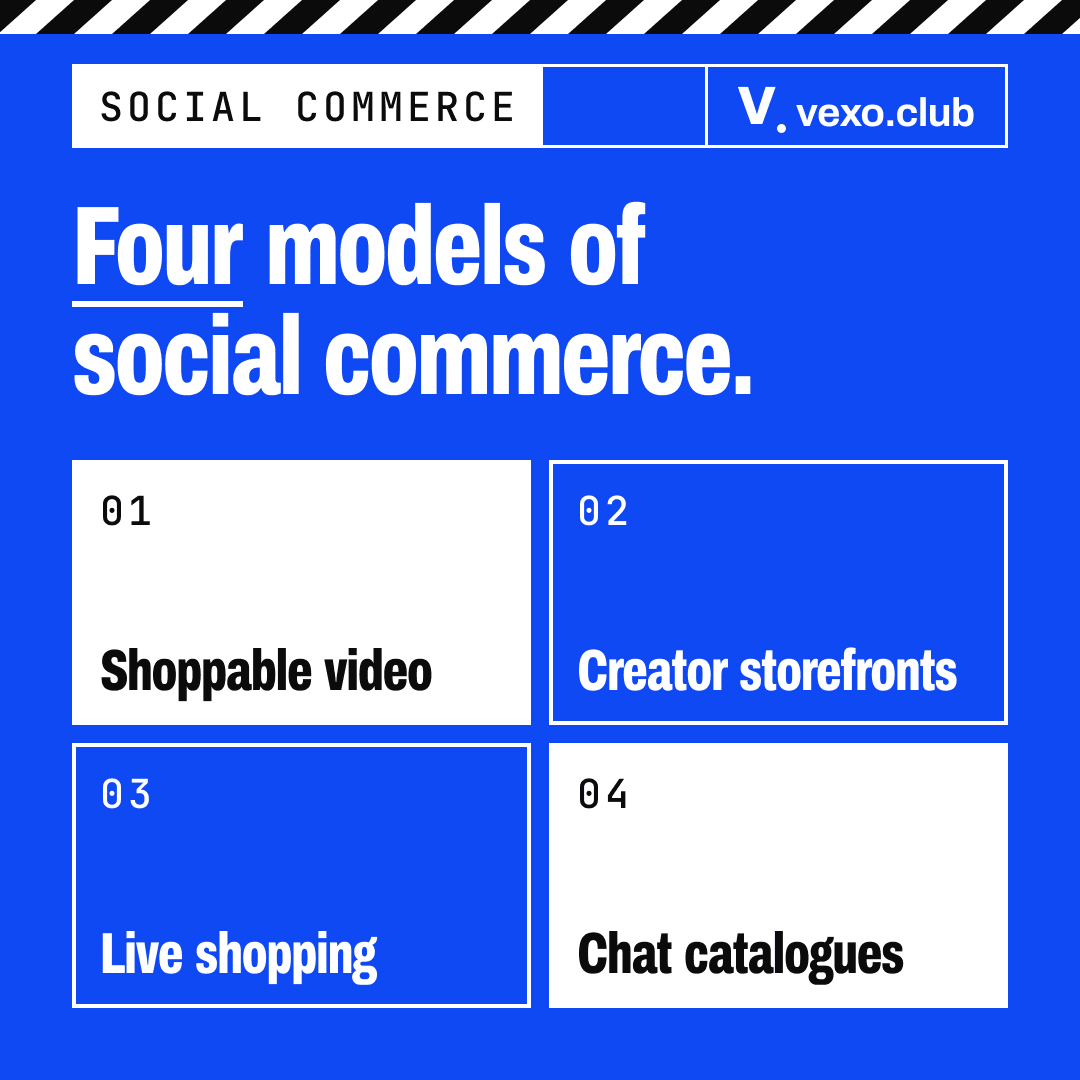
| Shoppable video | YouTube Shopping affiliate program | On the retailer’s site, one tap from the video | Which sellers carry the product, and the commission each sets |
| Creator storefront | Amazon Influencer Program | On the marketplace, from the creator’s own page | That the creator is approved and labels every affiliate link |
| Live shopping | Amazon Live, and live streams on YouTube | In the live session, or on a linked page | The label announced at the start and the end |
| Chat catalogue | WhatsApp Business catalogs | In a chat with the business | Who answers the chat, and how fast |
Shoppable video. YouTube’s Shopping affiliate program overview lists India among the countries where eligible creators can join. A channel must be in the YouTube Partner Program, meet its subscriber threshold, be based in a listed country, not be a music channel, and not be set as made for kids. Each participating brand or retailer sets its own commission rate and attribution window for each product, and commissions are paid through AdSense within 60 to 120 days after purchase, reversed if the customer returns the product.
Creator storefronts. Amazon’s Influencer Program help page describes a presence on Amazon that the creator curates with the products they recommend, under a vanity address of the form amazon.in/shop/handle. The creator is paid in a similar fashion to the Amazon Associates programme when customers shop through the page, and the page says it is important to disclose any affiliate link to the audience. Amazon’s own India announcement says the programme is free to apply for and describes Creator Central, where a creator sees earnings, top products and categories.
Chat catalogues. WhatsApp introduced catalogs in the Business app in 2019, with India in its first list of countries, as WhatsApp’s announcement records; a business adds a price, a description and a product code for each item. The sale then closes in a conversation, which suits a considered purchase and a brand with someone to answer. For the current requirements for India, read WhatsApp’s Business Help Centre.
The four models behind social commerce
What is live commerce, and what changes in a live session?
Live commerce is shopping inside a live broadcast: a creator shows a product, answers questions and points viewers to buy. Amazon describes Amazon Live as a feature where creators showcase products and interact with customers in real time, and a creator can also go live on YouTube. A live session cannot be edited afterwards, and people join late, so two things need settling before the session starts: what may be said about the product, and how the paid mention is labelled.
ASCI’s influencer guidelines apply wherever there is a material connection, and they say the label in a live stream should be announced at the beginning and the end, and added to the caption if the post stays visible after the stream. Its permitted labels include Advertisement, Sponsored, Partnership and Affiliate. The platform’s own paid-partnership tool counts in addition to the creator’s label, not instead of it. ASCI disclosure for brands sets out who labels what.
Running a shoppable or live brief
Do
Announce the label at the start and the end of a live session, and add it to the caption if the replay stays up
Don’t
Rely on the platform’s paid-partnership tag alone
Do
Label a commission link as affiliate
Don’t
Skip the label because the creator would have recommended the product anyway
Do
Give the creator the product facts to say, and have them approved before the session
Don’t
Let claims about the product be improvised on air
Do
Keep an affiliate link on the platform it was issued for
Don’t
Copy a YouTube Shopping link into another platform’s bio
YouTube’s programme terms bar routing outside traffic through its affiliate links.
How is social commerce different from ordinary influencer marketing?
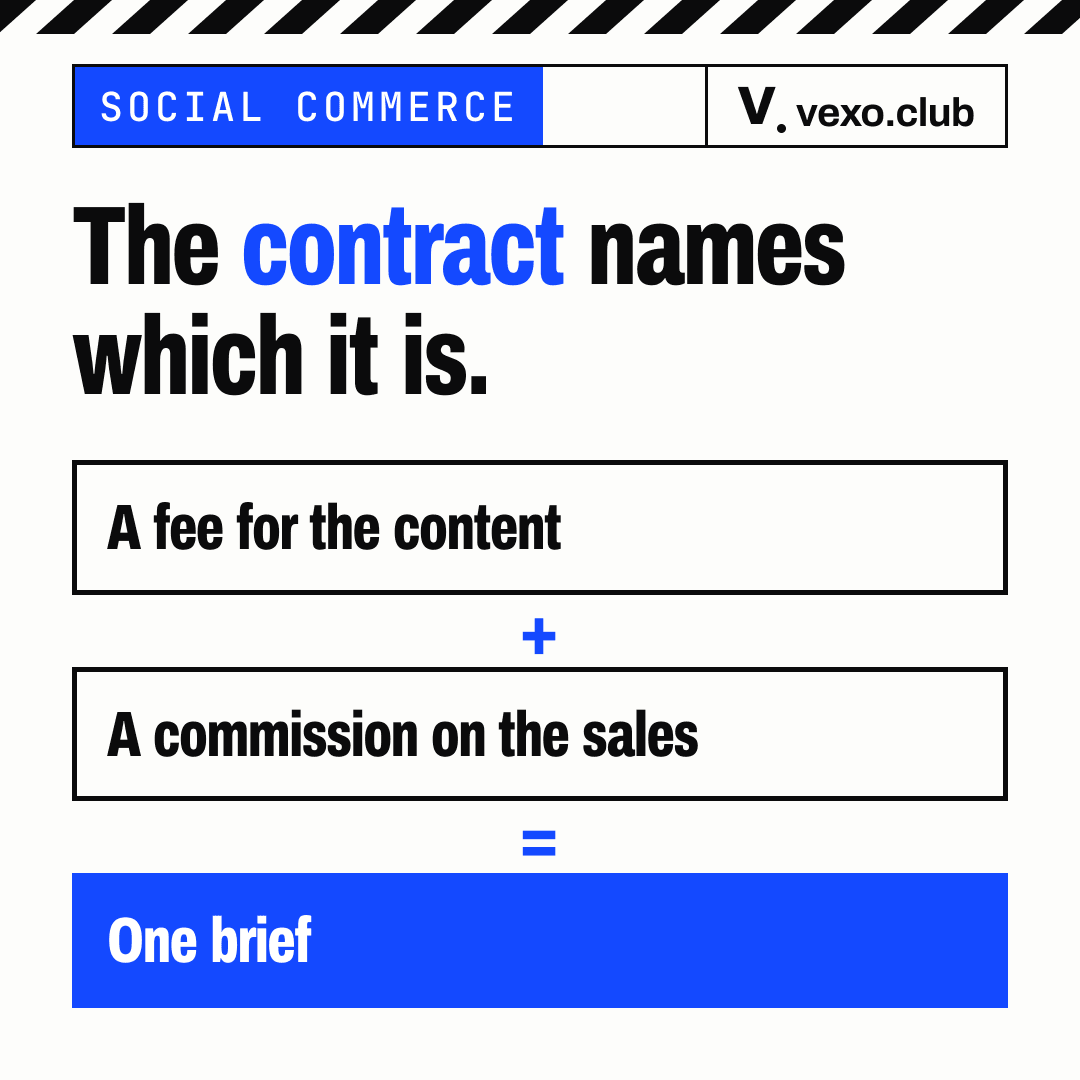
Ordinary influencer marketing buys a creator’s attention for a brief: a post, a video or an integration, paid as a fee. Social commerce adds a point of sale to that post, and often a second way to pay the creator, a commission on what sells. The two can sit in one brief, a fee for the content and a commission on the sales, and the contract names which it is, because a commission-only arrangement changes what a creator will make, how often, and how they label it.
The content is still a post by a creator in their own voice, so the rest of the craft carries over: the brief, the audience check, the label and the usage rights. Briefing a creator so you only need one revision sets out the brief, and what a creator rate card contains sets out the lines a fee is made of. A brand that wants the creator’s clip as its own ad is asking for something more than a post, and that is priced and written as usage, not as a sale.
A fee and a commission in one brief
Is social commerce worth it for a D2C brand?
It is worth a test where the sale can close in one tap and the brand can read the report. It is a poor fit where neither is true. The trade-offs are structural, and they do not need a number to see.
Social commerce for a D2C brand
Advantages
- The product is shown by a creator the audience already follows
- The buyer is one tap from a sale No search step in between.
- Programme dashboards report what sold Affiliate metrics in YouTube Studio; earnings and top products in Amazon’s Creator Central.
Drawbacks
- Commissions arrive after the returns window and reverse on a return
- The customer record may sit with the retailer, not the brand
- Programme rules differ by platform and change over time
- A paid link is a material connection and needs a label
Verdict A fit when the sale closes in one tap and the brand can read the report; a poor fit when it cannot be counted.
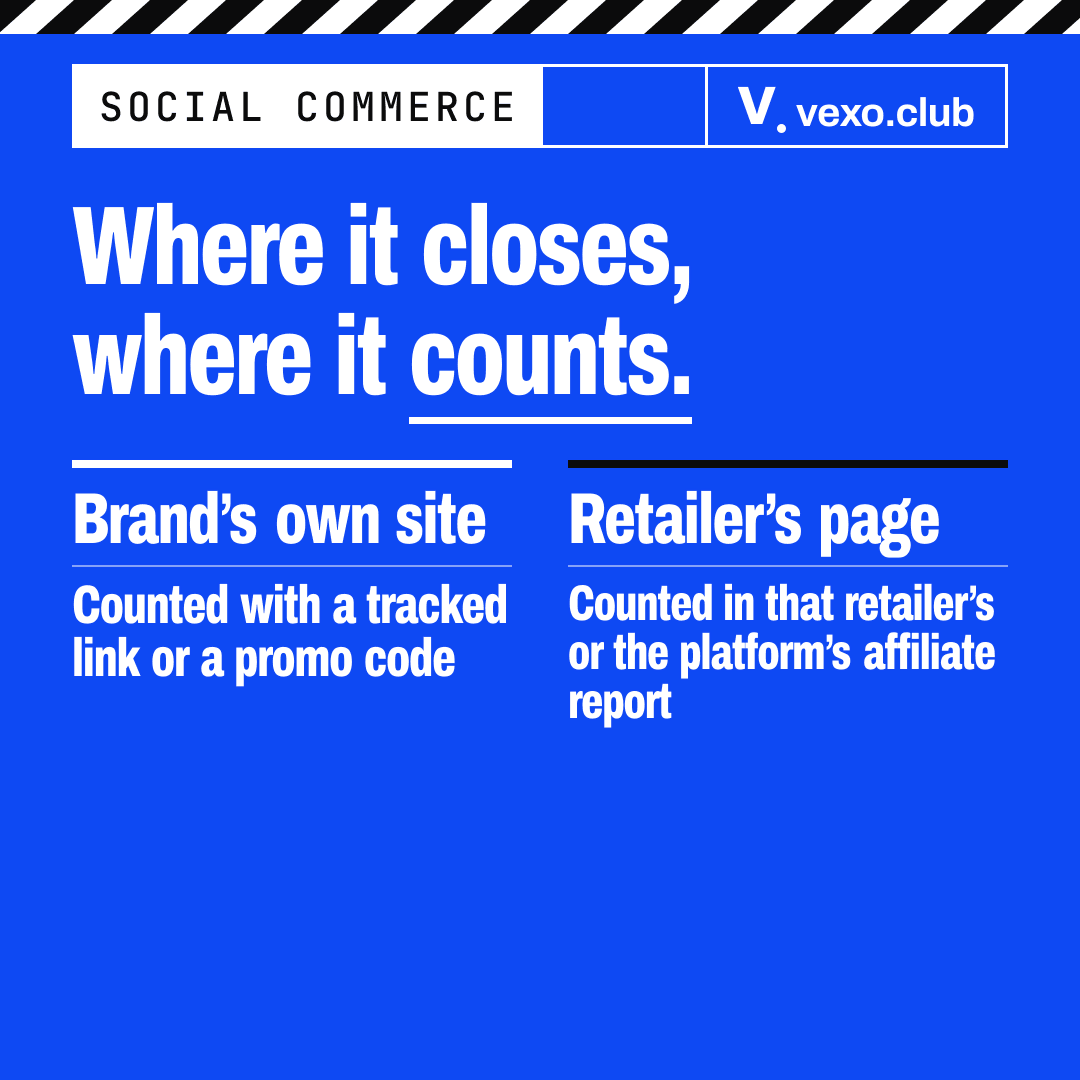
For a direct-to-consumer brand, the practical question is which sales it can see. A sale that closes on the brand’s own site can be counted with a tracked link or a promo code. A sale that closes on a retailer’s page is counted in that retailer’s or the platform’s affiliate report. The influencer marketing for D2C brands page sets out how the desk runs a D2C brief, and the measuring influencer marketing ROI post sets out what codes, links and surveys each can and cannot see.
Which sales a D2C brand can see
What can a brand measure in social commerce?
Each step has a different owner and a different report, and no single report holds all of it. The funnel below lists the steps in order. YouTube’s help page notes that commissions can change after an order is cancelled, refunded or exchanged, so a figure read on the day of the sale is not the figure that is finally paid.
What a brand counts, step by step
- Views of the video or live session The creator’s own analytics
- Taps on the product tag or link The platform’s or the tracked link’s report
- Visits to the product page The retailer’s, the marketplace’s or the brand’s analytics
- Orders The affiliate dashboard, the promo code or the brand’s own orders
- Returns and cancellations Taken back out before anyone calls it a result
Stages in order. The widths are not to scale.
Which creators fit a social commerce brief?
The creator whose audience already buys the category. Product-led categories on the roster are Beauty & Skincare and Fashion & Style, where the roster lists, among others, Rohit Sachdeva and Toshi Singh in beauty and skincare, and Divija Pandey, Nischita Babu and Talented Ritu Insan in fashion and style, each described on their own profile. No roster record says a creator runs a storefront or an affiliate account, so the desk states none, and asks each creator which programmes they have joined before a brief goes out.
What should a brand check before a social commerce brief?
Settle the closing point and the report first, then the creator, then the label. The audience check comes before any rate, and how to check an influencer’s audience before you pay sets out the method. If the brand wants to run the creator’s post as an ad, read usage rights and creator whitelisting explained before the contract.
Before a social commerce brief goes out
- Where the sale closes: a retailer, a marketplace storefront, a chat or the brand’s own site
- Which report counts it, and who can read it
- Whether the creator has joined the programme the brief depends on
- The audience check, from the creator’s own exports
- The label: affiliate or paid partnership, announced where the audience will see it
- The product facts the creator may say, approved in writing
- What happens to a returned order in the report
A social commerce brief for Delhi NCR starts at the Delhi desk page, the page on Instagram influencer marketing and the page on YouTube influencer marketing set out how each platform’s briefs are run, and a brief for anywhere can be sent to the desk.
Questions brands ask
What is social commerce? Shopping that starts in content: a viewer sees a product in a creator’s video, post or live session and buys it there or one tap away. The sale can close on a retailer’s page, a marketplace storefront, a chat or the brand’s own site, and the creator is paid a commission, a fee or both.
Which are the main social commerce platforms in India? There is no honest ranking, because the platforms do different jobs. By model: YouTube’s Shopping affiliate program for shoppable video, Amazon’s Influencer Program and Amazon Live for storefronts and live shopping, and WhatsApp Business catalogs for chat. Instagram’s documented brand tools include the Paid Partnership label and partnership ads.
How big is social commerce in India? This guide quotes no market size. Estimates vary with who publishes them and how they define social commerce, and a figure worth printing would name its source and its date. The desk has not found one it would stand behind, so it prints none.
Does an affiliate link need a label? Yes. A commission is a material connection, and ASCI’s list of permitted labels includes Affiliate. For a live stream, ASCI asks for the label at the beginning and the end. Amazon’s influencer page also says it is important to disclose any affiliate link to the audience.
Does vexo.club run a shop for brands? No. The desk briefs creators, checks the audience and the label, and reports what the platforms and the brand’s own analytics show. The storefront or the affiliate account belongs to the creator, and the sale closes on a retailer’s page, a marketplace or the brand’s own site.
Send the desk a brief — it comes back as a shortlist and a directional band, never a public price.
Brief the desk