UGC vs influencer marketing: what a brand in India is buying
UGC buys content for the brand’s own ads; influencer marketing buys a creator’s post and their audience. What each deal grants, and what to settle first.
Playbooks Updated 13 min read The operators’ desk
In this article10 sections
UGC, or user-generated content, buys the content alone: a creator films to the brand’s brief, and the brand uses the result in its own ads and on its own channels. Influencer marketing buys a creator’s post and their audience together, on the creator’s own handle. The first question for any brief is whose handle the content will run on, and the second is which usage right comes with it.
This guide comes from vexo.club (an influencer marketing company that also makes UGC for brands, run from one desk in Delhi NCR), so it has a stake in the answer and says so first. It explains both routes, links each rule where it quotes it, and prints no rate, market size or result.
UGC and influencer marketing, in short
- Influencer marketing runs on the creator’s own handle, to their followers, so it buys the audience with the content.
- UGC runs on the brand’s handle or in its ads, so the brand supplies the audience and buys the right to use the content.
- The word UGC is used two ways: content customers post unasked, and content a creator is paid to make. A brief usually means the second.
- In UGC the usage right is the deal: where the asset runs, for how long, and with or without media behind it.
- A label follows the handle. A paid post on a creator’s account carries one; a post the brand makes on its own account is the brand’s own advertisement.
What does UGC mean?
UGC is short for user-generated content, and the term is used two ways. The wider one comes from glossaries such as Fluent’s, which defines it as “anything people create and post online on their own (e.g., photos, videos, tweets, and reviews), rather than content made by companies” (read on 20 October 2026). A review, an unboxing or a photo of the product in use, posted unasked, is UGC in that sense.
A brief usually means the narrower one. Elev8or’s glossary, written for brands that buy influencer marketing, defines UGC as “photo and video content created by everyday creators or customers”, says UGC creators “are paid for the content itself, not for their following”, and says UGC is “usually licensed to the brand to run on the brand’s own channels” (read on 20 October 2026). That is the meaning used from here on: content a creator is paid to make, in a first-person style, for the brand to use itself.
What is the difference between UGC and influencer marketing?
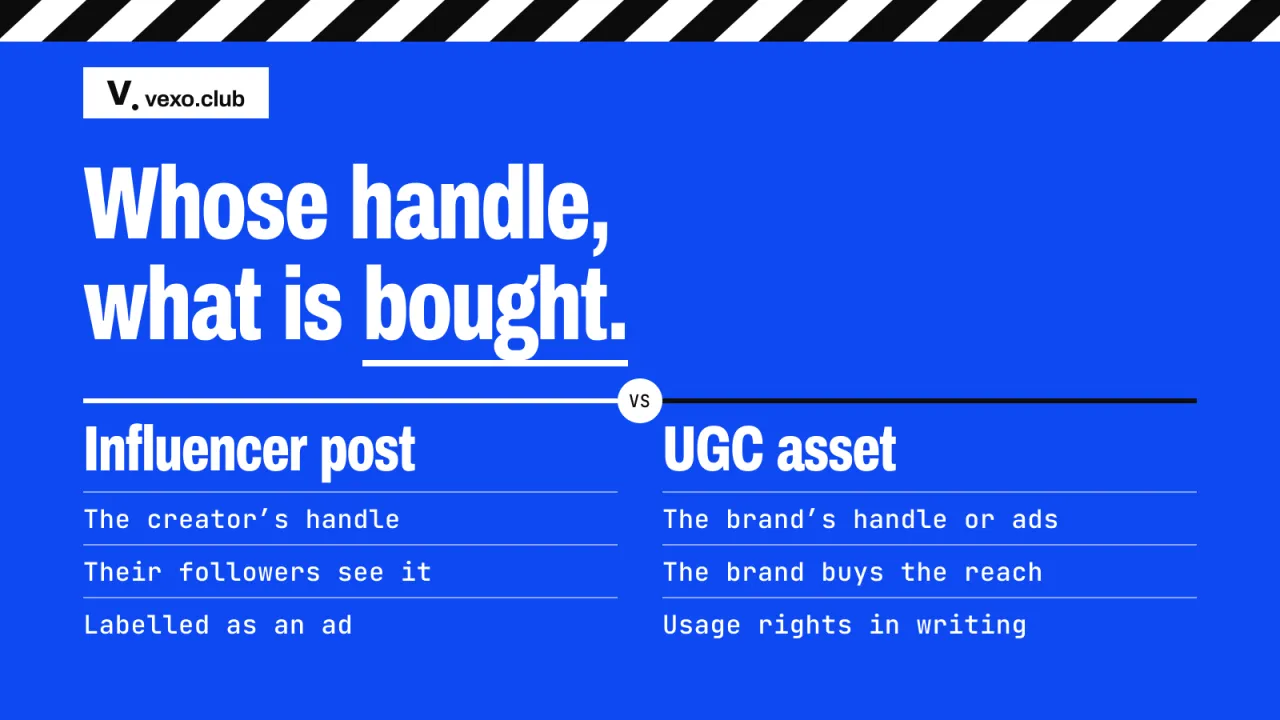
The difference is what the brand buys. An influencer post is bought for the content and the creator’s audience together: the creator’s followers see it, from someone they chose to follow. A UGC asset is bought for the content and the right to use it, and the brand supplies the audience with its own channels and its own media spend. The table sets the two against the questions a contract has to answer.
Influencer marketing and UGC, side by side
| Influencer marketing | UGC | |
|---|---|---|
| What it is | A creator’s paid post to their own followers | Content a creator makes to the brief, for the brand to use |
| Whose handle | The creator’s | The brand’s, or its ad account |
| Who supplies the audience | The creator’s followers | The brand, through its channels and media spend |
| What the contract grants | A post on agreed dates | A right to use the asset: where, how and for how long |
| How it is read | Reach, engagement and what the brand can trace | As ad creative, against the brand’s other creatives |
| Where the label goes | On the post, on the creator’s account | On any paid post the creator also publishes; the brand’s own post is the brand’s advertisement |
| Best for | Trust in a niche, a city or a language | A steady supply of ad creative to test |
Two lines in the table move the money. The first is the handle. Content on the creator’s handle is read by who saw it and what they did next. Content on the brand’s handle or in its ad account is read like any other ad creative, against the brand’s other creatives. The second is the right. An influencer post needs a posting date; a UGC asset needs a written right to run it, and that right can carry a fee of its own. What a creator rate card actually contains separates the content fee from the usage fee.
An influencer post and a UGC asset: two deals

Is influencer marketing the same as UGC?
No, though the same person can do both. A creator can publish a paid post to their followers one week and make an asset for a brand’s ads the next, and the two sit on different contracts. What blurs them is the look: a UGC asset is often made to look like a creator’s own post. It is an influencer post only if it is published on the creator’s own account. Where the creator also posts it, it is a paid post and carries a label. Where only the brand posts it, it is the brand’s advertisement.
What does a brand buy in a UGC deal?
A usage right. The contract for a UGC asset says where the brand may run it, for how long, with or without paid media behind it, and whether the creator may make the same kind of content for a competitor. Each of the four can carry its own fee. Usage rights are where budgets quietly break explains why, and the influencer contract clauses that change the price covers the wording.
The four lines of a UGC usage right
- Where it runs The brand’s handle, its ad account, its product pages
- For how long A window with a start and an end
- With media or without Posting an asset and paying to show it are different rights
- Exclusivity Whether the creator may make the same kind of content for a competitor, and for how long
The window matters most. When it closes, the asset comes down or the right is renewed in writing; an asset left running after the window is a use the contract does not cover.
The four lines of a UGC usage right

Can a brand run a creator’s own post as an ad?
Yes, if the creator agrees, and the platforms have tools for it. That is whitelisting, a separate right from UGC, and whitelisting, explained for brand teams sets out the contract side. Instagram’s page for creators says that “Reels, stories, static posts, and carousels can all be run as partnership ads”, and that “content that includes licensed music cannot be run as a partnership ad” (read on 20 October 2026).
On YouTube the creator shares brand partner access to a video, which lets the brand feature it in ad campaigns. YouTube Help says the creator can remove that access at any time, that the video may still be promoted in other ad contexts, and that “creators are advised to discuss video usage rights with advertisers and obtain all required agreements independently” (read on 20 October 2026). A platform setting grants access. The window, the fee and the exclusivity belong in the contract.
What do the rules say about labels?
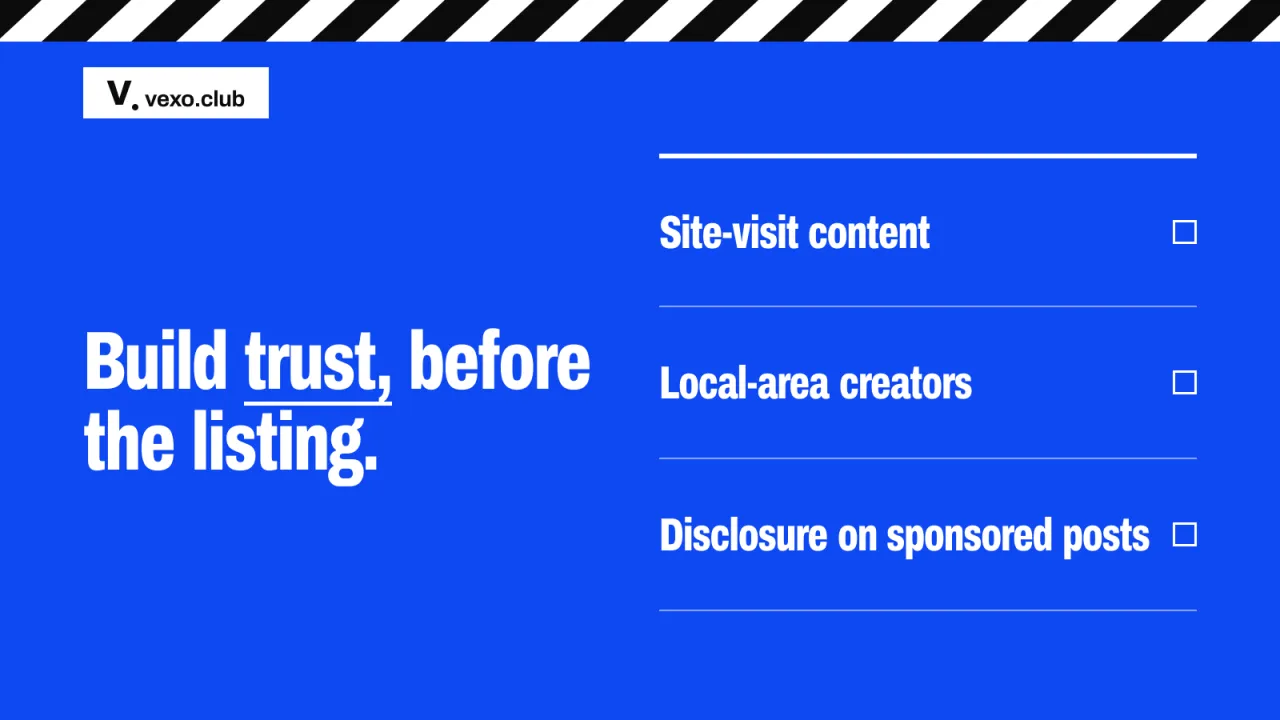
A label follows the handle. ASCI’s influencer guidelines, printed on its Code and guidelines page (read on 20 October 2026), define an influencer as someone who “has access to an audience and the power to affect their audiences’ purchasing decisions or opinions”, and a material connection as “any connection between an advertiser and influencer that may affect the weight or credibility of the representation made by the influencer”. They say that “all advertisements published by social media influencers or their representatives, on such influencers’ accounts must carry a disclosure label that clearly identifies it as an advertisement”, and permit Advertisement, Ad, Sponsored, Collaboration, Partnership, Employee, Free gift and Affiliate among the labels. A paid influencer post carries one.
A UGC asset that only the brand posts is a different case. It runs on the brand’s own account, so it is the brand’s own advertisement and the claims in it are the brand’s to stand behind. The same page records the ASCI Code’s rule: “Advertisements shall neither distort facts nor mislead the consumer by means of implications or omissions” (Chapter I (4)). That matters most when a paid creator speaks as a customer. The person should have used the product, and the claim should be one the brand can prove; the guidelines advise influencers “to review and satisfy themselves that the advertiser is in a position to substantiate the claims made in the advertisement”.
True customer content sits on the other side of the line. The guidelines say that where there is no material connection and a person is telling people about a product they bought and happen to like, that “is not considered to be an advertisement and no disclosure is required on such posts”. A reward changes it: ASCI’s list of material connections includes “discounts, gifts, contest and sweepstakes entries”. This is a reading of ASCI’s page as published on 20 October 2026, not legal advice; have a lawyer read the contract and the script before a claim in a regulated category goes out. ASCI disclosure for brands sets out who labels what, and who checks it before the post goes live.
Four questions to settle before a UGC or influencer brief

When does each one fit?
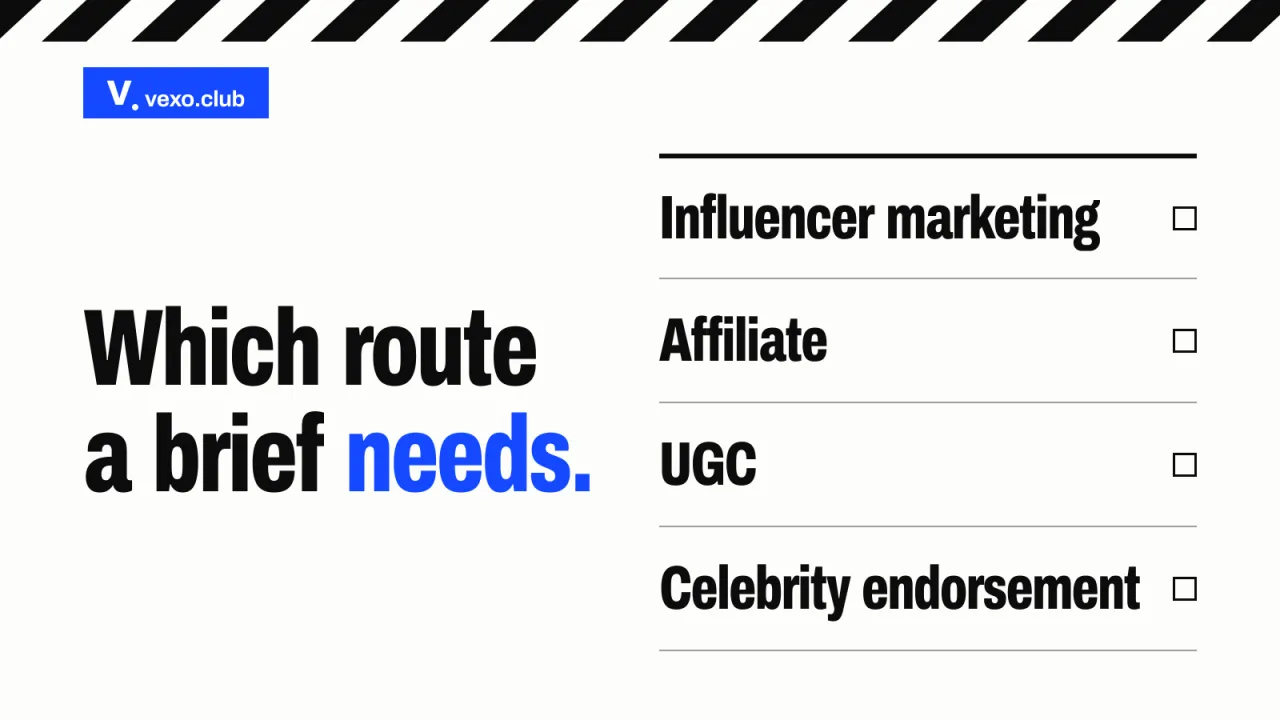
Start from what the brief has to move, not from the route. The grid is a starting point for a first call; most briefs land on one row and borrow from a second.
Which route a brief points to
| Route | Why | Check first | |
|---|---|---|---|
| Feed ads with many creative versions | UGC | The brand supplies the audience; the asset is the deal | Where it runs, in which formats and for how long |
| Introduce a product to a niche, a city or a language | Influencer marketing | Trust from an audience that chose the creator | The audience, from the creator’s own exports |
| Give a product page a human voice | UGC | The asset is made for the brand’s own pages | That the contract names the product page as a placement |
| Give a creator post that works more reach | Influencer marketing plus whitelisting | The post earns trust; the ad account adds reach | The window, and whose ad account |
| Launch with both | Both, in one contract | A post for the creator’s audience, an asset for the brand’s ads | That each deliverable is named as a post or an asset |
Before any creator is chosen for an influencer post, read their audience from their own exports; how to check an influencer’s audience before you pay sets out the method. For a UGC asset the audience is the brand’s own, so the check that matters is the contract.
How is each one read?
A post and an asset answer different questions, so each is read against a different record, chosen before launch. An influencer post is read by reach, engagement rate and whatever the brand can trace: a code, a tracked link, a lift in its own orders. What we count when we count reach explains the first. A UGC asset is read as ad creative: cost per acquisition and CPM in the brand’s own ad account, beside the brand’s other creatives. Measuring influencer marketing ROI without inventing it sets out how to choose the method.
Where vexo.club fits
vexo.club runs both. For influencer campaigns it shortlists creators in 18 hours, writes the usage rights into every contract and puts a label ASCI permits on every paid post. For UGC, creators film videos and photos to the brand’s brief and the brand uses them in its own ads. The shortlist comes back in 18 hours with rate cards, contracts and briefing are done inside a week, and the usage rights, the window and the label are in the contract before anyone films.
The desk publishes no standard menu of formats, no price list and no turnaround for the content itself: a brief sets them. How a UGC brief runs here is set out on its own page. To brief the desk, send a brief with the product, the objective, where the content will run, a budget band and the dates, or write to mail@vexo.club.
Questions brands ask
What is the difference between UGC and influencer marketing? Influencer marketing buys a creator’s post and their audience together, on the creator’s own handle. UGC buys content made to the brand’s brief, for the brand to use in its own ads and on its own channels, so the brand supplies the audience and the usage right is the deal.
Is influencer marketing the same as UGC? No. The same creator can do both, but they are different deals. An influencer post runs on the creator’s account, to their followers. A UGC asset runs on the brand’s account or in its ads. A paid post on the creator’s account carries a label that identifies it as an advertisement.
What is UGC marketing? Marketing that uses content made by people outside the brand. In the wide sense that is anything customers post on their own. In a brief it usually means videos and photos a creator is paid to make, which the brand uses in its own ads under a written usage right.
Does UGC need an ASCI label? It depends on whose handle it runs on. A paid post on a creator’s own account must carry a label that identifies it as an advertisement, under ASCI’s influencer guidelines. A UGC asset that only the brand posts is the brand’s own advertisement, held to the ASCI Code like any other. A customer’s unpaid post with no material connection is not an advertisement.
Can a brand run a creator’s post as an ad? Yes, with the creator’s agreement. On Instagram it can run as a partnership ad, which licensed music rules out. On YouTube the creator shares brand partner access to the video and can remove it at any time. The window, the fee and the exclusivity belong in the contract.
What should a UGC contract say? Where the asset may run, for how long, with or without paid media, and whether the creator may make the same kind of content for a competitor. It should also say who approves the claim before anything runs, and which label a paid post on the creator’s own account carries. This is general information, not legal advice.
Does vexo.club make UGC? Yes. Creators film videos and photos to the brand’s brief, the brand uses them in its own ads, and the usage rights are written into the contract before the shoot. Prices, formats and a turnaround for the content are not published; a brief sets them. The page for it is UGC agency in India.
Sources
- Fluent’s (opens in a new tab) fluentco.com
- Elev8or’s glossary (opens in a new tab) elev8or.io
- Instagram’s page for creators (opens in a new tab) creators.instagram.com
- YouTube Help (opens in a new tab) support.google.com
- Code and guidelines page (opens in a new tab) ascionline.in
Cite this page
UGC vs influencer marketing: what a brand in India is buying. vexo.club, published 20 Oct 2026, updated 28 Oct 2026. https://vexo.club/blog/ugc-vs-influencer-marketing-india
Send the desk a brief: it comes back as a shortlist and a directional band, never a public price.
Brief the desk