LinkedIn influencer marketing for B2B brands in India: a strategy playbook
LinkedIn influencer marketing runs on a slower clock than Instagram or YouTube. How a B2B brand uses founder posts, carousels and employee advocacy, and how to brief a LinkedIn creator differently from a consumer one.
Playbooks 10 min read The vexo.club desk
In this article7 sections
LinkedIn influencer marketing in India is a different craft from booking a reel or a YouTube review, because the post is read by people weighing a slow decision rather than making a quick one. This playbook is written from vexo.club, an influencer marketing agency run from one desk in Delhi NCR, for a brand deciding how to use LinkedIn creators, thought-leaders and its own employees as part of a B2B marketing plan. It names no creators; who they are is covered on its own page, LinkedIn influencers in India. This one covers the strategy: how LinkedIn differs from Instagram and YouTube for a B2B brand, the formats that carry a post, the stages of a long sale a creator has to support, employee advocacy as a separate lever from a paid creator brief, and how a brief to a LinkedIn creator reads differently from a brief to a consumer one. That is the whole difference this playbook works through: B2B creator marketing in India runs on a longer clock than a consumer feed, and LinkedIn is where that clock is most visible.
A B2B creator campaign on LinkedIn does not close a sale in one post. It earns a place in a conversation several people are already having (a buyer, a user, an approver), and the report afterwards asks what the post changed in that conversation, not how many people liked it.
What to know about a B2B LinkedIn creator strategy
In short
- A LinkedIn post serves a slow, shared decision, so it earns familiarity rather than a direct sale.
- Founder-led posts work because the audience reads for who said it, not only what was said.
- Employee advocacy is a separate programme from a paid creator brief: it asks for a fact, not a script.
- The brief names the buyer’s role and decision first, and the creator’s own voice carries the rest.
How does LinkedIn influencer marketing differ from Instagram or YouTube?
The difference is who is being persuaded and how long it takes. A consumer post on Instagram or YouTube aims at one person with a short decision in front of them: add to cart, book a table, try the app. A LinkedIn post aims at a group around a slower decision: a software buyer who reads the post in March might not sign until later in the year, after a colleague forwards it and a second approver asks for a reference. The post’s job is to be remembered correctly when that moment comes, not to close anything itself. That changes who should carry it. On Instagram and YouTube the audience follows the creator first and tolerates the brand. On LinkedIn a B2B audience will read a founder, a specialist or the brand’s own employee ahead of an outside creator with a bigger following, because the post is judged on whether the person has stood in the buyer’s position, not on production value.
LinkedIn against Instagram and YouTube for a B2B brand
| YouTube | |||
|---|---|---|---|
| Typical length of the decision | Long, several people involved | Short, one person decides | Mixed, depends on the product |
| Who the post is best spoken by | A founder, specialist or employee | A creator the audience already follows | A reviewer or demonstrator |
| What the post is judged on | Whether the claim holds up at work | Whether the feed looks native | Whether the video is watched to the end |
| Format that tends to work | Carousels and text posts | Reels and stories | Long-form review or demo video |
| Best for | A considered, multi-person sale | A fast, single-buyer purchase | A product that needs to be shown working |
What content formats work for a B2B brief on LinkedIn?
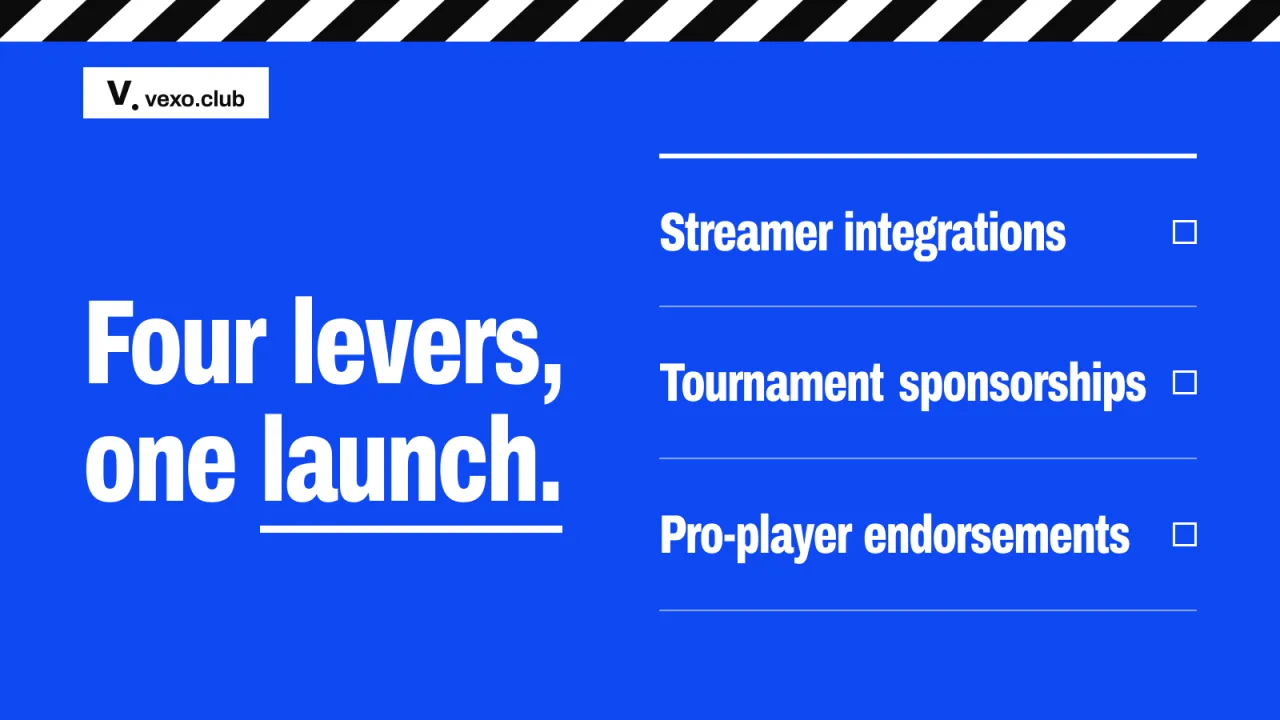
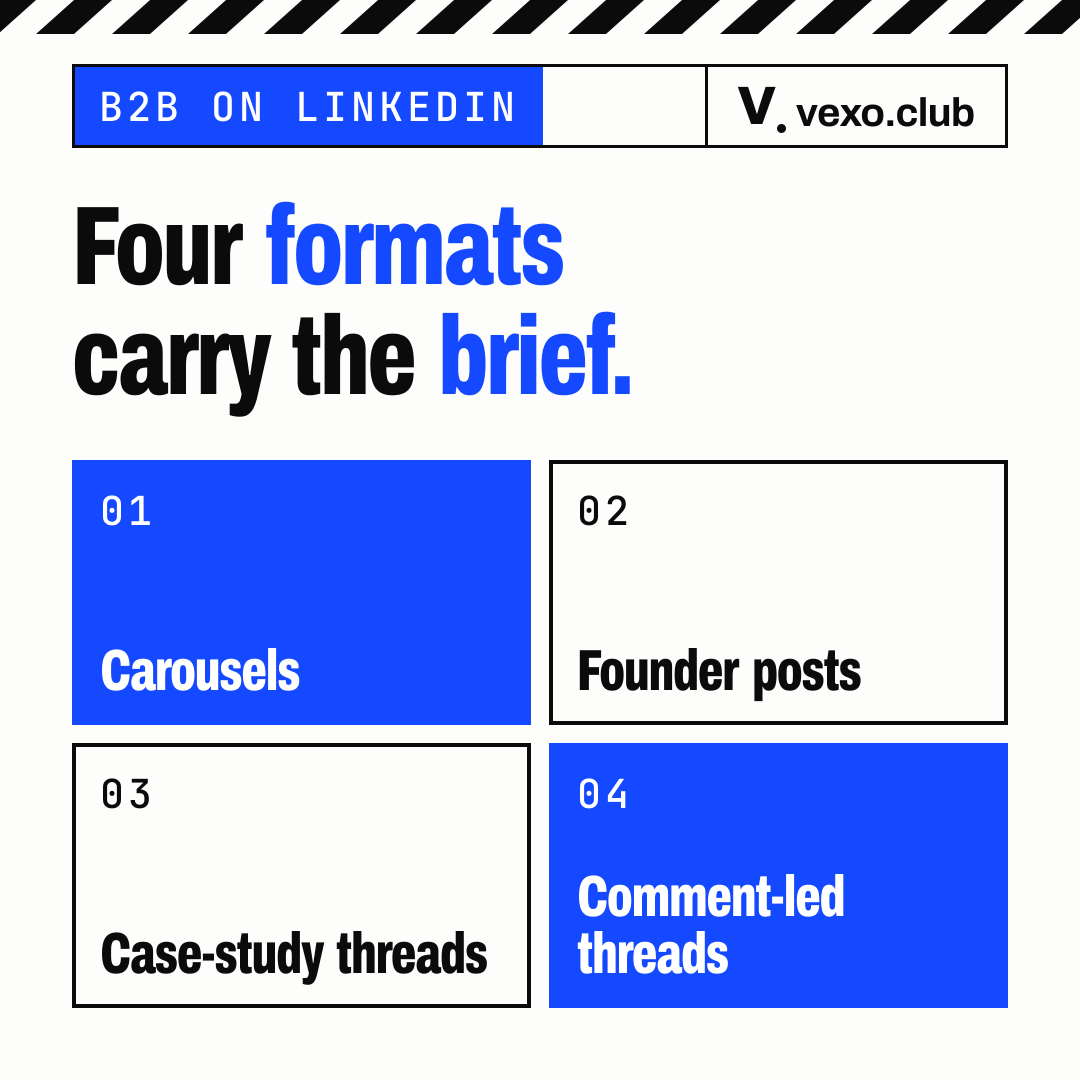
Four formats carry most of a B2B LinkedIn brief.
- Carousels. A short slide-by-slide document that walks through one idea the buyer already has a question about: a comparison, a framework, a decision checklist. The feed shows the first slide as a stopping point, so that slide is written to be true and useful on its own, not a teaser for the rest.
- Founder posts. The founder or a named specialist writes in their own voice about a problem they have actually solved, and the brand supplies the fact rather than the sentence. The post reads as a point of view rather than an announcement, and a sales team can forward it the way it would forward a reference.
- Case-study threads. A short series, or one longer post, that tells a real before-and-after as a story (the problem, what was tried, what changed) rather than a slide of numbers the brand cannot verify. A number that cannot be sourced is left out rather than rounded to sound exact.
- Comment-led threads. A post that asks a real question of the creator’s own field and lets practitioners answer underneath, with the brand named once, in context, rather than carrying the whole post. The format works because the audience is reading other practitioners, not the brand.
The content formats that carry a LinkedIn B2B brief
How does a long sales cycle change what the post has to do?
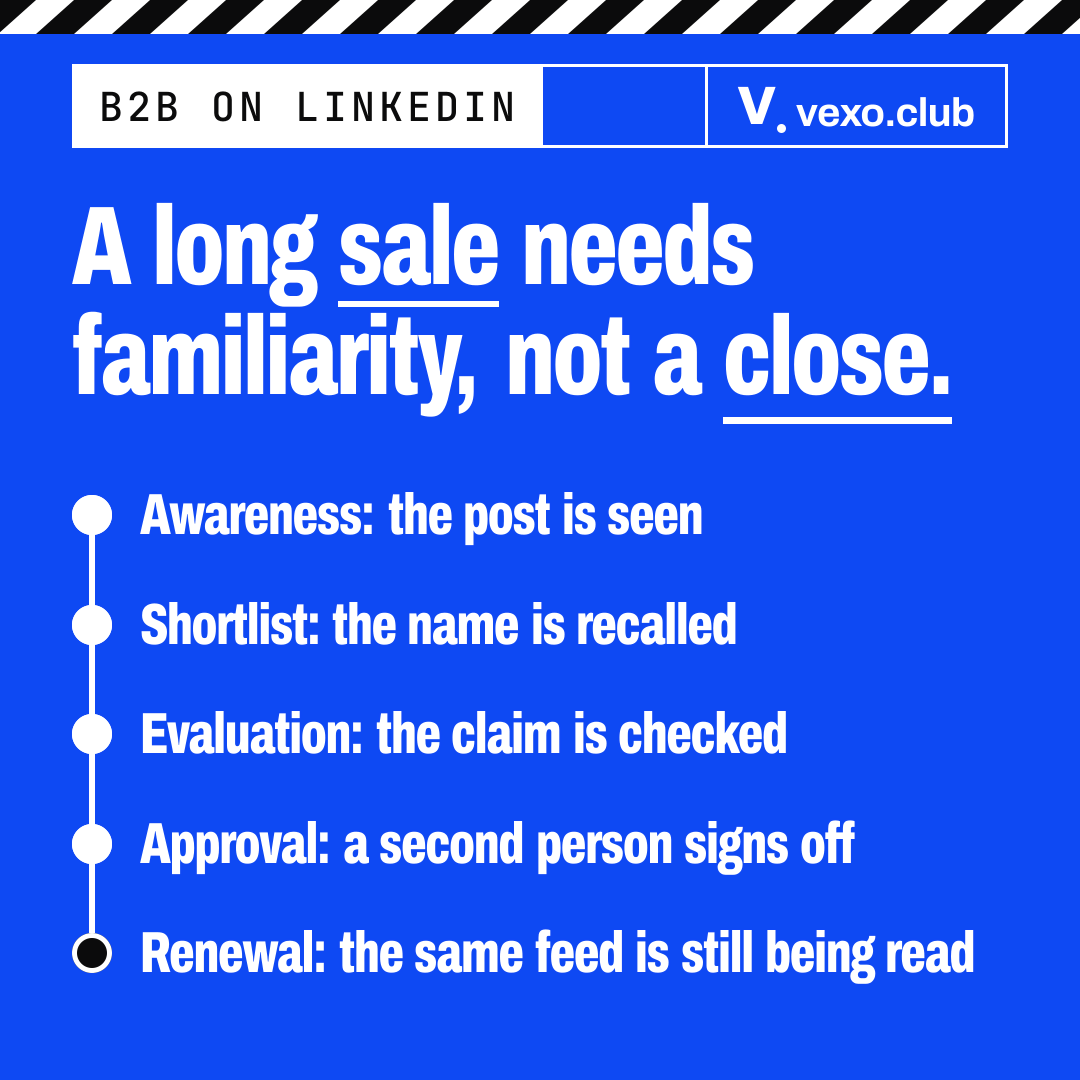
A consumer impulse buy happens in the time it takes to watch one reel. A B2B purchase moves through several people over weeks or months, and a LinkedIn post only has to do its job at the stage it reaches the reader: it does not have to carry the whole decision on its own. Early in the cycle a post has to be remembered. Later in the cycle it has to be checked and found accurate. By the time of renewal, the same account team is probably still reading the same feed. A campaign planned around one post and one deadline misses most of that arc.
The B2B buyer’s long sale, in five stages
What is employee advocacy, and how does it differ from a paid creator brief?
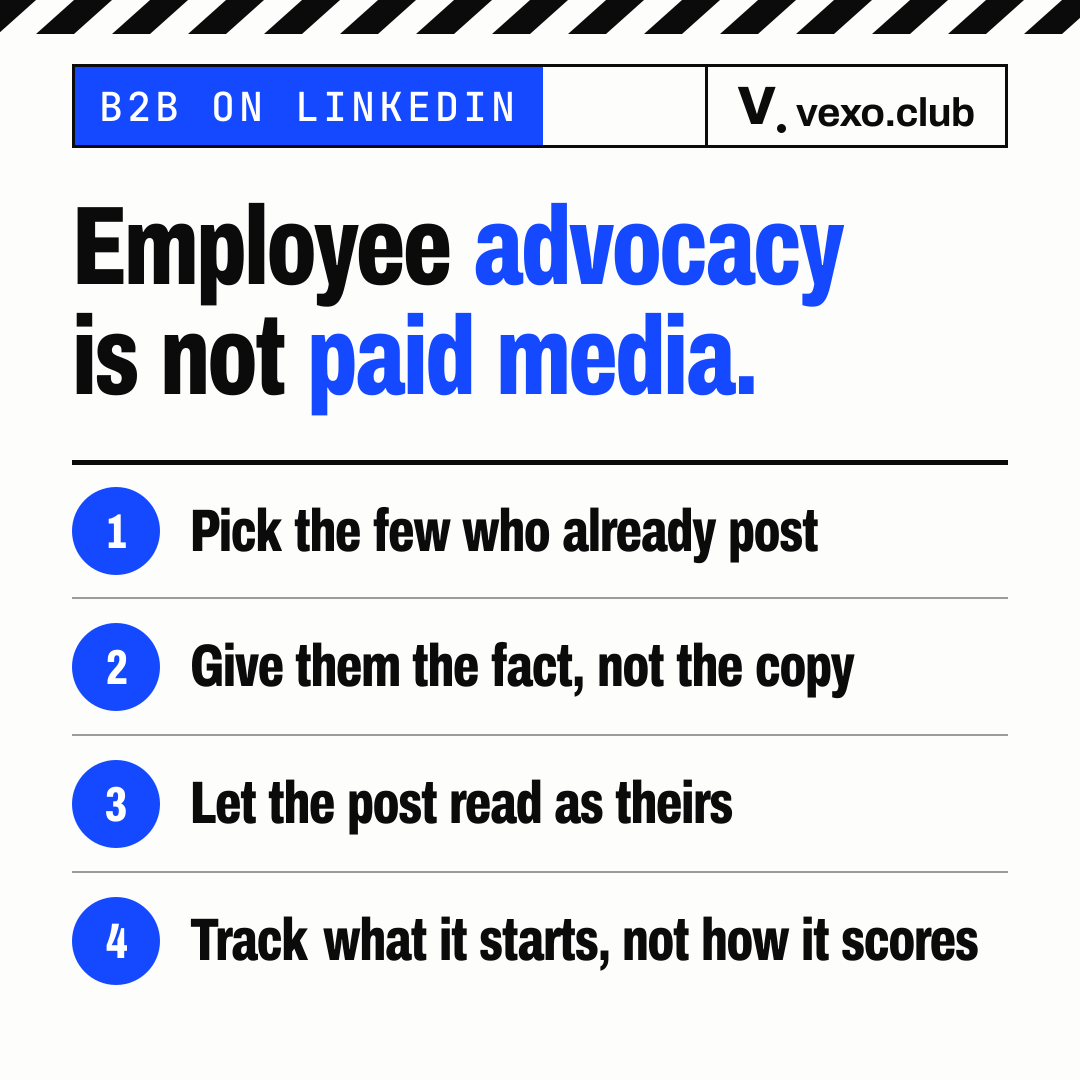
Employee advocacy is not a cheaper version of influencer marketing: it is a different programme with a different unit. A paid creator brief buys a stranger’s reach. Employee advocacy asks people who already work at the company, and already post sometimes, to say something true about their own work in their own words. No fee changes hands for a colleague’s post, so the brief looks nothing like a creator contract: there is no rate and no usage window. A label still applies, though: ASCI’s influencer guidelines count an employment relationship as a material connection and accept Employee as a disclosure label, so an employee post that promotes the company’s product or service should carry one. What the programme asks for instead is a fact worth repeating and the freedom to post it without a script. A founder post sits at the edge of the same idea: it is read as an employee’s post with more weight behind it, not as a creator’s.
What an employee-advocacy programme actually asks for
How do you brief a LinkedIn creator differently from a consumer creator?
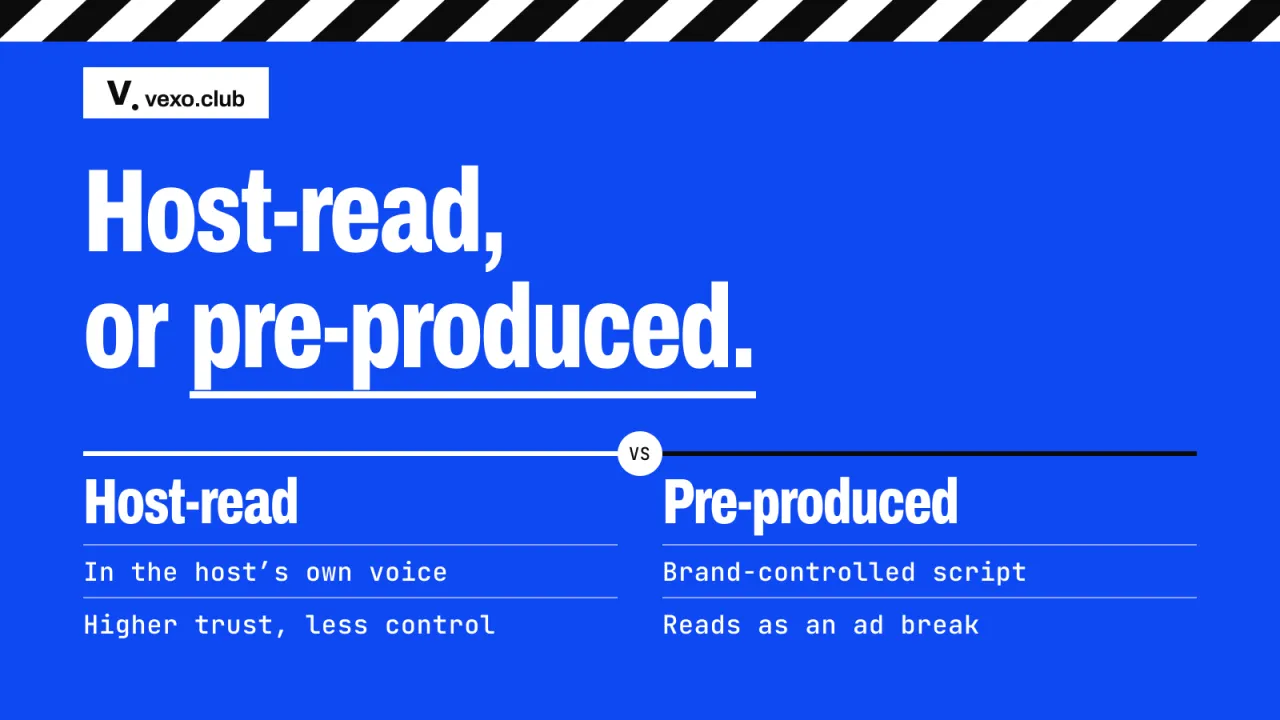
A consumer brief names the product, the hook and the call to action, and most of the work is in the script. A LinkedIn brief does the opposite: it names the buyer’s role and the decision they are weighing, hands over the fact and its source, and leaves the words to the creator, because a post that reads like copy loses the credibility the audience came for. The brand still owns the claim (what can and cannot be said about the product is agreed before the post, the way it would be for any creator), but it does not own the sentence.
How a LinkedIn creator brief differs from a consumer one
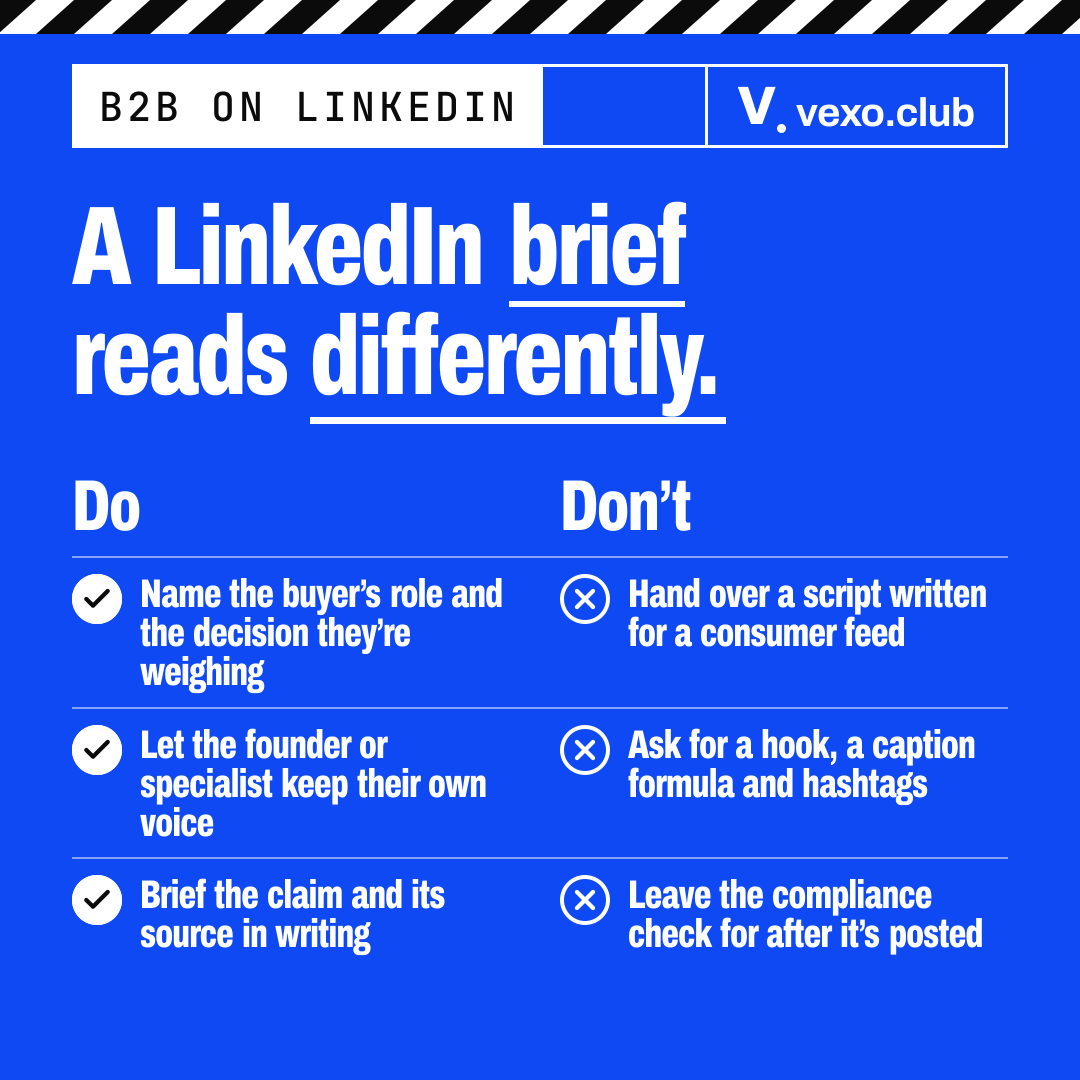
A paid LinkedIn post still needs a disclosure in the opening lines rather than behind “see more”, and LinkedIn’s own brand-partnership tag alongside it: the same rule that applies to any paid post on the platform, set out in ASCI disclosure for brands. The steps below are what the desk runs the brief through once the voice is chosen.
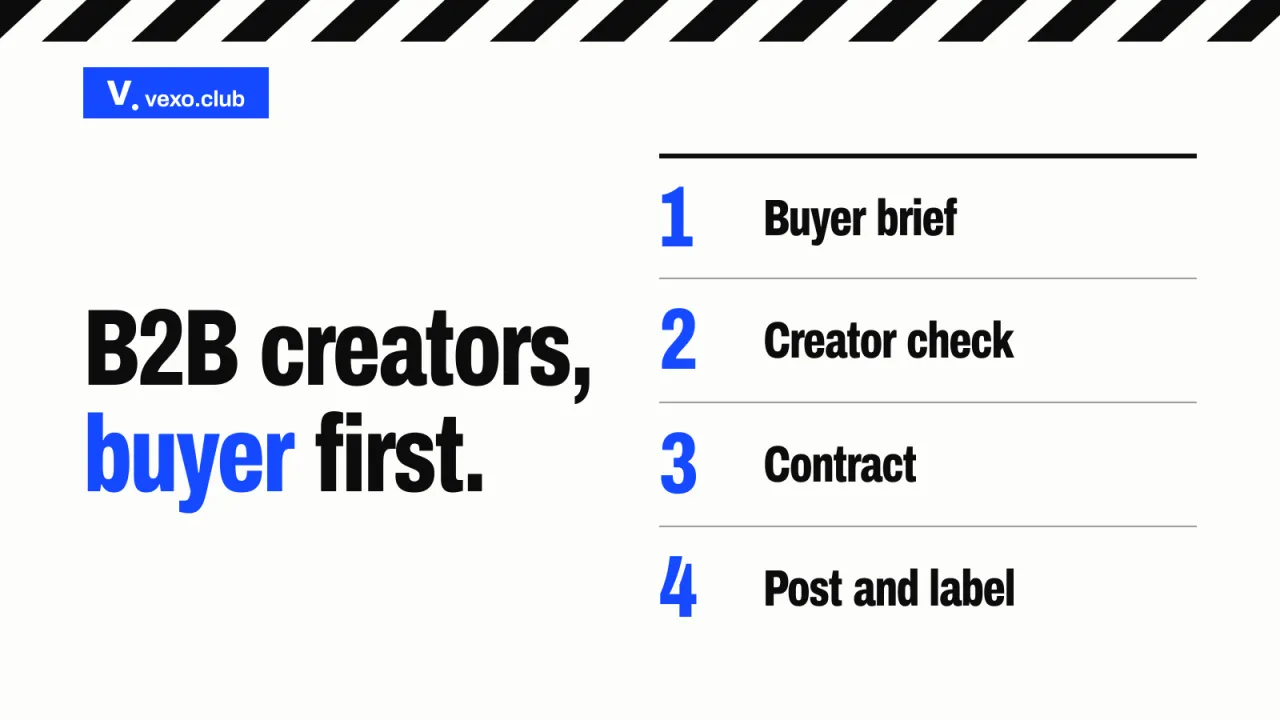
How a B2B LinkedIn creator brief runs
- Buyer named The role, the decision, and what they should take away
- Voice chosen Founder, employee or outside specialist, picked for credibility to that buyer
- Fact briefed The claim and its source, written down, not described on a call
- Format set Carousel, founder post, case-study thread or comment-led thread
- Read against the buyer The report asks what the post changed in the conversation
What should a B2B brand check before the brief goes out?
Most of what goes wrong in a B2B LinkedIn brief happens before the first draft, in what the brief failed to name.
Before a B2B LinkedIn brief goes out
- The buyer’s role and decision are named, not just the product
- The voice is chosen for credibility to that buyer, not for reach
- The claim and its source are briefed in writing
- The disclosure sits in the opening lines, not behind “see more”
- The report asks what changed in the sales conversation
The shape of the brief itself, line by line, is in how to brief an influencer marketing agency; usage rights for reusing a post in an ad or a deck are in usage rights; and the named creators this playbook does not repeat are on LinkedIn influencers in India. To brief a LinkedIn creator, or to set up an employee-advocacy programme alongside one, send the desk a brief.
Questions brands ask
Is LinkedIn influencer marketing worth it for a B2B brand in India? It fits a brand with a considered sale and more than one person in the decision, because the audience is reading for work rather than entertainment. A fast, single-buyer consumer purchase is usually better served by Instagram or YouTube.
What is the difference between a LinkedIn creator brief and an Instagram brief? An Instagram brief carries the hook and the script. A LinkedIn brief carries the buyer’s role and the fact, and leaves the words to the creator. The two are written for different people reading at different speeds.
Is employee advocacy a form of influencer marketing? Not in the paid sense. No creator fee changes hands, but a disclosure still applies: ASCI’s influencer guidelines count an employment relationship as a material connection and accept Employee as a label, so an employee post that promotes the company’s product or service should say so. It runs alongside a paid LinkedIn creator programme rather than replacing it.
Do LinkedIn posts need the same disclosure label as Instagram? Yes. ASCI’s guidelines apply to a paid post on any platform, and LinkedIn has its own brand-partnership tag as well; both belong in the opening lines of the post, not behind a “see more” fold. See ASCI disclosure for brands.
How is LinkedIn influencer marketing in India different from the consumer kind? The audience is reading for work, the decision is slower and shared, and the voice that is trusted is often the founder or the employee rather than an outside creator with a bigger following. The strategy in this playbook is built around that difference; the creators themselves are covered in LinkedIn influencers in India.
Cite this page
LinkedIn influencer marketing for B2B brands in India: a strategy playbook. vexo.club, published 31 Oct 2026. https://vexo.club/blog/linkedin-influencer-marketing-b2b-brands-india
Send the desk a brief: it comes back as a shortlist and a directional band, never a public price.
Brief the desk