B2B SaaS influencer marketing in India: the channels beyond LinkedIn
Beyond LinkedIn, software brands that sell to businesses reach buyers through YouTube reviewers, newsletters, podcasts, X builders, private communities, developer-relations creators and their founders. Which to pick, how a long sales cycle changes the brief, and how to measure a late sale.
Playbooks 19 min read The vexo.club desk
In this article13 sections
If you sell software to businesses in India, the channels that work beyond LinkedIn are the ones where your buyer checks a claim alone and trusts the person making it: a YouTube reviewer who shows the product working, a newsletter or podcast that one job title already reads, a founder posting under their own name, and the communities and builder circles where people compare tools in private. Pick them by where your buyer verifies you before a demo call, not by follower count. Then change two things a consumer brief takes for granted. The brief aims at a buyer role and a stage of the sale instead of a click, and the report is read over a window as long as your sales cycle.
This is the wider playbook. LinkedIn has its own page, LinkedIn influencer marketing for B2B brands in India, and this one does not repeat it. The rules quoted below were read at the source in October 2026: ASCI’s influencer guidelines, the YouTube and X help pages, and the government’s DPDP announcement. It prints no rate and no conversion benchmark. The ones that circulate are mostly US dollar figures from vendor blogs, and none of them is an Indian record this site can trace.
Business-software creator marketing beyond LinkedIn, in short
- Start with where your buyer researches alone, not where the audience is largest.
- A review video is found by people searching for it long after it posts. A post on X is read for a day or two. Pay for the shelf life that matches the job.
- Newsletters and podcasts sell trust in a narrow audience, so ask who reads, not how many. Private communities cannot be bought into at all.
- A long sale means the brief names a buyer role and a stage, and the report runs as long as the cycle.
- Ask every lead how they heard about you, in their own words. It catches what a tracked link cannot.
Does influencer marketing work for business software at all?
Sometimes, and mostly when three things are already true. You know which job title signs off the purchase. That person reads, watches or listens to something specific. And someone on your side can reply to a lead within a day. If any of the three is missing, a creator will not fix it. A creator sends attention, and qualifying that attention is your job.
The answer is plainly no in a few cases. A product sold through tenders is better served by events, partners and outreach to named accounts. A product with no trial, no sandbox and nothing useful to hand a stranger gives a creator nothing to point at.
Where does your buyer live, in India or abroad?
Settle geography before channels, because a good channel pointed at the wrong country is a wasted fee. Much of Indian SaaS sells abroad. NASSCOM’s 2020 SaaS report, as Business Standard reported it, found that most revenue of Indian SaaS vendors came from overseas sales. It is a 2020 finding, so check a newer NASSCOM edition before leaning on it. SaaSBoomi, the Indian founder community, describes its own purpose as helping founders win in global markets.
If your buyer is an operations manager in the United States, an Indian tech YouTuber with an Indian audience reaches the wrong market however good the video is. You want practitioners in your category who speak to that buyer, and India’s part shrinks to your founder’s own content and the Indian peer community around you. If your buyer is Indian, for instance an accountant, a school administrator, a retailer, a clinic or a mid-sized manufacturer, then Indian creators matter and language becomes a real lever. A tool sold to small retailers is often explained in Hindi or in Hinglish, and an English-only reviewer leaves most of those buyers out.
Where each channel sits in a long software sale
| Where the buyer meets it | What it does in the sale | Where it falls short | |
|---|---|---|---|
| YouTube reviewers and educators | Searching for a tool or a how-to, usually alone | Evaluation: shows the product working | Needs a practitioner. A gadget reviewer cannot judge a workflow |
| Newsletters and podcasts | A habit the buyer chose, in a narrow field | Trust and recall, built over repeated placements | Click-through is a poor measure of it, and opens are unreliable |
| X builders and Communities | A fast feed of peers and early adopters | Launches, early adopters and word of mouth | Short shelf life. The audience skews to builders |
| Slack and Discord communities | A private room where peers ask each other | Late-stage proof from people like the buyer | Cannot be bought into. Slow and hard to measure |
| Developer-relations creators | Documentation, tutorials, code and talks | Technical evaluation by the people who will implement | Fits only a product with a technical user |
| Founder-led content | Wherever the founder already has a following | Familiarity that carries through the whole sale | Depends on one person’s time and voice |
How do YouTube tech-reviewer integrations work for software?
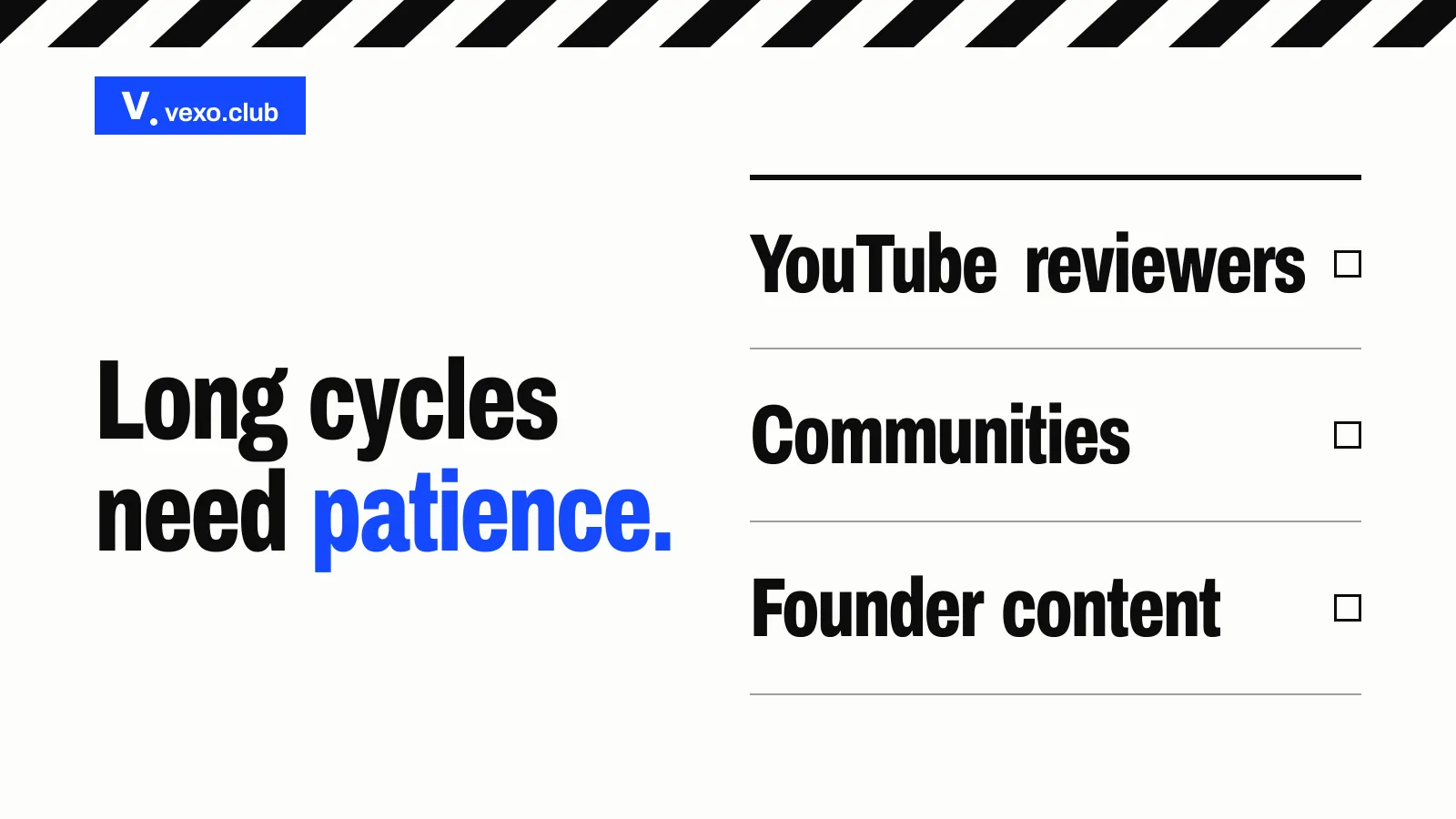
The useful split is between a gadget reviewer and a workflow educator. Tech YouTubers in India covers who the well-known tech creators are. For business software, the more useful person is usually someone who uses your product category in their own work: an accountant, a designer, a recruiter, a no-code builder, a sales-operations person. Their audience searches for how to do a job, and a video that does the job with your tool in it is found while the buyer is mid-evaluation. A video is found by search for a long time. A feed post is read once.
Choosing between a segment inside a video and a dedicated video follows the same logic as any other category, and integration or dedicated video sets it out. For software the rule of thumb is this. Use an integration when the product only needs to be mentioned inside a topic the audience already cares about. Use a dedicated tutorial or review when the product has to be seen working, because a buyer will not take a claim they cannot watch. In a comparison video the creator must be free to say what your product does not do. That freedom is what makes it believable.
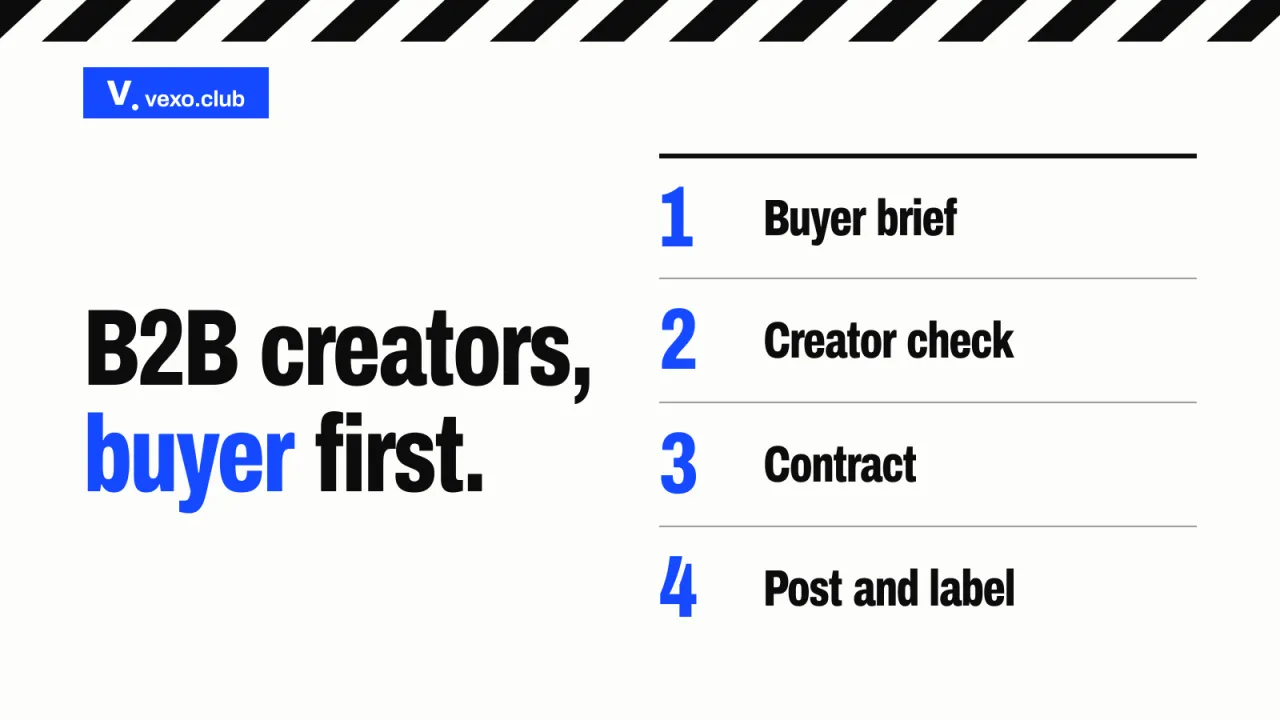
Give the creator a real account on the plan a buyer would actually use, not a stripped demo login. Give them sample data, and a named person in your product team who replies within a day. Expect them to find a bug on camera. It is cheaper to hear it from a reviewer than from a buyer in a comment. A contract can give you the right to correct a factual error. It should not give you a veto over an opinion, and a good creator will strike out a clause that tries.
How a reviewer integration is set up for a software product
- Name the buyer’s question The search the buyer types while they are evaluating
- Find a practitioner who has that question Someone who does the job, not only someone who covers tech
- Give real access The plan a buyer would use, with sample data and a named contact
- Agree what may be corrected Facts yes, opinions no
- Set up the link, the page and the question One link per creator, a useful page, a free-text how-did-you-hear field
Disclosure is where software brands slip. YouTube asks the creator to switch on the paid promotion setting, which adds a label at the start of the video. ASCI’s influencer guidelines list “Includes Paid Promotion” on YouTube among the permitted labels, and say using a platform’s own tool should be considered in addition to the creator’s disclosure. For a video of two minutes or more, the label has to stay for the whole section in which the brand or its features are discussed. The quiet trap is free access. ASCI treats anything of value, including free products received unsolicited, as a material connection, and says disclosure is needed even when the evaluation is unbiased. An extended free trial handed to a reviewer counts. The full mechanics are in ASCI disclosure rules for brands.
What do X builder circles and Communities do that YouTube does not?
X is fast and public, and the people who are there for software are mostly builders, founders and early adopters. That makes it good for a launch, a founder’s own commentary and word of mouth among people who try things first. It is a weak fit for a finance manager at a mid-sized company who has never posted there. A post is read within a day or two, so budget it as a spike, not a library. If you pay for posts, judge the creator by the replies under their last few, not the follower count.
The rules are specific. X’s paid partnerships policy counts a gifted product, a payment, a commission from an affiliate link or discount code, or a commercial agreement such as an ambassador role as a paid partnership. Those posts must carry the Paid Partnership disclosure from the post settings, and the policy asks that the product and call to action be clear without anyone having to click through. X Communities are run by admins and moderators who set rules that sit on top of X’s own, and X does not pay them. So a placement there is a private arrangement with the moderator, their rules still apply, and the right first move is to read what the Community is for before pitching anything.
What should you ask a newsletter or podcast before sponsoring it?
Both sell the same thing: a trusted voice, in a narrow audience, heard repeatedly. The podcast mechanics, host-read against pre-produced and how a run is arranged, are covered in podcast sponsorships. What follows is what changes when the product is software. The first question is who reads it, by job title and company type. A newsletter for founders is a poor home for a product used by accounts teams, however well it is written. Ask for a past sponsor read, not only a rate card, to hear whether it sounded like the publication or like a banner.
What to ask a newsletter before a first run
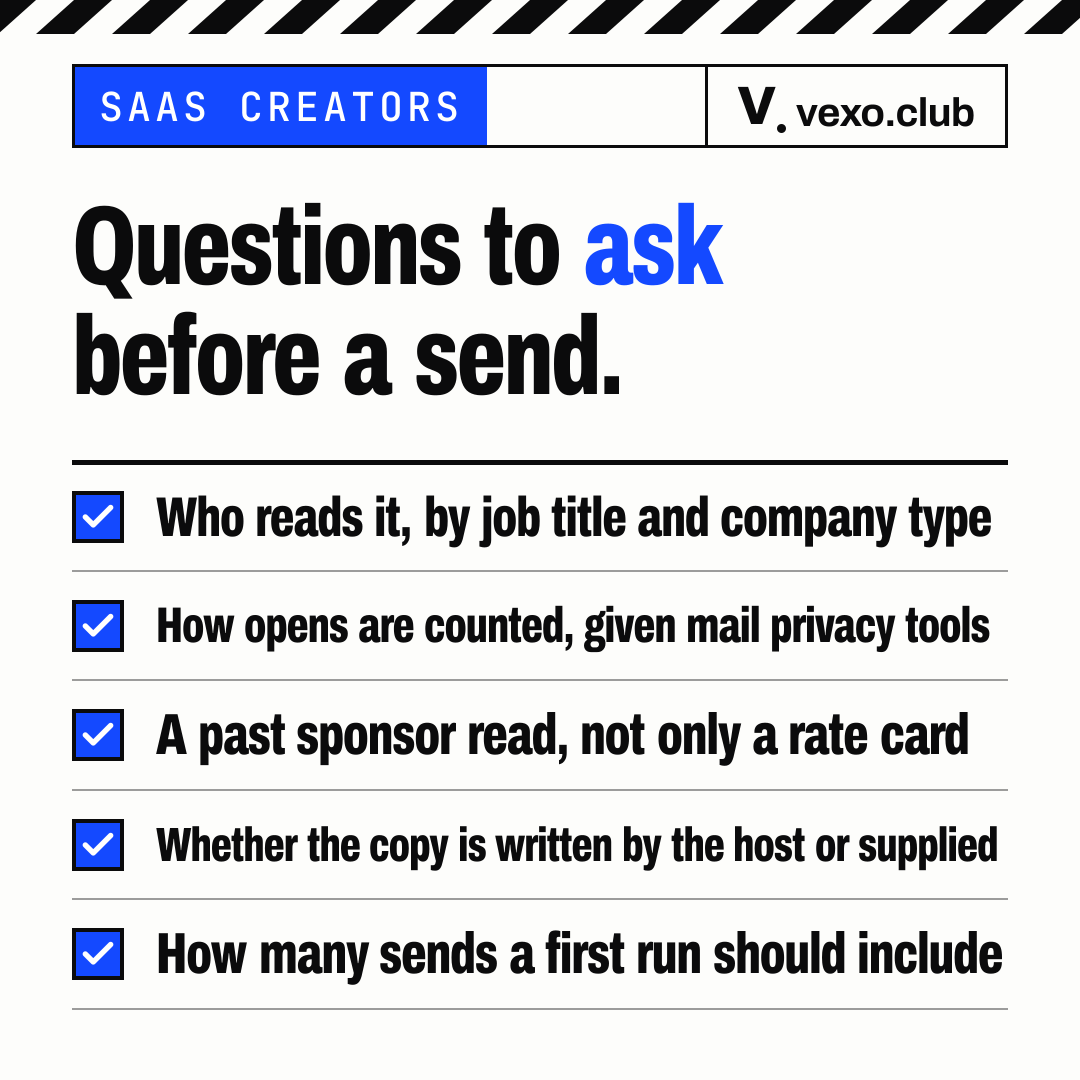
Treat any open rate with suspicion. Apple’s Mail Privacy Protection prevents senders from seeing whether an email was opened, so a newsletter with many readers on Apple Mail cannot report opens cleanly. Ask instead for click behaviour on past sponsors, a reply or survey sample, and who the publisher is willing to name as past advertisers. Then buy a short run, not one send. A buyer needs to see you more than once before the name means anything.
Let the writer write it. Supply the facts, the one claim you can prove and a single destination, and let the voice be theirs. The destination should be something a reader can use alone: a template, a calculator, a teardown, a sandbox or a short trial. “Book a demo” on the homepage is the usual way a good slot is wasted. For audio, ASCI wants the disclosure announced at the start and the end, and before and after every break.
One legal point is easy to miss. If the sponsorship works through a gated report or a webinar sign-up, you are collecting personal data from strangers. The government notified the DPDP Rules on 13 November 2025 with an eighteen-month phase-in, so the main obligations are due from around May 2027. Build the plain consent notice now. And refuse any offer from a creator to hand you their subscriber emails. A list you did not collect with a notice in your name is a liability, not an asset.
How do Slack and Discord communities fit in?
You cannot place an ad in a private room, and trying to will get you removed. What works is being useful inside it under a real name: an office hour with your engineer, a practical talk from a founder, someone from support answering questions without a pitch. Some communities accept a sponsored event or resource and others do not, so ask the admin openly and accept the answer.
The Indian example is instructive. SaaSBoomi describes itself as a volunteer-driven, non-profit community of founders. A pitch to a room like that is a lesson or an honest account of something you learned, not a banner. If a community member is paid or given free product and then recommends your tool, the ASCI material-connection rule applies exactly as it does on YouTube. If a label cannot be shown clearly in that space, do not run it there. Never harvest member lists or message members unasked. The DPDP point above applies here too.
What changes when the creator is a developer-relations type?
A developer-relations style creator is an engineer who teaches in public: tutorials, sample apps, conference talks, open-source work. They judge a product by building with it, and their audience trusts them because they publish what broke. That suits a product with an API, an SDK or a technical user. It does nothing for a product sold to HR managers.
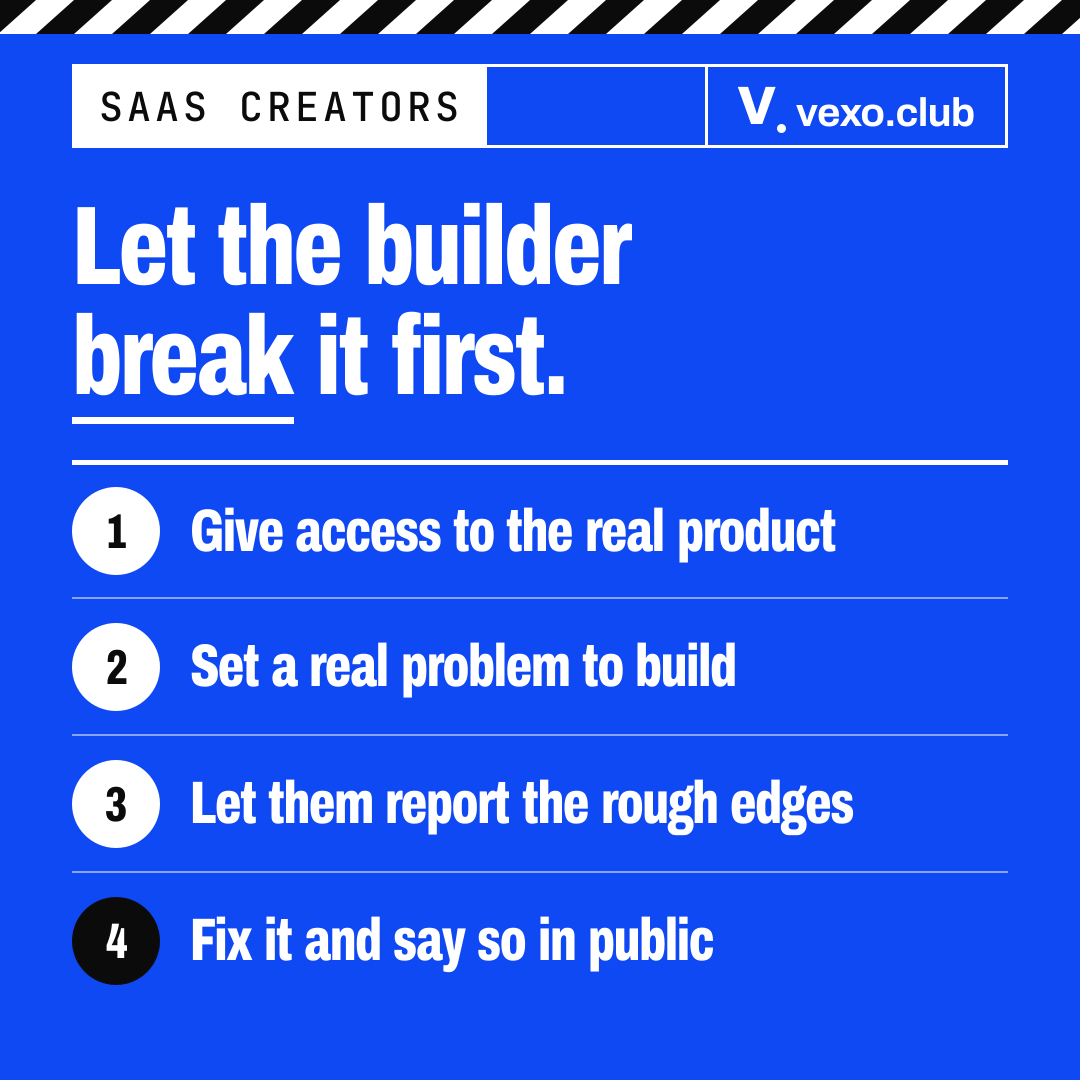
Give them the real product, the real documentation and a problem to build, not a script. Agree up front that factual errors can be corrected and opinions cannot be edited out. Then fix what they find and say so publicly. A creator who sees a reported rough edge fixed will often write the follow-up, and it is the most believable thing you will get. The disclosure rule is the same as everywhere: free access is a material connection.
How a developer-relations style brief runs
Is founder-led content influencer marketing, and where does it sit?
It is the base layer, the one channel you do not rent. Everything above creates curiosity, and then the buyer looks you up. What they find is the founder’s posts, a podcast appearance, a talk. A buyer who searches the founder’s name and finds nothing worth reading has been taught to doubt the creator mention that sent them there. So build before you buy.
One compliance wrinkle. ASCI’s list of material connections includes employment, and its permitted labels include “Employee”. A founder or employee posting a promotional message about their own company should label it. A plain post about the work they did is less clear, and the desk has not found an ASCI ruling on founder posts either way. When in doubt, label it. A label costs nothing and a complaint costs a takedown.
How does a long sales cycle change the brief?
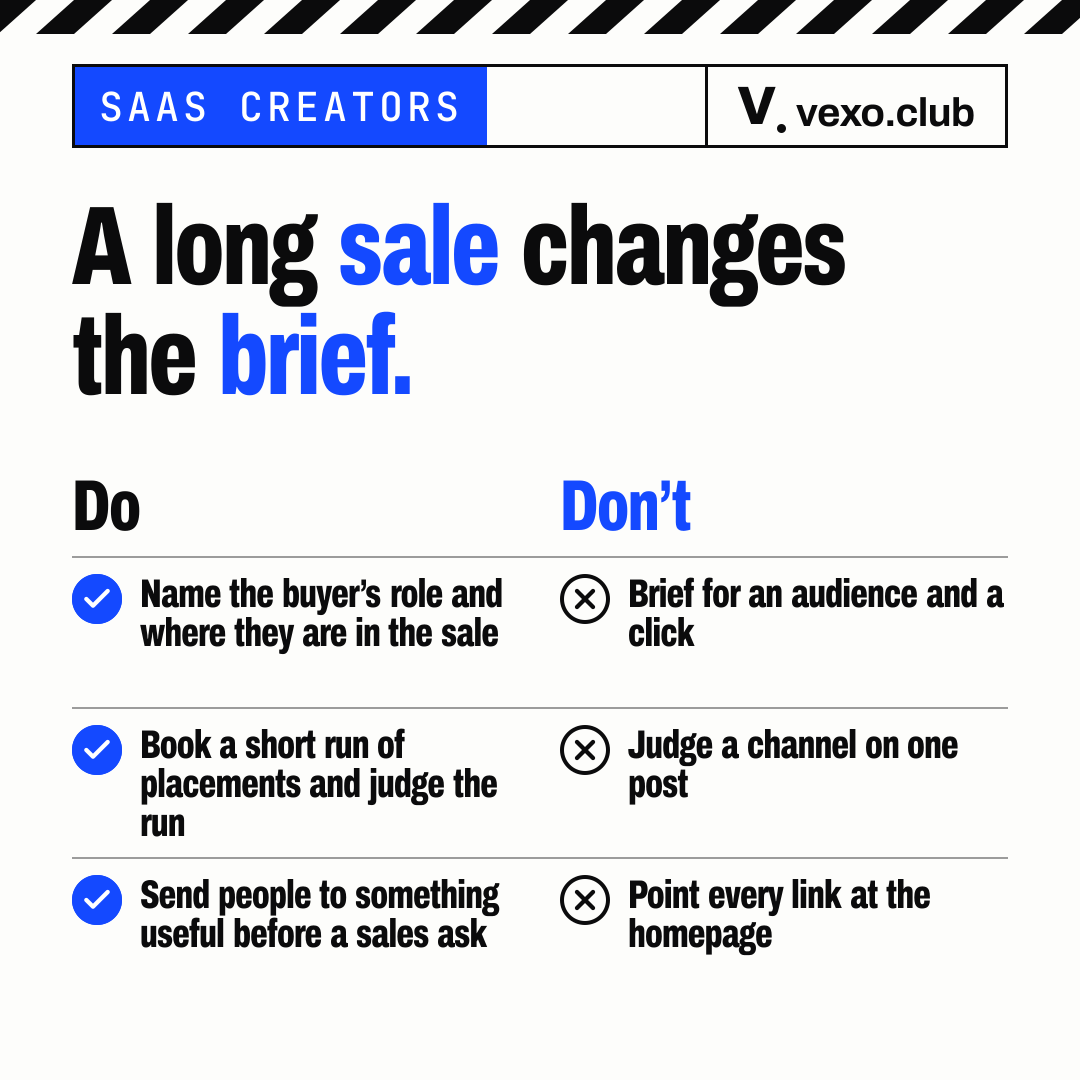
A consumer brief assumes one person decides quickly. A software sale involves a user, a manager, often a finance or security reviewer, and weeks or months. A creator post is read by one of them at one stage. So the brief has to say which. Five changes follow. First, name the buyer’s role and where they are in the sale, not just the audience. Second, book a short run of placements and judge the run, because a single post tells you how one post went. Third, send people to something useful before a sales ask. Fourth, contract for the time the sale takes: the right to share the video or post with a buying committee, a reuse window, and category exclusivity. Usage rights covers the clauses. Fifth, give your sales team a job, which is to ask every prospect what they have seen and to write the answer in the record.
How a long-sale brief differs from a quick-purchase brief
Here is a paste-ready paragraph for the top of a brief, with a hypothetical product. Edit it to your own buyer. “The audience is finance managers at mid-sized Indian manufacturers who are replacing spreadsheet reconciliation. They know the problem and are comparing a few tools. The job of this video is to show a real month-end reconciliation done in the product, including the step it does not automate. Please do not read a script. Tell us if anything we have said contradicts what you see in the product. Send viewers to the sample workbook through the link we give you. The paid promotion label goes on screen for the whole section about our product.”
How do you measure it when the deal closes months later?
You will not get clean attribution, and it helps to tell whoever approves the budget so before the first placement. What you can get is a layered picture. Use four instruments together. A distinct tracked link or code for each creator, written down before anything is published. A required open-text question on the demo and signup forms, “How did you hear about us?”, with no dropdown, because a dropdown hides the answers you did not think to offer. The same question asked by sales on the first call and recorded. And a baseline of branded search and direct signups taken before the first placement, so movement is visible even when its source is not.
Two ways to measure the same sale
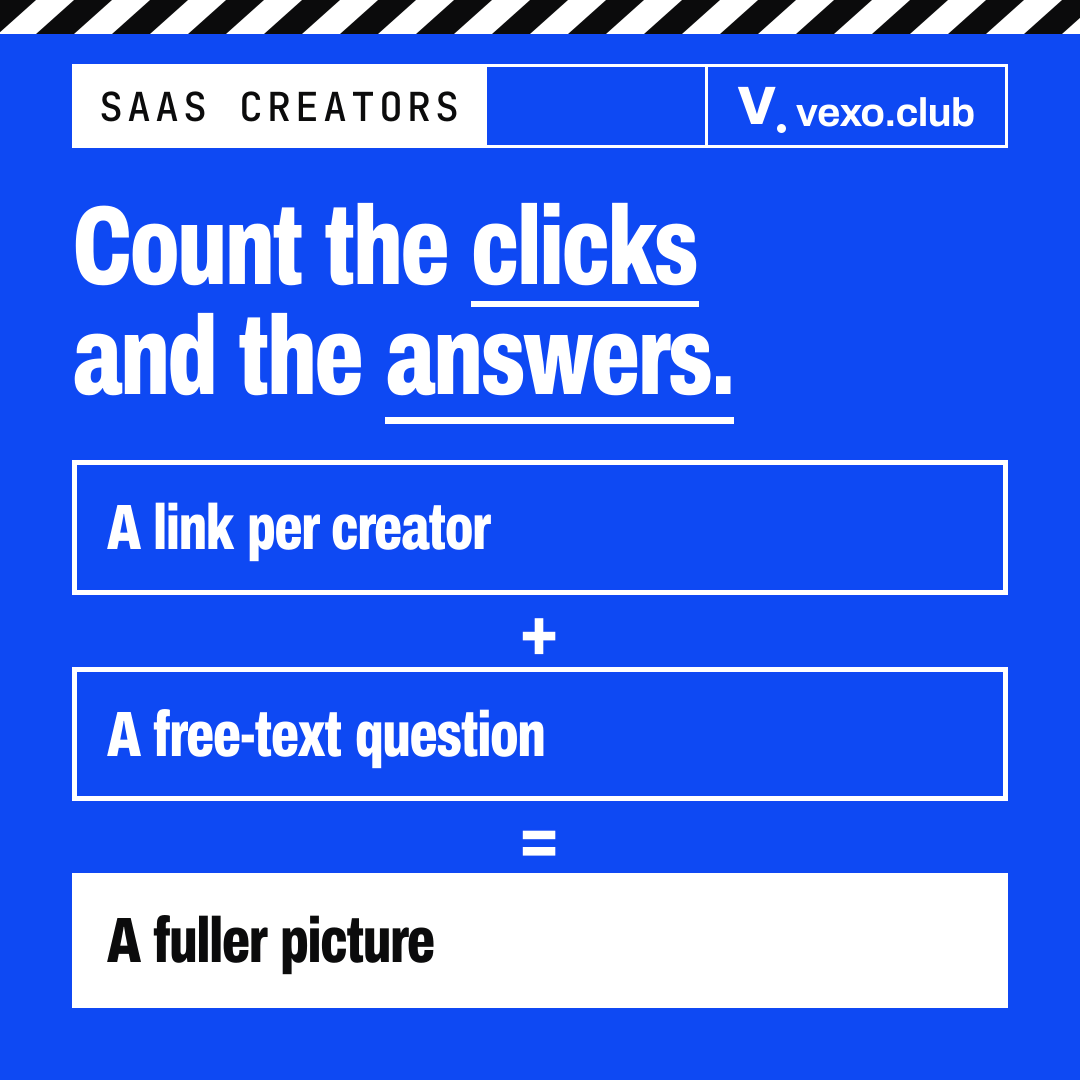
Then read the results over a window as long as your sales cycle plus the lag between a video and a signup, not post by post. Look for leads from the right roles and company types, a better meeting show rate, prospects who quote a video on a call, and deals that move faster than those without a creator touch. Compare creator-touched accounts with others over the same period rather than waiting for closed revenue alone. Be honest about the limits. Self-reported answers favour whatever a person remembers last, and much influence travels by forward or team chat where nothing tracks it. Treat the answers as direction, not proof. The wider method is in measuring influencer marketing ROI.
What do ASCI, the consumer rules and the DPDP Act mean for a software brand?
ASCI’s guidelines make the advertiser and the creator both responsible: the creator for the disclosure, and the advertiser for making sure the post follows the ASCI Code. They also advise creators to check that the advertiser can substantiate its claims, so expect a good reviewer to ask for proof of anything you say about security, uptime or savings. The Central Consumer Protection Authority’s 2022 guidelines on misleading advertisements and endorsements apply to advertisements in any form and cover endorsers, and ask for disclosure of a material connection the audience would not expect, as AZB’s summary describes. Read the gazetted text before relying on it.
One real uncertainty. The Consumer Protection Act’s definition of “consumer” excludes a person who buys for a commercial purpose, so a business buyer may have a narrower route to complain under that Act. That does not make business-software advertising exempt from ASCI’s code or from the platforms’ own rules, and the desk found no carve-out for it. Treat the rules as applying, and take advice for anything unusual. Payment mechanics work as for any creator: see TDS on influencer payments.
What should a small team do this week?
A sensible first quarter is small. Start with the founder’s own channel, add one reviewer who uses your product category in real work, and one short newsletter run. Put an open-text question on your forms and take a baseline. Hold podcasts, developer-relations creators and community deals until the first round shows what your buyer responds to. Six channels at once means six thin tests.
This week, before any fee is paid
- Write down the buyer’s job title, company type and country
- List the places that buyer checks a claim before a demo
- Add a required open-text “how did you hear about us” field to demo and signup forms
- Take a baseline of branded search and direct signups
- Pick one reviewer, one newsletter and the founder’s own channel, and no more
- Write the disclosure and the factual-correction right into each brief
- Ask sales to record what every prospect says they have seen
Questions brands ask
Does influencer marketing work for B2B SaaS in India? It can, when you know the buyer’s job title, the buyer reads or watches something specific, and your team can follow up a lead quickly. Check the buyer’s country first, because many Indian SaaS products sell abroad.
How do I measure it when the sales cycle is long? Use a tracked link per creator, a required open-text “how did you hear about us” field, the same question on the first sales call, and a pre-campaign baseline of branded search. Read the results over a window as long as your cycle. Expect direction rather than proof.
Are YouTube sponsorships worth it for software? A review or tutorial by someone who uses your product category is found by search for a long time, which is the main reason to pay for one. It is worth less if the creator is a gadget reviewer with no feel for the workflow.
Do I have to disclose if I only give a reviewer a free trial? Yes. ASCI treats anything of value, including free products received unsolicited, as a material connection and requires disclosure even when the review is unbiased. YouTube’s paid promotion setting and X’s Paid Partnership toggle exist for this.
Can I buy a place in a Slack or Discord community? Not as such. Some communities accept a sponsored event or resource when the admin agrees, and many do not. Ask openly, offer something the members want, and accept a no. Never message members you found there without being asked.
How much should a SaaS company pay a creator in India? The desk cannot give a verified Indian figure. The numbers in vendor blogs are mostly US dollar quotes for US creators, and they do not transfer. Ask two or three creators for quotes against a written deliverable, and compare the reader list and past work, not the follower count.
Can a newsletter owner give me their subscribers’ emails? Do not accept them. You would be holding personal data you did not collect and cannot explain, and the DPDP Rules’ main obligations are due from around May 2027. Collect leads yourself through a page and a consent notice in your name.
To send a software brief to a Delhi NCR desk, use the contact page. vexo.club works from Delhi NCR only. For a business-software product the most useful first message names the buyer’s role, their country, and what a free trial or sandbox lets a stranger do.
Sources
- Business Standard (opens in a new tab) business-standard.com
- SaaSBoomi (opens in a new tab) saasboomi.org
- asks the creator to switch on the paid promotion setting (opens in a new tab) support.google.com
- ASCI’s influencer guidelines (opens in a new tab) ascionline.in
- X’s paid partnerships policy (opens in a new tab) help.x.com
- X Communities (opens in a new tab) help.x.com
- Mail Privacy Protection (opens in a new tab) support.apple.com
- eighteen-month phase-in (opens in a new tab) pib.gov.in
- AZB’s summary (opens in a new tab) azbpartners.com
- excludes a person who buys for a commercial purpose (opens in a new tab) indiankanoon.org
Cite this page
B2B SaaS influencer marketing in India: the channels beyond LinkedIn. vexo.club, published 20 Nov 2026. https://vexo.club/blog/influencer-marketing-b2b-saas-beyond-linkedin-india
Send the desk a brief: it comes back as a shortlist and a directional band, never a public price.
Brief the desk