How to find and vet micro-influencers for a campaign
Where to find micro-influencer candidates beyond a hashtag search, the first-pass filter to run before the full audience check, the red flags a media kit carries, and how to size a shortlist so one dropped name does not reopen the search.
Playbooks 8 min read The vexo.club desk
In this article6 sections
Finding a micro-influencer is rarely the hard part. A category search on Instagram returns hundreds of accounts in the right follower band within a minute. Vetting them before a brief goes out is the part that takes judgement, and it is where most of the avoidable risk sits: a shortlist built from hashtag search alone tends to carry the same names every brand in the category already approached. This guide sets out where else to look, what to check before anyone runs a full audience export, what a media kit’s red flags look like, and how to size a shortlist so one dropped name does not send the search back to zero.
What to know before you source and vet
In short
- Source candidates from more than one route: tags, comments, marketplaces, referrals and rosters each surface different names.
- Run a first-pass filter before the full audience check, so the deep check is spent only on names worth the time.
- Read a media kit as a sales document and ask for the export behind every claim it makes.
- Size a shortlist to survive its own attrition, not to match the number of slots in the brief.
What does the vetting process for micro-influencers look like end to end?
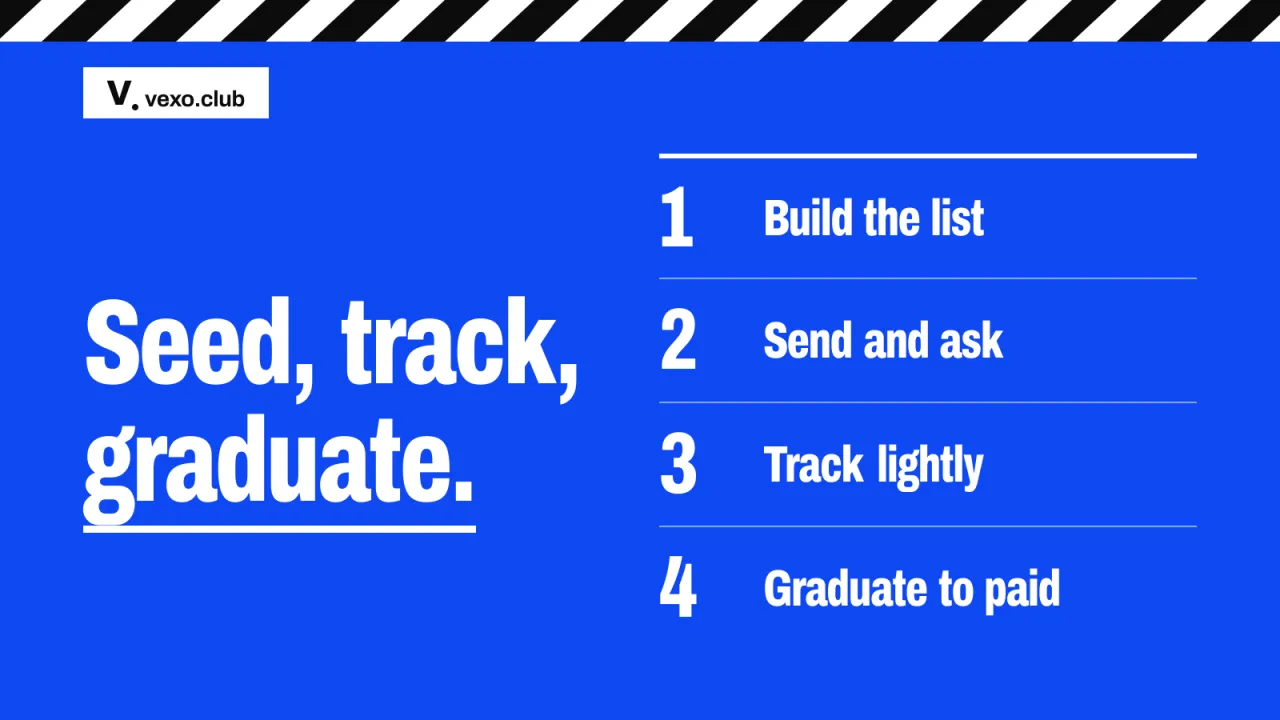
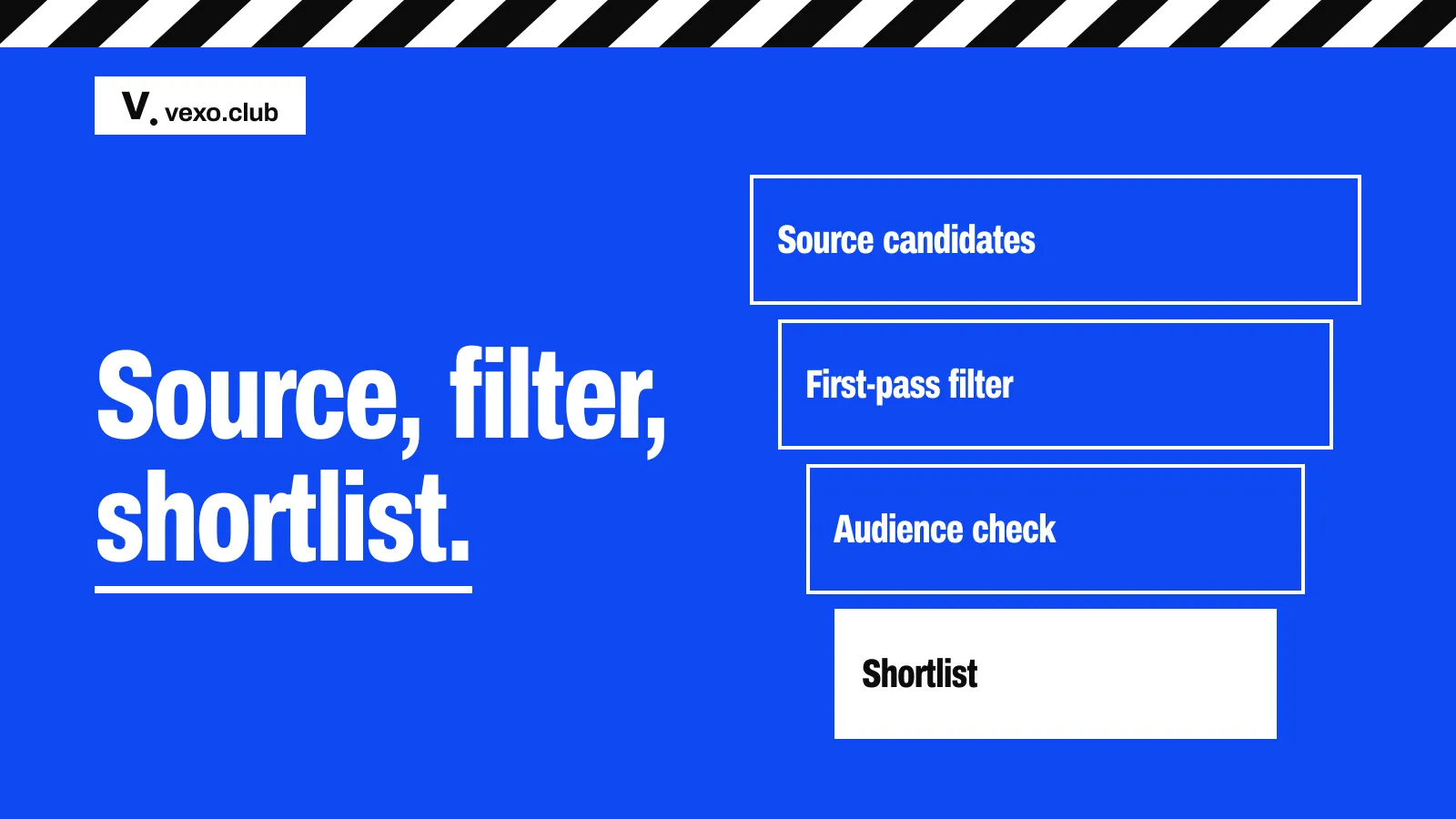
Run it as a funnel, in a fixed order: source candidates widely, cut the obvious misfits in a first pass, read each media kit against what it claims, run the full audience check only on names that survive, then shortlist what is left for the brand to choose from. Skipping a step does not save time. It moves the same work downstream, onto a contract that is harder to unwind than a name that was easy to drop.
From long list to confirmed booking
- Source candidates Beyond hashtag search
- First-pass filter Grid, cadence, contact, language
- Media kit read Checked against the export
- Audience check Exports, geography, comments
- Shortlist Presented to the brand
- Confirmed booking Contract signed
Where do you find micro-influencer candidates beyond a hashtag search?
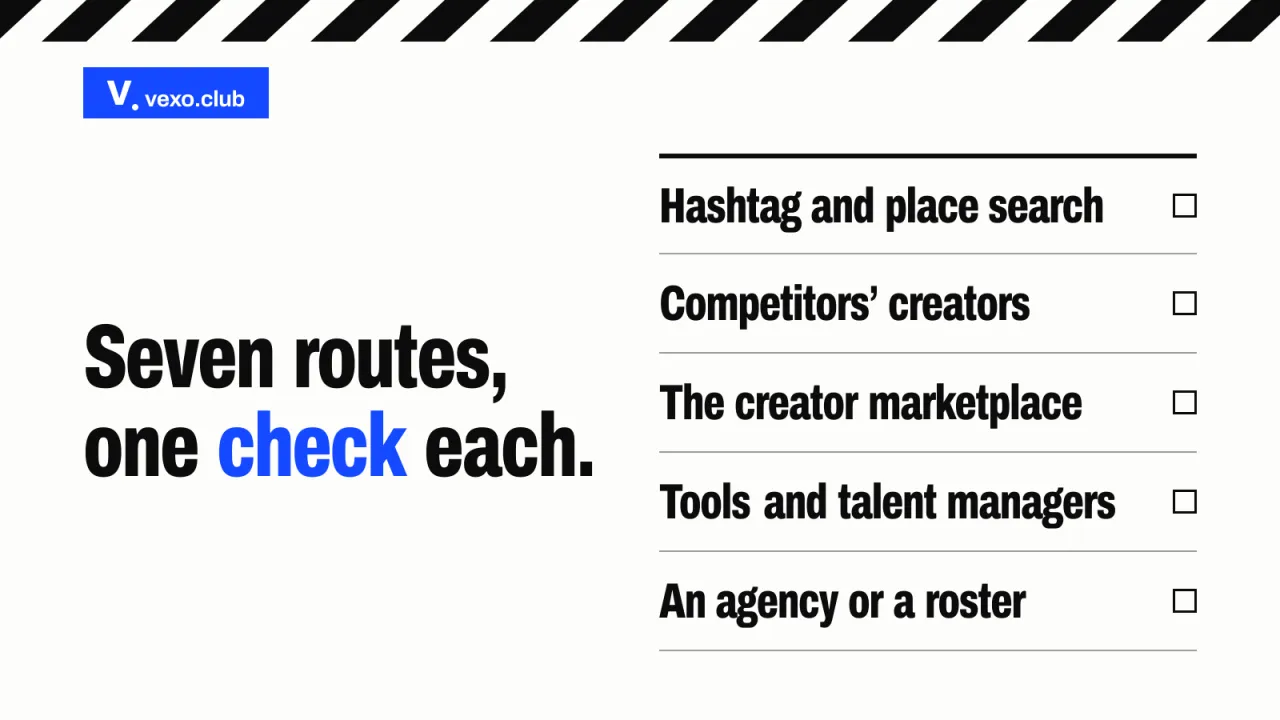
A hashtag search surfaces whoever posts loudest in a niche, which is not the same as whoever has the right audience for a brief. Five other routes turn up names a hashtag search misses:
- Tagged-in posts. Open a competitor’s or an adjacent brand’s grid and see who they tag back. A creator who already works in the category and already runs ads for someone else is a known quantity before a message is sent.
- Comment sections under bigger creators. The accounts leaving specific, on-topic comments under a larger creator in the niche are often smaller creators themselves, with an audience that already follows the category.
- Creator marketplaces and discovery tools. Searchable by niche, city and language, and faster than a manual scroll, though your team still does the filtering, the contract and the report.
- Referrals from creators already booked. A creator who delivered well on a past brief usually knows two or three others in the same niche worth a message.
- A manager or agency roster. A manager represents several creators in one niche and can point to one who fits a brief that a public search would not surface, because the account is private or posts without the hashtag you searched.
Where to find micro-influencer candidates
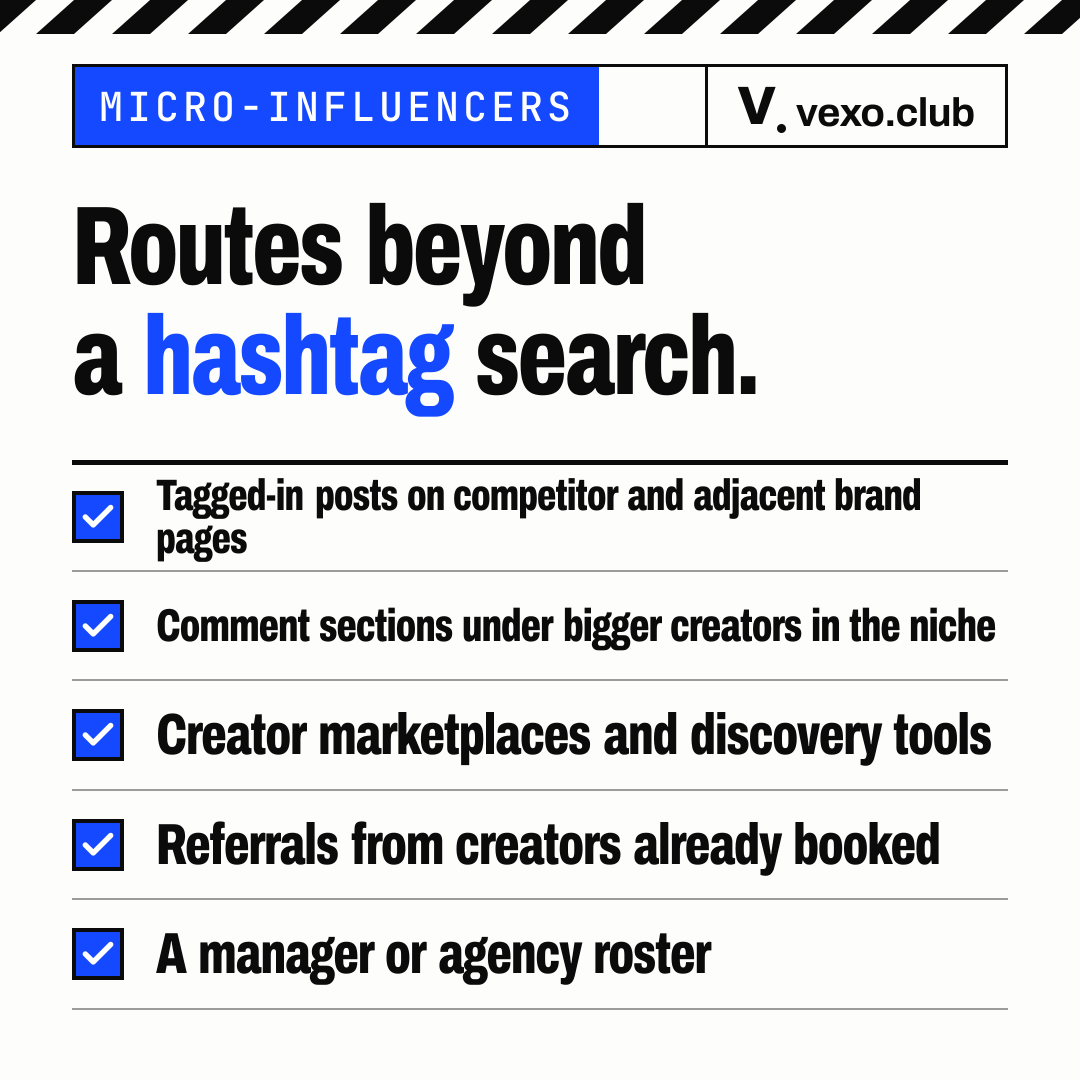
None of these routes replaces the others. A long list built from one alone repeats whatever bias that route carries: a marketplace surfaces whoever signed up for it, a hashtag search surfaces whoever posts loudest. Draw from at least two or three before the first-pass filter starts.
What should a first-pass filter catch before the deep audience check?
The full audience check takes real time per creator, so it should run on names that have already cleared an obvious-misfit pass rather than on everyone sourced. A first-pass filter is five minutes on a public profile, not an export:
What the first-pass filter checks
- The grid matches the niche or product category at a glance
- Posting is regular, without long unexplained gaps
- The bio carries a working contact, not only a link-in-bio wall
- At least one past sponsored post exists to read
- Captions are in the language the brief needs
- The follower-to-following ratio is not wildly inverted
The first-pass filter before an audience check
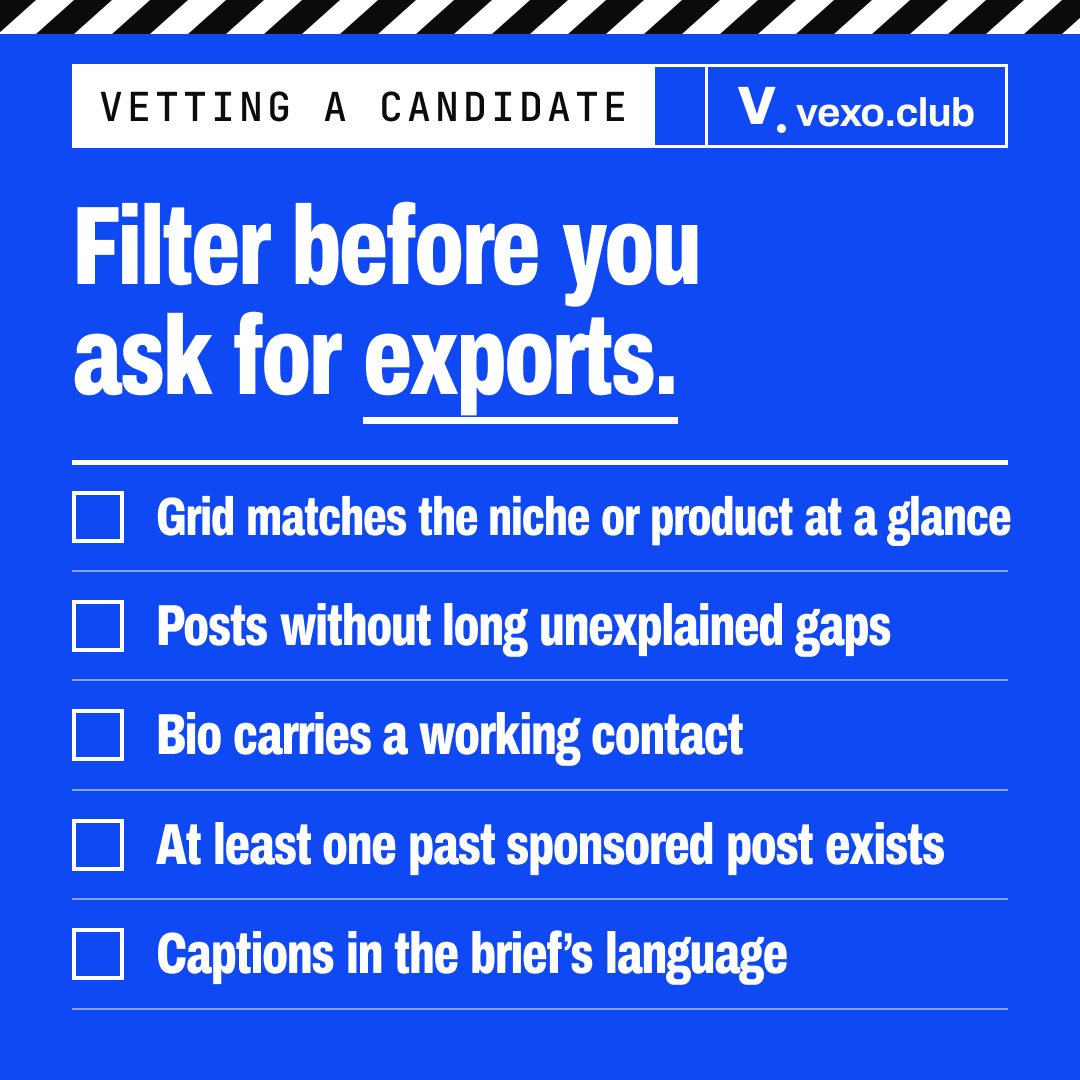
A name that fails this pass is not worth the time a full audience check costs. A name that clears it is not yet approved. It has only earned the next step, which is the audience check itself. That method (the exports to ask for, the geography and language checks, and reading the comments for a real audience) is set out in full in how to check an influencer’s audience before you pay, and it is not repeated here: run it once a creator has cleared the filter above, before any rate is agreed.
What are the red flags in a micro-influencer’s media kit?
A media kit is a sales document, written by the person it benefits, and it should be read as one. Most of what a kit claims can be checked against the platform export it is supposedly summarising, and the gap between the two is the signal worth acting on.
Reading a media kit before you trust it
Do
Open the platform export the kit claims to summarise
Don’t
Accept the kit’s own charts as the record
Do
Check whether the brand names in its case studies can be verified
Don’t
Accept a trusted-by-brands line with none named
Do
Compare the kit’s follower count with the live profile
Don’t
Assume the kit was updated recently
Do
Ask for a figure where the kit uses a word like strong or above average
Don’t
Take a qualitative claim as a substitute for a figure
Red flags in a micro-influencer media kit
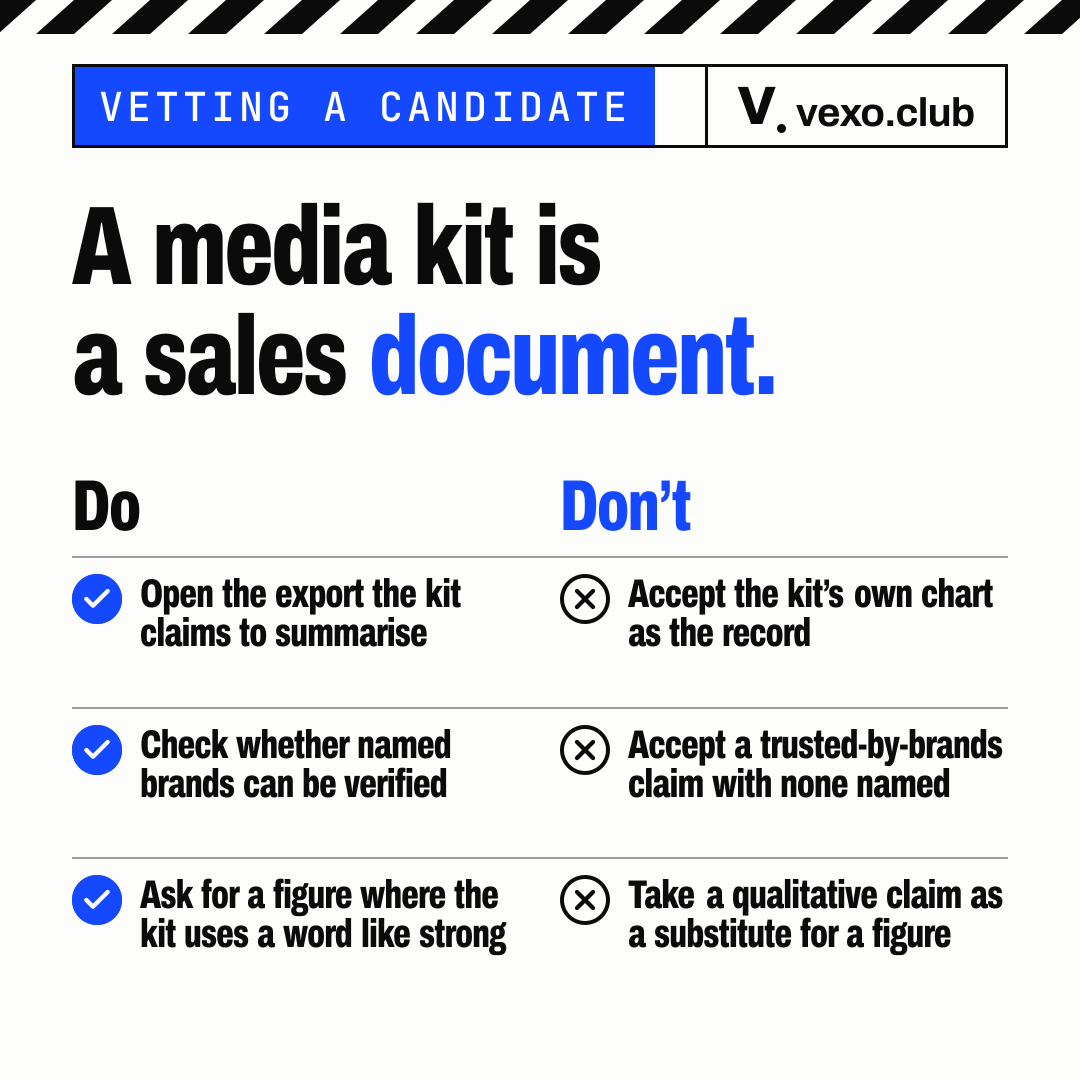
The deeper method for reading a kit line by line, including which exports to ask for and what a genuine growth curve looks like next to a bought one, is in how to read a media kit you did not commission. The short version for a vetting pass: if the kit will not survive being set beside the export, do not let it stand in for one.
How many candidates should you shortlist per confirmed booking?
There is no fixed ratio, because the two things that would set one, how crowded the niche is and how many sourced names actually pass the audience check, change with every brief. What stays fixed is the shape of the funnel: a long list loses names at the first-pass filter, loses more at the audience check, and loses a few again to a rate the brief will not pay or a date the creator cannot hold. A shortlist sized for exactly the number of slots in the brief has no room for any of that, and the brief ends up either delayed or filled with the first name left standing rather than the best one.
Why a shortlist needs more names than slots
- Long list Every candidate sourced
- First-pass filter Obvious misfits removed
- Audience-checked Exports and comments read
- Shortlisted Presented to the brand
- Booked Contract signed
Stages in order. The widths are not to scale.
Build the shortlist to survive its own attrition rather than to match the booking count. If a brief needs two creators, the shortlist should carry enough names that losing one to a schedule conflict or a failed check does not send the search back to the first step. For the tier this guide assumes, nano creators are not cheap and micro, macro or celebrity set out how the tiers differ beyond follower count. A brief for any size can be sent to the desk, and the roster lists creators bookable through it by niche and city.
Questions brands ask
How do you find micro-influencers in India beyond a hashtag search? Tagged-in posts on competitor or adjacent brand pages, comment sections under bigger creators in the niche, creator marketplaces and discovery tools, referrals from creators already booked, and a manager or agency roster. Draw from more than one route, because each carries its own bias.
What is the vetting process for micro-influencers before a brief goes out? Source widely, run a first-pass filter on the public profile, read the media kit against what it claims, then run the full audience check only on names that survive, and shortlist what is left. Skipping a step moves the same work onto a contract instead of a name.
What should a first-pass filter catch before the audience check? Whether the grid matches the niche, whether posting is regular, whether the bio has a working contact, whether a past sponsored post exists to read, whether captions are in the brief’s language, and whether the follower-to-following ratio looks inverted.
What are the main red flags in a micro-influencer’s media kit? A chart with no export behind it, case studies that name no brand, a follower count that does not match the live profile, and qualitative words such as strong or above average standing in for a figure.
How many candidates should a shortlist carry for each confirmed booking? There is no fixed ratio. Size it for the funnel’s own attrition: names lost to the first-pass filter, the audience check, a rate the brief will not pay, or a date the creator cannot hold, so losing one name does not reopen the search.
Cite this page
How to find and vet micro-influencers for a campaign. vexo.club, published 31 Oct 2026. https://vexo.club/blog/how-to-find-and-vet-micro-influencers
Influencer marketing across India
Send the desk a brief: it comes back as a shortlist and a directional band, never a public price.
Brief the desk