Does influencer marketing work in India? What the evidence says, and when it does not
Influencer marketing works in India under three conditions: one measurable goal, an audience that matches the buyer, and tracking set before the first post. What dated, sourced evidence shows and where it stops, how to measure a campaign so you can tell, and when the spend is wrong.
Playbooks 13 min read The vexo.club desk
In this article10 sections
Influencer marketing works in India when a campaign has one measurable goal, creators whose audience matches the buyer, and tracking set before the first post. It fails when it is bought on follower counts and judged on likes. The evidence below is dated and sourced, and where a claim cannot be checked, this page says so.
Does it work, in short
- It works when a campaign has one goal that can be measured, creators whose audience matches the buyer, and tracking set before the first post.
- It fails when it is bought on follower counts and judged on likes.
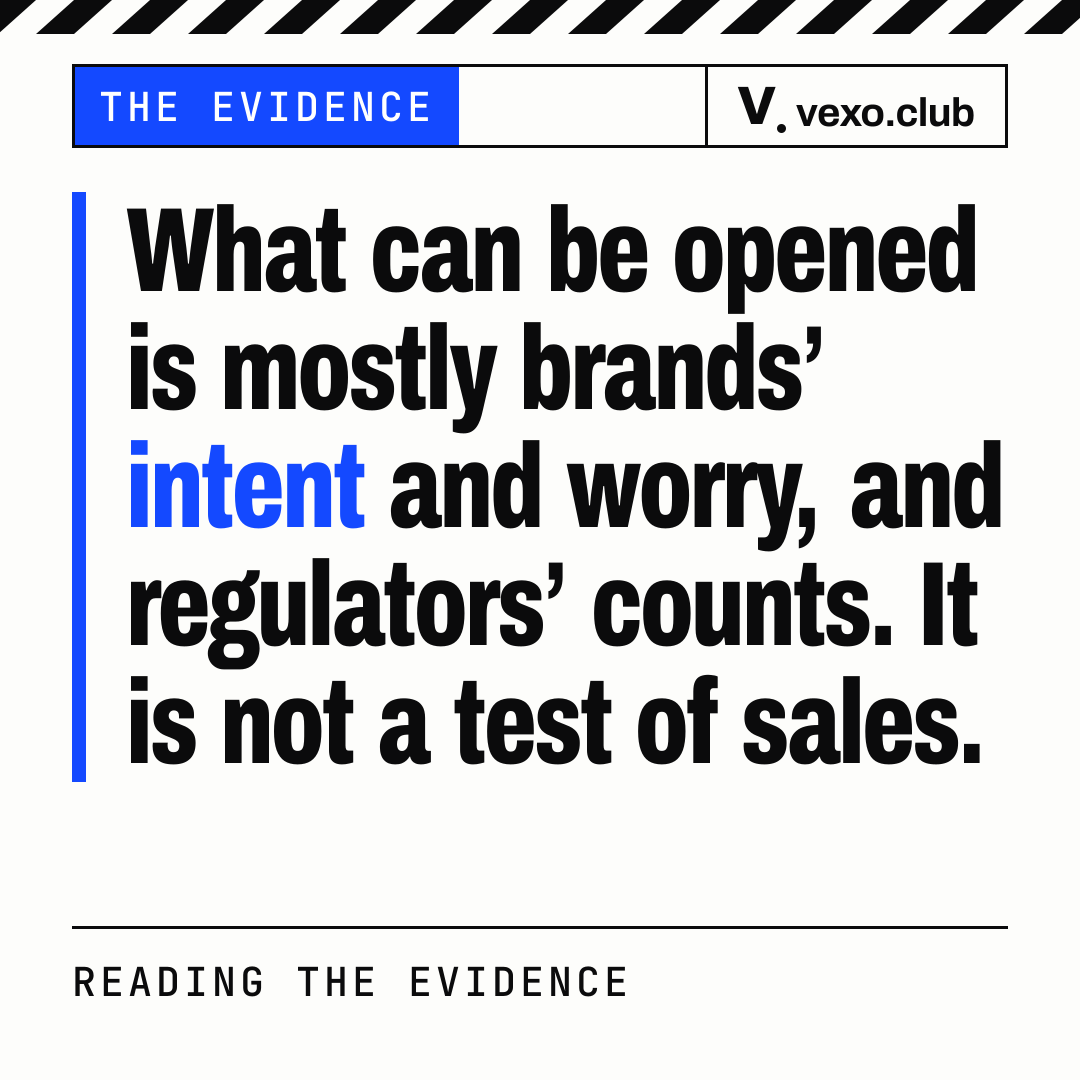
- The evidence that can be opened is surveys of what brands intend and fear, and regulators’ counts of what they found. None of it is a controlled test of sales.
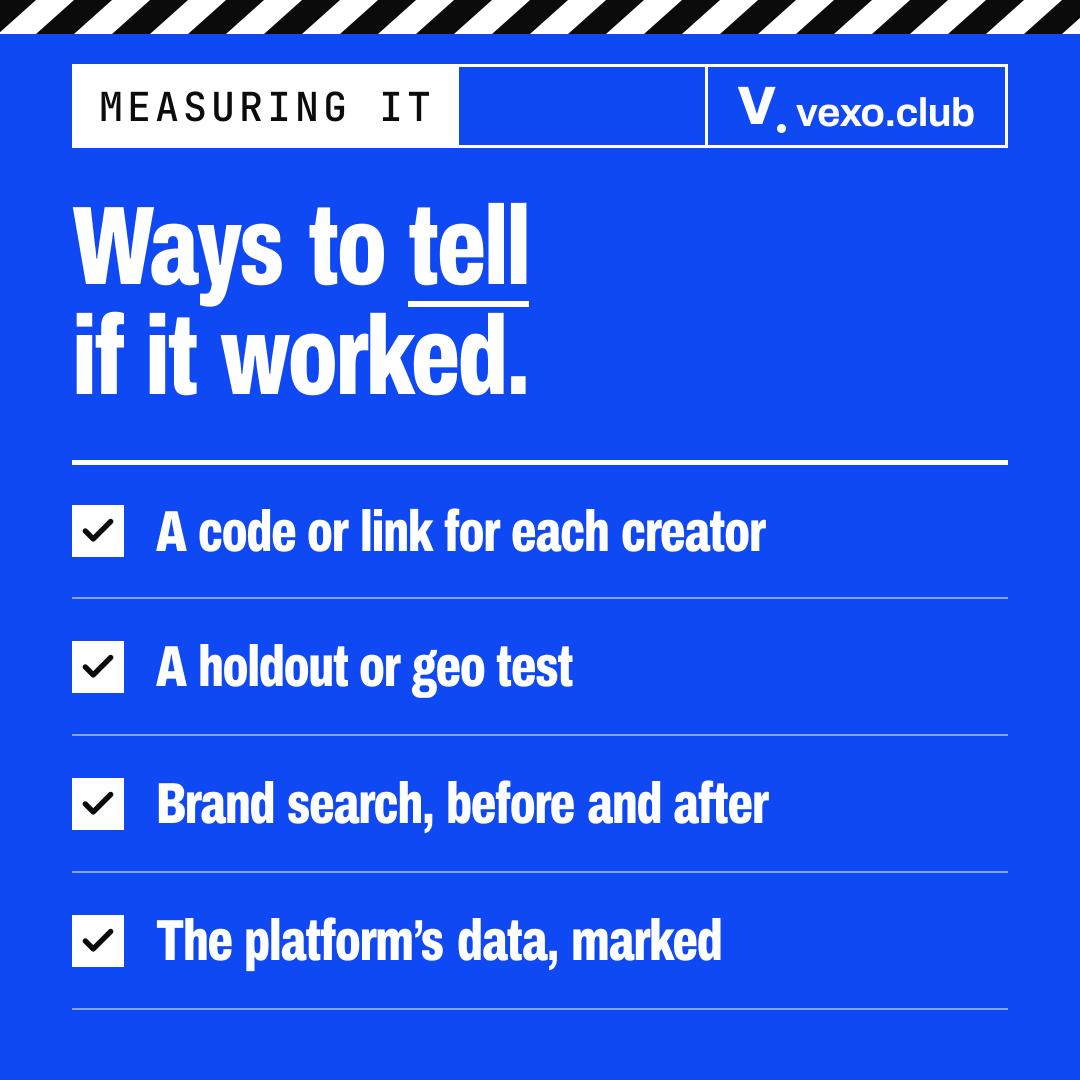
- Decide the method before launch: a code or link for each creator, a holdout or geo test, a read of brand search, and the platform’s own data marked as such.
vexo.club is an influencer marketing agency run from one desk in Delhi NCR, so it sells the thing this page asks whether to buy. That is the reason every figure here is someone else’s, with its date and its link, and none is the desk’s own result.
Does influencer marketing work?
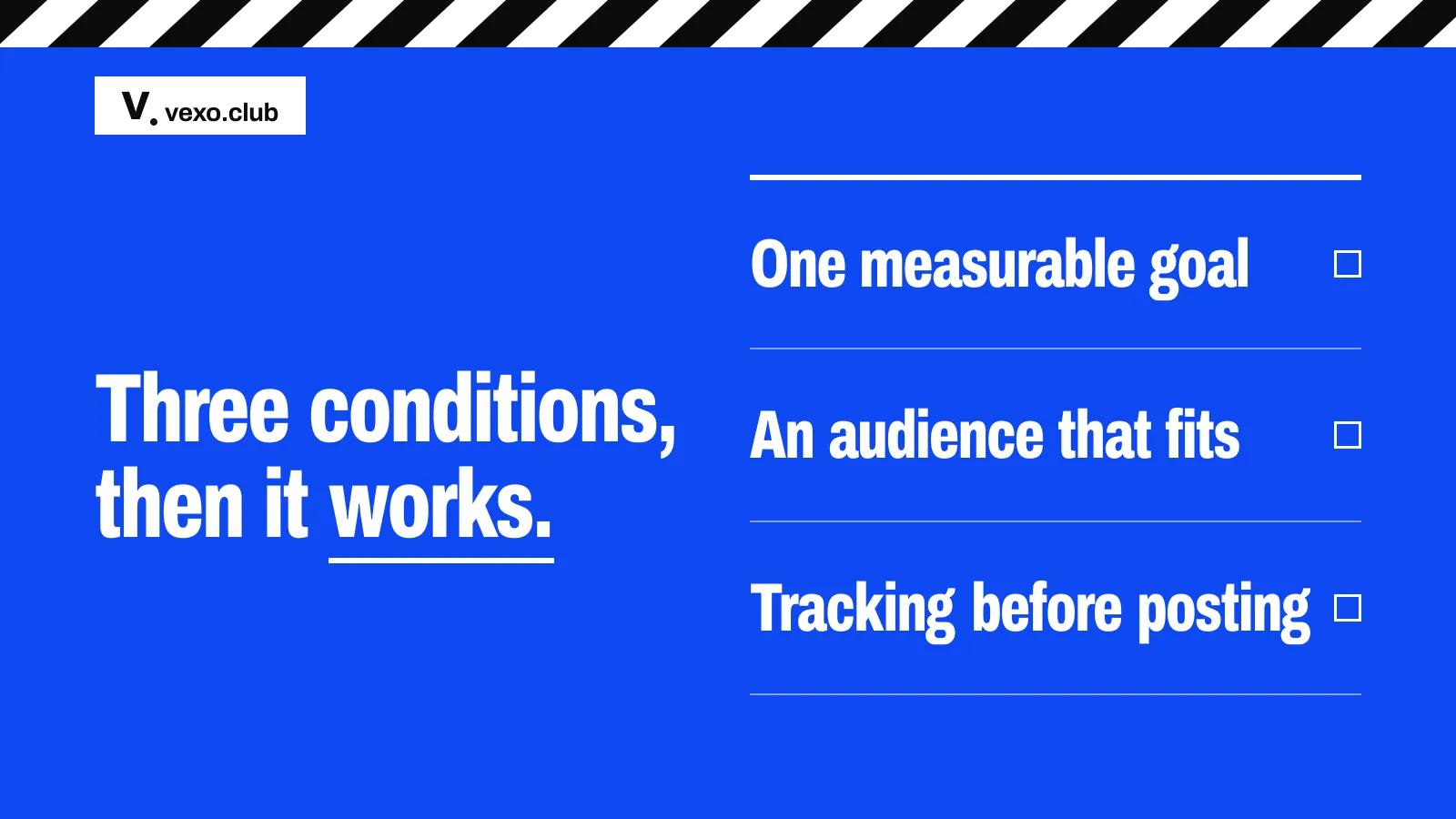
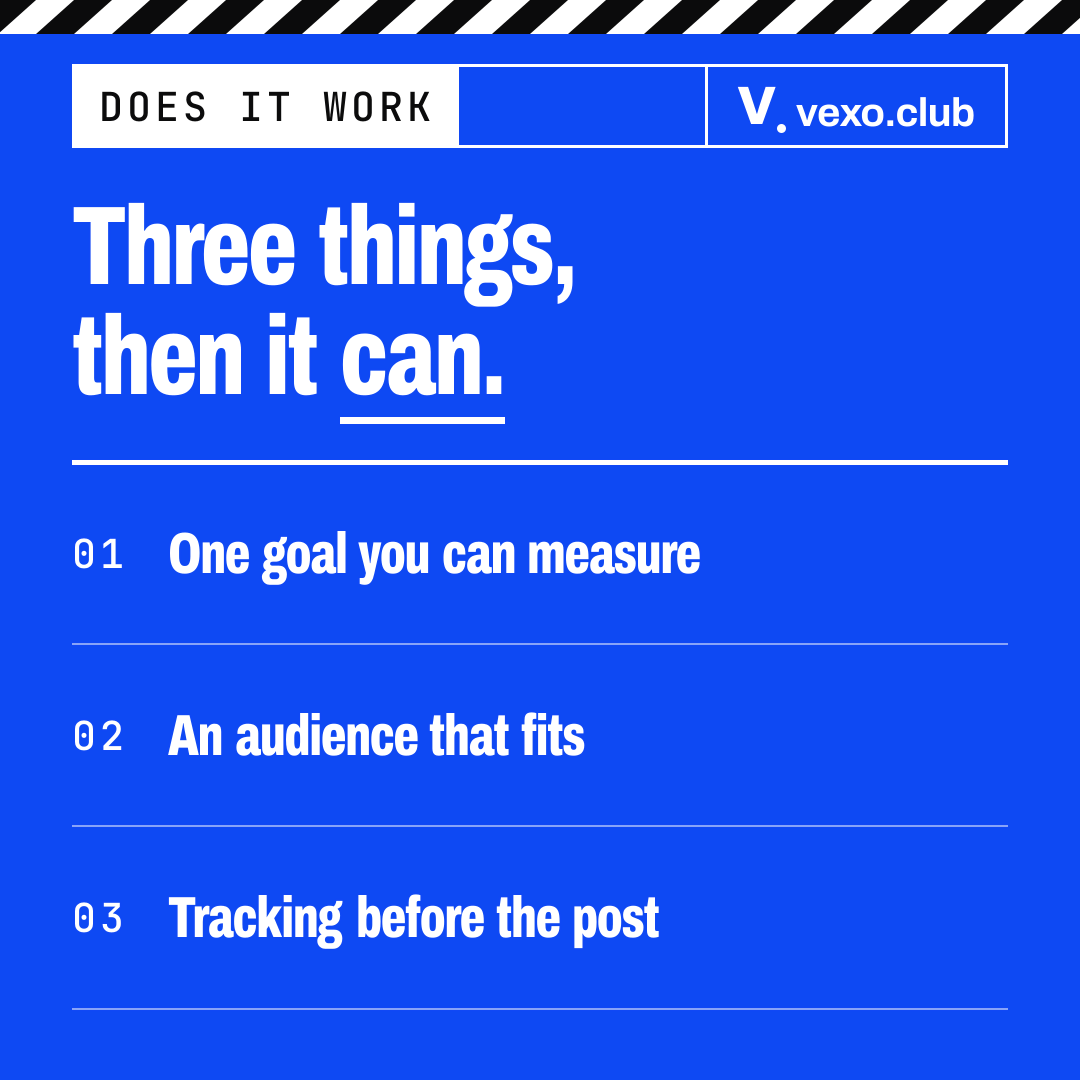
Yes, under three conditions. The campaign has one goal that can be measured, so success is something you can point to. The creators have an audience that matches the buyer, so the post reaches the people who buy. And the tracking is set before the first post, because a code, a link or a holdout cannot be added afterwards.
Three things brands assume, and what the evidence supports
Myth
More followers means more sales.
Fact
Brands surveyed say fake followers worry them most. The shift reported is from follower count to audience fit, engagement and trust.
Myth
Likes show that it worked.
Fact
A like is a public reaction. Sales, brand search and a holdout show effect, and each needs setting up before the post.
Myth
One post that did well proves the channel.
Fact
One post is one observation. Repeat it with a different creator and the same tracking before drawing a rule.
When those three hold, a brand can read what the creators delivered against what it asked. When they do not, the campaign is bought on follower counts and judged on likes, and the result is a report that looks full and says little. The conditions are not special to India. What is specific to India is the rest of the work around them: creators in many languages, the ASCI label on every paid post, and tax on creator fees. A first campaign, step by step takes the whole route in order.
The three conditions under which influencer marketing works
What does the evidence say?
What follows was opened and read on 1 November 2026, and each claim carries its publisher, its date and its link. Read it for what it measures. The first finding is about the evidence itself: what could be opened is surveys of what brands intend and fear, and regulators’ counts of what they found, and none of it is a holdout or a geo test that isolates what creators caused.
Brands say they will spend more, and name uncertainty about the return among their concerns. Boston Consulting Group’s report on India’s creator economy, as Storyboard18 reported on 4 May 2025, found that 70% of the brands it surveyed plan to increase creator budgets by 1.5 to 3 times over the next two to three years. The same coverage lists the concerns that hold brands back: “fake followers (74%), uncertain ROI (40%), and brand risk (38%)”. It adds that this “has led to a shift in brand strategy away from sheer follower count to audience-content fit, engagement levels, and trust.” The report’s own sample is not stated in the article, so read these as what the surveyed brands said, not as a count of all brands.
EY India’s survey of CMOs, creators, agencies and individuals, published on 2 April 2024, reaches the same place from another direction.
The biggest challenge for marketers, in EY’s survey
“The biggest challenge for marketers is determining the ROI of their influencer marketing campaigns.”
EY India, How influencer marketing is impacting brands in India,
Source: ey.com
The regulator’s counts say what happens when execution is poor. In its Annual Complaints Report 2024-25, ASCI says that of the 1,015 influencer ads it processed, 98% required modification. Its dipstick study of September to November 2024 reviewed 100 influencer posts and found “only 29% had proper disclosures”. The 2025-26 report’s press release of 28 May 2026 gives the next year’s count.
What ASCI found in the influencer ads it processed
“Of the 1,609 influencer ads processed during the last financial year, 97.3% required modification, with over 54% promoting categories prohibited by law or where advertising is restricted.”
Advertising Standards Council of India, Annual Complaints Report 2025-26, press release of 28 May 2026,
Source: ascionline.in (PDF)
A post that has to be rewritten, relabelled or taken down has not done its job, so these counts are evidence of what makes a campaign fail: a missing label, a claim nobody substantiated, a category the law restricts. They are not evidence about how often campaigns work, because ASCI reviews the ads it chooses to and the complaints it receives. The label and the claims check are the cheapest part of a campaign to get right, and ASCI disclosure for brands sets out who labels what and who checks.
What the published evidence holds
Is it effective for sales, or only for awareness?
It can be either, and the objective decides which. In the same BCG coverage, the objectives it lists for brands include “boosting consideration (70%), awareness (40%), and even D2C conversions (28%)”. On the consumer side, the report is quoted as saying that in tier 2 and tier 3 towns “over 60% of consumers report being influenced by creator content in their purchase decisions”. That is consumers’ own account of what influenced them, and being influenced is not the same as a sale that would not have happened anyway.
So the useful question is what the campaign is meant to move, and what would show it. A campaign built to sell needs a way to see sales: a code or a tracked link for each creator where the sale closes on your own site, a holdout or a geo test where it closes in a shop. A campaign built for awareness is judged on reach, on brand search and on recall, and is called awareness. An objective that cannot be seen is a reason to say so before the brief goes out, not after the report comes back.
When is influencer marketing worth it, and when is it the wrong spend?
It is worth it when the buyer can be reached through creators and the brand can say what it will count. It is the wrong spend when neither is true, and no creator makes up the difference.
When it is worth it, and when it is the wrong spend
Worth it when
- The buyer can be found on a platform and trusts creators in your category
- One goal is written down and can be measured
- You can tell an audience from a follower count
- The budget covers creator fees, usage rights and production, not one post
- Every claim the post will make can be substantiated
The wrong spend when
- The buyer is reached through associations, introductions or a shop counter and not a feed
- Nobody has said what success is, or how it would be seen
- The product claim cannot be substantiated
- You need sales this week from a cold audience and have nothing to count them with
- The category is one where the law restricts the advertising
Two of the “wrong spend” lines are worth a sentence each. A trade buyer who is reached through market associations, introductions and messaging groups does not scroll a feed for a supplier, so a creator’s reach is the wrong tool even when it is large. And a product claim that cannot be substantiated is a risk before it is a message: ASCI’s counts above are mostly about claims and categories, and the brand answers for the claim whoever posts it.
What does a campaign that did not work usually have in common?
The sources above point at the same few faults, and a brief can be checked against them before money moves. The goal was never written down, so nothing could be called a miss. The audience was read from followers and not from an export, which is where fake followers and the wrong city come in. The claim in the post was not substantiated, or the paid label was missing, so the post was modified or withdrawn. The tracking was added after the post, when it could no longer see anything. And one post was treated as a result.
Each fault has a fix that costs less than the campaign: a sentence, an audience check before you pay, a claims check, a code or a link, and a second creator before a rule is drawn. None of the fixes needs an agency. All of them need someone to be accountable for doing them, and for saying so in the report.
How do you measure whether it worked?
Decide the method before launch, because most methods cannot be added afterwards. Each sees part of the effect and misses part, and the honest report says which. Measuring influencer marketing ROI without inventing it goes through them, and the short version is below.
- Codes and tracked links. A code or a link for each creator counts the sales that use it, and misses the ones that do not: the viewer who saw the post and bought later, or in a shop.
- A holdout or a geo test. Withhold the campaign from some customers or some places and compare. It counts what the campaign caused and not only what it touched, and it needs the plan to allow a place that gets nothing.
- Brand search. A rise in searches for the brand’s name in the weeks after the campaign, read against the weeks before. It shows attention, not sales, and other things move it too.
- A recall survey. A short question put to a sample of the audience about who remembers the brand. It suits awareness, and its sample size is the first thing to ask.
- The platform’s own data. Reach, views and saves are reported by the platform and should be marked as platform-reported. A figure nobody can verify is marked, not rounded up.
Set before the first post
- The one goal, in a sentence, with the date it will be read
- A code or a tracked link for each creator, if sales will be counted on your own site
- A holdout or a geo test, if sales close in shops or in many places
- The brand-search read, with the weeks before the campaign as its baseline
- Which figures come from the platform, and a mark on every figure that cannot be verified
Four ways to tell whether a campaign worked
This site’s own Indian creator benchmarks count followers and languages from the roster’s records and say plainly that the records hold no engagement rate, so no engagement figure appears on this page. An engagement rate, where it is used, belongs beside the post and the day it was read.
What is the role of influencer marketing in a marketing plan?
It buys a trusted voice’s attention for a stated purpose and window, and it does one of three jobs. It introduces a product to people who do not know it, which is consideration and awareness. It shows the product in use, which is proof. Or it sits at the point of decision with a code or a link, which is sale. A plan that asks one campaign to do all three at once usually measures none of them.
It sits beside paid media and search, not in place of them. Where the contract allows it, a creator’s best post can run as an ad from the creator’s own handle (creator whitelisting), which is how creator content feeds paid media. And it is one of several routes to a customer: influencer marketing against affiliate, UGC and celebrity endorsement sets out where each fits.
Questions brands ask
Does influencer marketing work in India? Yes, when a campaign has one measurable goal, creators whose audience matches the buyer, and tracking set before the first post. It fails when it is bought on follower counts and judged on likes. The published evidence is surveys and regulators’ counts, not controlled tests of sales, and this page says so.
Is influencer marketing worth it? It is worth it when the buyer can be reached through creators, the claim can be substantiated and the brand can say what it will count. It is the wrong spend for a trade buyer reached outside a feed, a claim nobody can substantiate, or a brief with no way to see the result.
Does influencer marketing increase sales? It can, where a sale can be traced to it: a code or tracked link for each creator on your own site, or a holdout or geo test for sales in shops. Surveys say consumers report being influenced by creators, but being influenced is not a measured lift, so count before you claim.
How does influencer marketing increase brand awareness? By putting a product in front of a creator’s audience for a stated window, in a voice that audience already trusts. Brands surveyed name awareness among their top objectives. Awareness is read from reach, brand search and recall, and a campaign should be called awareness, not sales.
What is the role of influencer marketing? To introduce a product, to show it in use, or to sit at the point of decision with a code or a link. A plan that asks one campaign to do all three usually measures none. It works beside paid media and search, and can feed them when the contract allows whitelisting.
How do I know if influencer marketing worked? Decide the method before launch: a code or link for each creator, a holdout or geo test, a read of brand search, and the platform’s own data marked as such. Compare the result with the one goal written down at the start, and mark every figure that cannot be verified.
Sources
Each page below was opened and read on 1 November 2026. The sample, where an article does not state it, is not stated here either.
- Storyboard18, 4 May 2025: India’s creator economy influences $400 bn in consumer spend; set to drive $1 tn by 2030: BCG, the budgets, objectives and concerns of surveyed brands, and the consumer-influence finding.
- EY India, 2 April 2024: How influencer marketing is impacting brands in India, the survey of CMOs, creators, agencies and individuals.
- ASCI, Annual Complaints Report 2024-25, published in May 2025: the influencer ads processed, and the dipstick study of 100 posts.
- ASCI, Annual Complaints Report 2025-26, press release of 28 May 2026: the next year’s count of influencer ads processed.
Send a brief
If a brief fits an agency, send the desk the objective, the budget band, the market and the timeline, and a creator shortlist comes back in 18 hours. If a campaign cannot be measured the way this page asks, the desk says so before it quotes.
Pages this note links to
Cite this page
Does influencer marketing work in India? What the evidence says, and when it does not. vexo.club, published 01 Nov 2026. https://vexo.club/blog/does-influencer-marketing-work-in-india
Send the desk a brief: it comes back as a shortlist and a directional band, never a public price.
Brief the desk