When to build an in-house influencer marketing team: the signals that say you are ready
A decision framework for brands weighing in-house vs agency: the volume and frequency signals, the creative and production capability test, and the hybrid model that usually comes first.
Playbooks 10 min read The vexo.club desk
In this article10 sections
“Should we go in-house or stick with an agency” is the wrong first question for a brand that already runs campaigns. The better one is narrower: is this brand ready to build its own influencer function right now, or is it building one too early. This post answers that question with three signals: how often campaigns run, whether creative or production capability already sits inside the brand, and whether a hybrid split can carry the load before a full team is justified. It does not repeat the job-by-job routing in the general in-house vs agency comparison; it sits one step before that guide, deciding whether to open the conversation at all.
This comes from vexo.club, an influencer marketing agency run from one desk in Delhi NCR, so the framework below is built to work even when the honest answer is “not yet” or “a hybrid, not a full team.” It carries no rupee figure, no headcount number and no frequency stated as a rule: those depend on the brand’s own budget and category, and the desk will not invent them.
Building in-house, in short
- The decision turns on three signals: how often campaigns run, whether production already happens in-house, and whether a hybrid split can carry the volume before a full team can.
- Volume is read in frequency, not spend: campaigns running every month rather than a few times a year point toward an in-house team.
- A creative or production team already in place lowers the cost of building a programme function on top of it.
- A hybrid model, in-house strategy with agency execution, is usually the step before a full team, not a permanent compromise.
What actually signals readiness
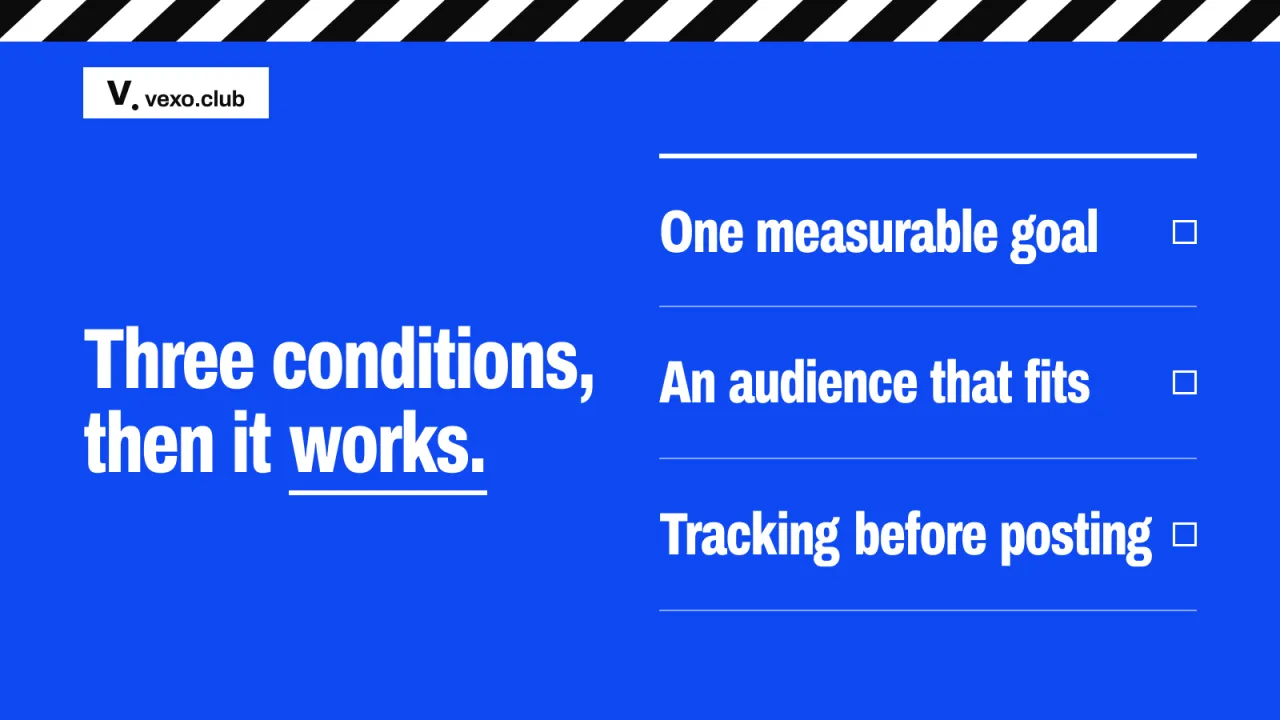
Three things decide whether building in-house is the right move this year, rather than next year or never. The first is campaign volume and frequency: a steady run of briefs justifies a standing team in a way that two campaigns a year never will. The second is whether the brand already has creative or production capability, because that capability is the expensive half of a programme team and a brand that already has it is halfway there. The third is whether a hybrid split (in-house strategy, agency execution) can do the job for another year while the first two signals mature. None of the three is a one-time test. A brand revisits them every planning cycle, because the answer changes as the programme grows.
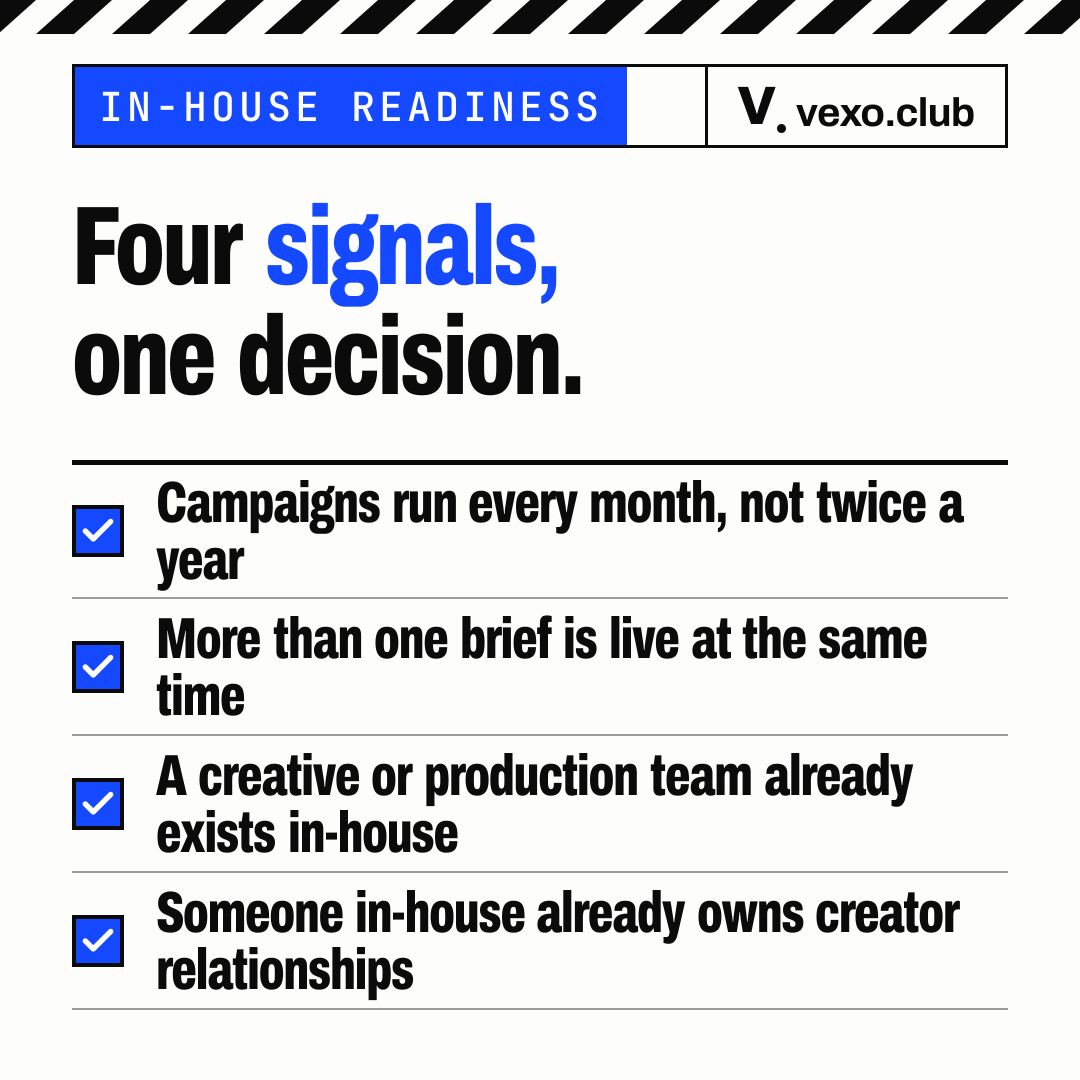
Four signals it is time to build in-house
The volume and frequency threshold
Volume is read as a pattern, not a number. An agency and an in-house team both cost the brand money whether or not a campaign is running, but they carry that cost differently: an agency’s fee tracks the work, while an in-house team’s salaries run on, idle or busy. That is why frequency matters more than spend. A brand briefing creators every month, with more than one campaign live at a time, is paying for a team’s idle weeks far less often than a brand running two bursts a year around a launch and the festive season.
- Steady, year-round briefs point toward a team: the always-on cadence described in an always-on roster’s first rotation is the pattern an in-house function is built for.
- Seasonal bursts (a launch, Diwali, the wedding season) suit an agency, which can staff up for the weeks that matter and stand down after.
- Overlapping briefs, where two or three campaigns run at once across products or regions, strain an agency relationship less than they strain a single in-house generalist trying to cover all of them.
- A single annual campaign rarely justifies a team under any reading of volume, regardless of its size.
Does the brand already have creative or production capability
The second signal is whether the brand can shoot, edit and ship creator content without hiring for it first. A brand that already runs an in-house studio, photographer or editing function (the kind of capability some agencies sell as a separate service line alongside sourcing and management) is not starting a programme team from zero. It is adding sourcing, contracting and reporting on top of production it already owns, which is a smaller build than standing up both halves at once.
A brand with no production capability at all is not disqualified from going in-house, but it is taking on a second build, not one. That brand should weigh whether to build production and programme management together, or to keep production with an agency or a freelance network while the programme side moves in-house. The two do not have to move on the same timeline, and forcing them to is where in-house builds stall.
Where volume and capability point: the decision grid
Put the two signals on one grid and the decision gets more legible than either signal read alone. A brand high on both is the clearest case for a full in-house team. A brand with production capability but low volume can let the agency keep sourcing and contracting while running shoots itself. A brand with volume but no production capability is the clearest case for a hybrid: the strategy and relationships move in-house, production stays with an agency or a vendor. A brand low on both stays with an agency, in full, for now.
Where a programme sits: volume against production capability
Capability without volume
An in-house creative or production team already exists, A few campaigns a year
- Keep the agency for sourcing and contracting
- Run production in-house, where the capacity already sits
Ready to build in-house
An in-house creative or production team already exists, Campaigns running every month
- Volume and production capability both exist
- A team can own sourcing, contracts and production together
Stay with an agency
No creative or production capacity in-house, A few campaigns a year
- Too little volume to justify a standing team
- No production capacity to build a programme on top of
Hybrid: strategy in-house, execution out
No creative or production capacity in-house, Campaigns running every month
- Keep the calendar, relationships and approvals in-house
- Hand production and overflow to an agency
Across A few campaigns a year Campaigns running every month
Up No creative or production capacity in-house An in-house creative or production team already exists
The hybrid model: in-house strategy, agency execution
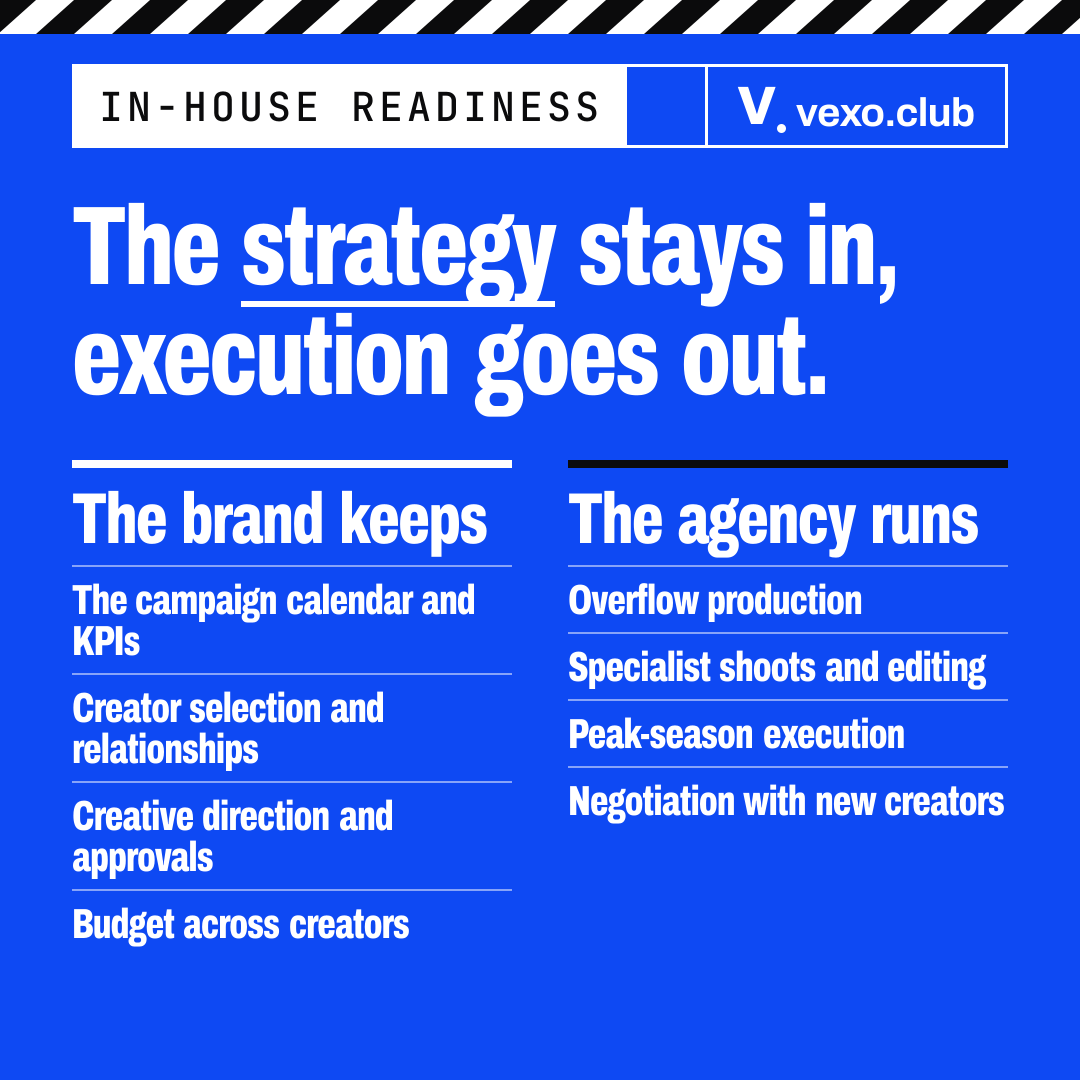
Most brands that end up building a full in-house team pass through a hybrid stage first, and some stay there by choice rather than moving further. In a hybrid, the brand keeps the decisions that need its own judgement (the calendar, the budget, which creators to work with, what a draft is allowed to claim), and hands the agency the work that scales with volume: overflow shoots, specialist production, peak-season execution and negotiation with creators the brand has not worked with before. The split works as long as each line has one named owner in writing, because an unnamed hand-off is where a hybrid quietly breaks down.
The hybrid split: strategy in-house, execution out
What the team needs before the first brief
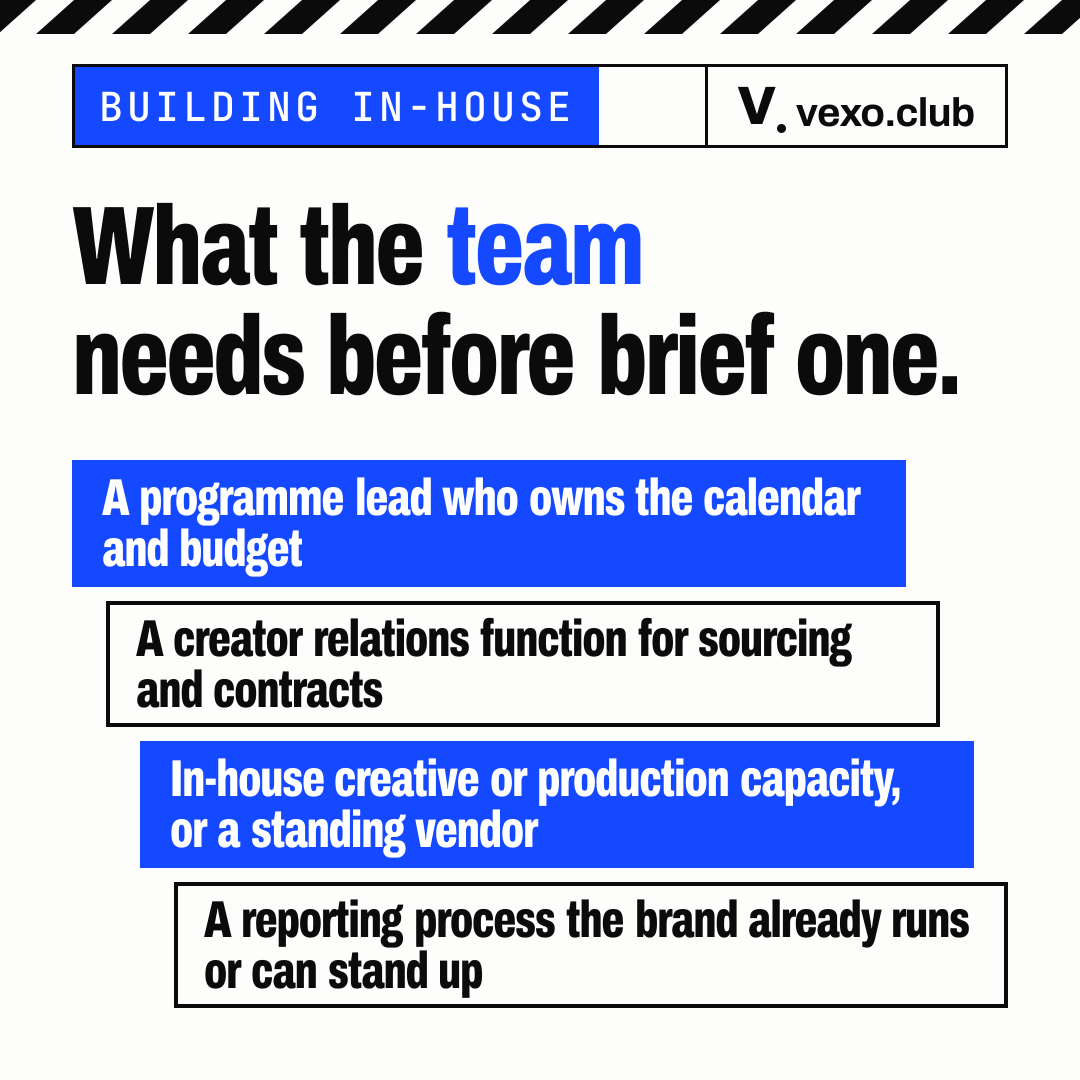
Readiness on the volume and capability signals is necessary but not sufficient. Before the first brief goes to an in-house team rather than an agency, four things need an owner: a programme lead who sets the calendar and budget, a creator relations function that sources and keeps relationships beyond one campaign, creative or production capacity (built or standing with a vendor), and a reporting process the brand can run without the agency’s sheet behind it. Hiring for the first and skipping the rest is the most common way an in-house build stalls in its first quarter.
What an in-house team needs before the first brief
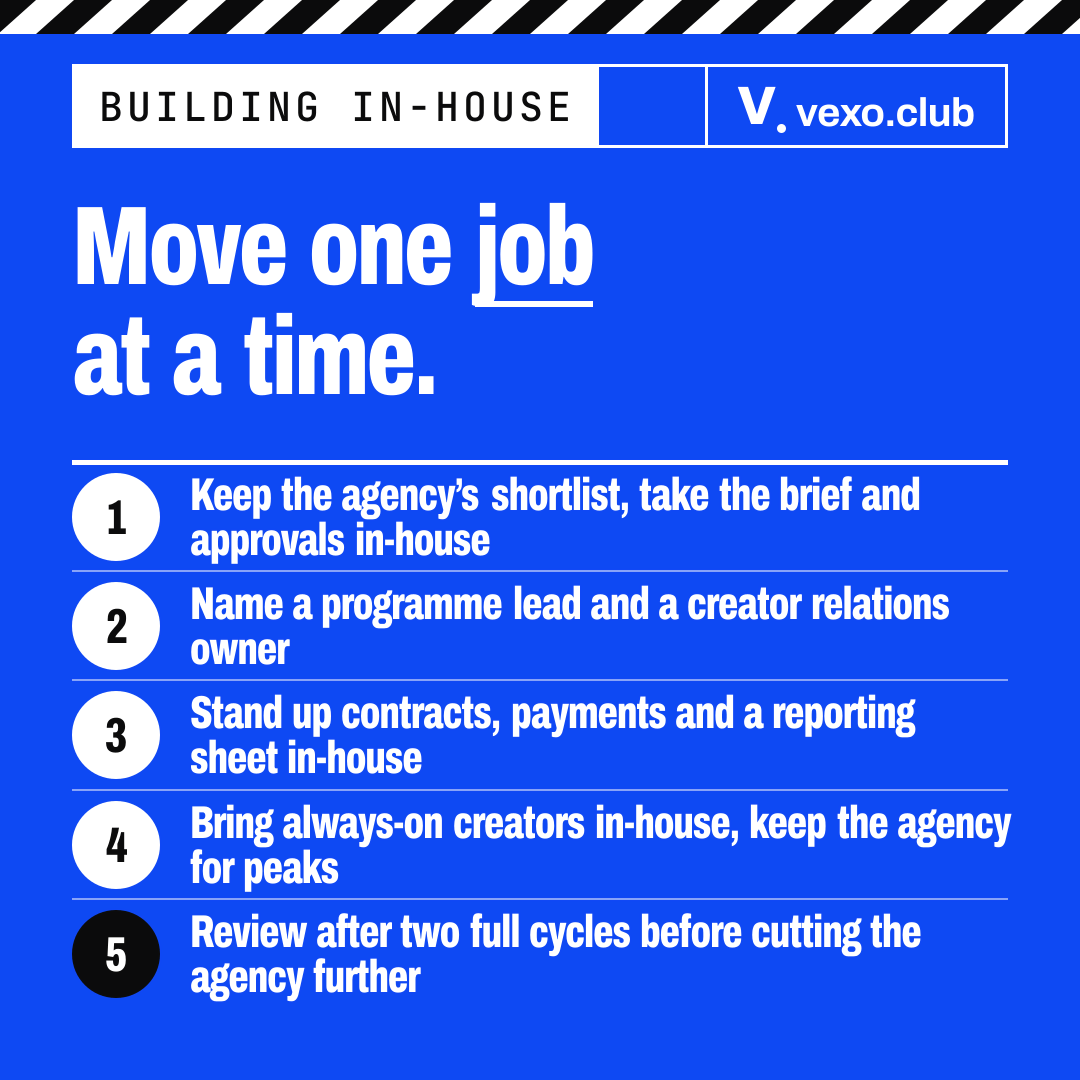
Moving one job at a time
A brand rarely moves every job in-house on the same day, and should not try to. The lower-risk order starts with the jobs closest to the brand’s own judgement (the brief and approvals), and moves outward: naming the people who will own creator relations and the calendar, standing up contracts and a reporting sheet, then bringing the creators who return brief after brief in-house, while keeping the agency for peaks the new team cannot yet staff. Each step should run beside the old setup for at least one cycle before the next step starts, so a dropped hand-off shows up while the agency can still cover it.
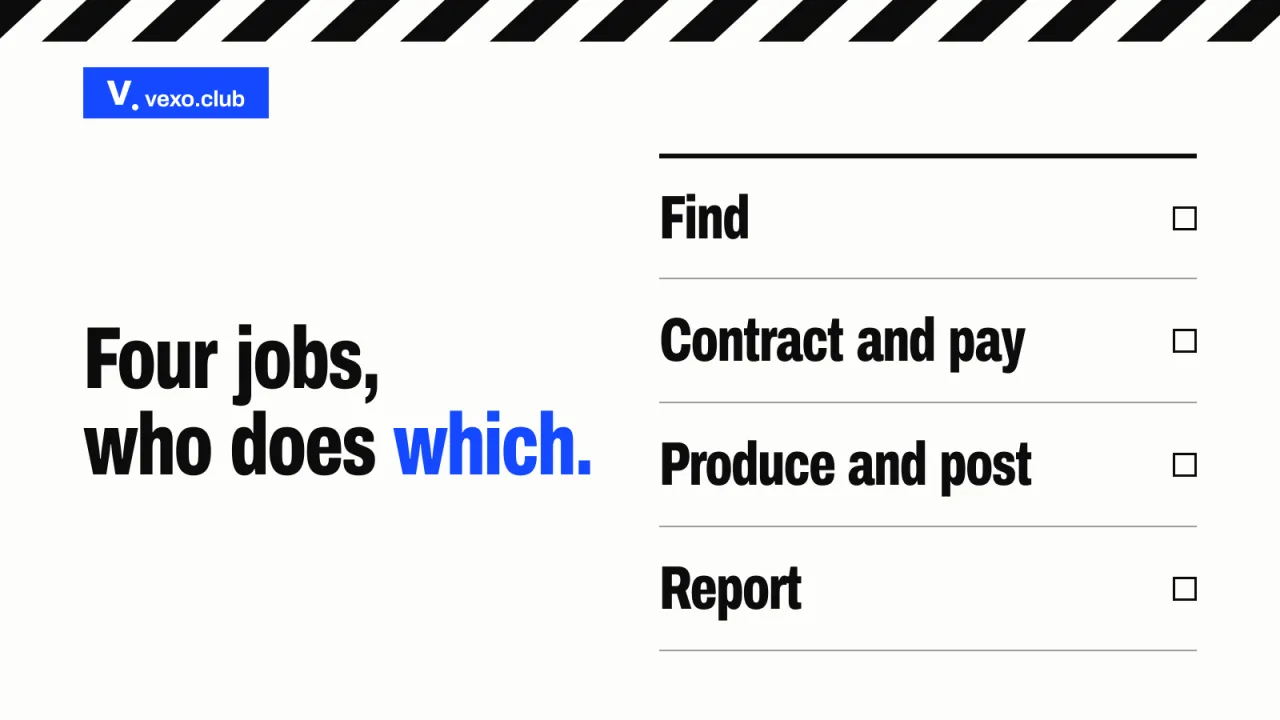
Moving the function in-house, one job at a time
The readiness test, before the first hire
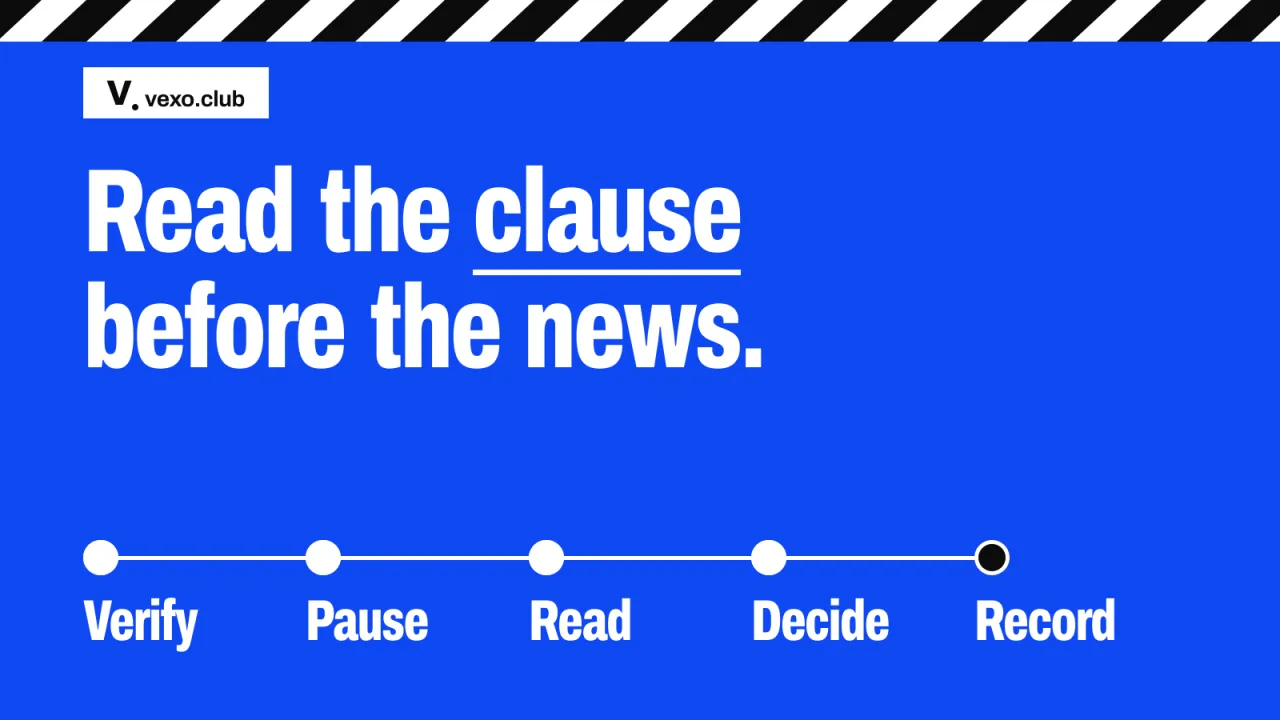
Run the questions below against next year’s plan, not the campaign that just finished. A brand answering yes to most of them is closer to a full in-house team than a hybrid; a brand answering no to most of them should read the volume and capability signals again before opening a requisition.
The readiness test
- Are campaigns running every month, not just around launches and festive weeks?
- Is more than one brief live at the same time?
- Does the brand already have a creative or production team, even a small one?
- Is there someone in-house who can own creator relationships and contracts full time?
- Can the brand absorb a slow quarter without the new team sitting idle?
- Is there a named person who can run reporting and vendor management from day one?
Where vexo.club fits
vexo.club is an agency, and most of the brands it works with are not yet past the readiness signals above, or have chosen the hybrid split deliberately rather than as a stopgap. The desk takes either brief: full service while volume and capability are still building, or a hybrid scope with the brand’s own calendar and approvals and the agency running sourcing, contracts and production. On record: creator fees are line items at fixed rate-card prices, the desk’s fee is stated separately, and usage is agreed per deliverable before the shoot. The questions to put to any agency, vexo.club included, are in the desk’s buyer’s guide. A brief naming where the brand already has capability and where it does not can go to the desk directly.
Questions brands ask
How many campaigns a year justifies an in-house influencer team? There is no fixed number, and a figure printed here would not hold for every category or budget. The signal to read is frequency and overlap (campaigns running every month, with more than one live at a time) against whether the brand already has the production capability a team would otherwise need to build from zero.
Is a hybrid model a permanent option or a step toward a full in-house team? Both, depending on the brand. Some brands use the hybrid split as a deliberate steady state, keeping strategy and relationships in-house while an agency carries production and overflow indefinitely. Others treat it as the stage before a full build, moving one more job in-house each cycle as volume and confidence grow.
Does having an in-house creative team mean a brand should build an in-house influencer team too? Not automatically, but it changes the calculation. Production capability is the more expensive half of an influencer programme to build from scratch, so a brand that already has it is adding sourcing, contracts and reporting on top of something it owns, rather than building both halves of the function at once.
What is the first job to move in-house, and the first to keep with an agency? The brief and approvals are usually the first to move, because they sit closest to the brand’s own judgement and need no new relationships to run. Specialist production, peak-season execution and sourcing creators the brand has not worked with before are usually the last to move, because they are the jobs that scale hardest with volume.
What happens if a brand builds an in-house team too early? The team sits idle between bursts, the cost runs on regardless, and the brand often ends up re-hiring an agency for the peaks it under-staffed for: paying for both routes without getting the full benefit of either. Reading the volume and capability signals honestly before the first hire is cheaper than unwinding a team built too soon.
Cite this page
When to build an in-house influencer marketing team: the signals that say you are ready. vexo.club, published 01 Nov 2026. https://vexo.club/blog/when-to-build-an-in-house-influencer-team
Send the desk a brief: it comes back as a shortlist and a directional band, never a public price.
Brief the desk