What a creator rate card actually contains
Content fee, usage, production and exclusivity are four numbers. Most disputes start when they are quoted as one.
Pricing Updated 3 min read The operators’ desk
In this article4 sections
A single figure against a creator’s name is the most expensive shortcut in this business. It hides four separate decisions, and every one of them can move after the contract is signed.
One figure against four lines
| A single figure | Four lines | |
|---|---|---|
| Decisions it shows | None: it hides four | All four, quoted separately |
| Where the asset may run | Assumed by the brand | Its own line: where, and for how long |
| A nil | Not applicable | A decision on the record |
| The bill in week three | An argument about trust | Nothing left to argue about |
The four numbers
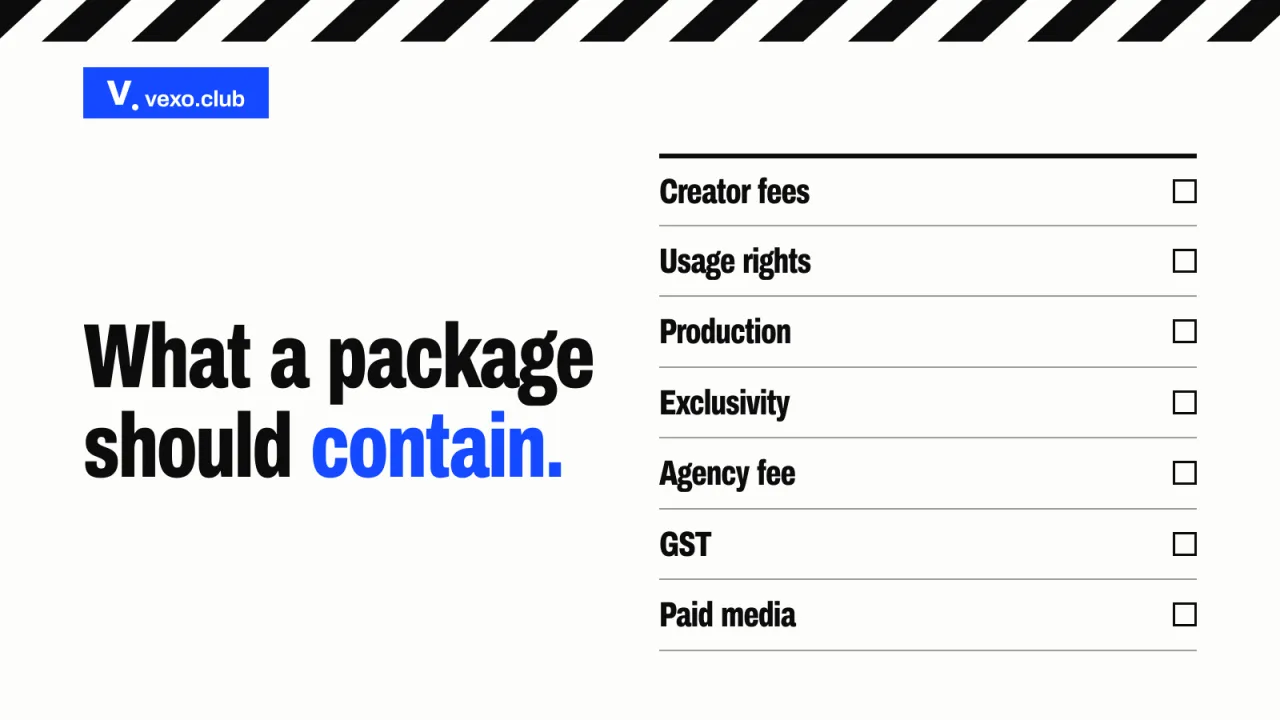
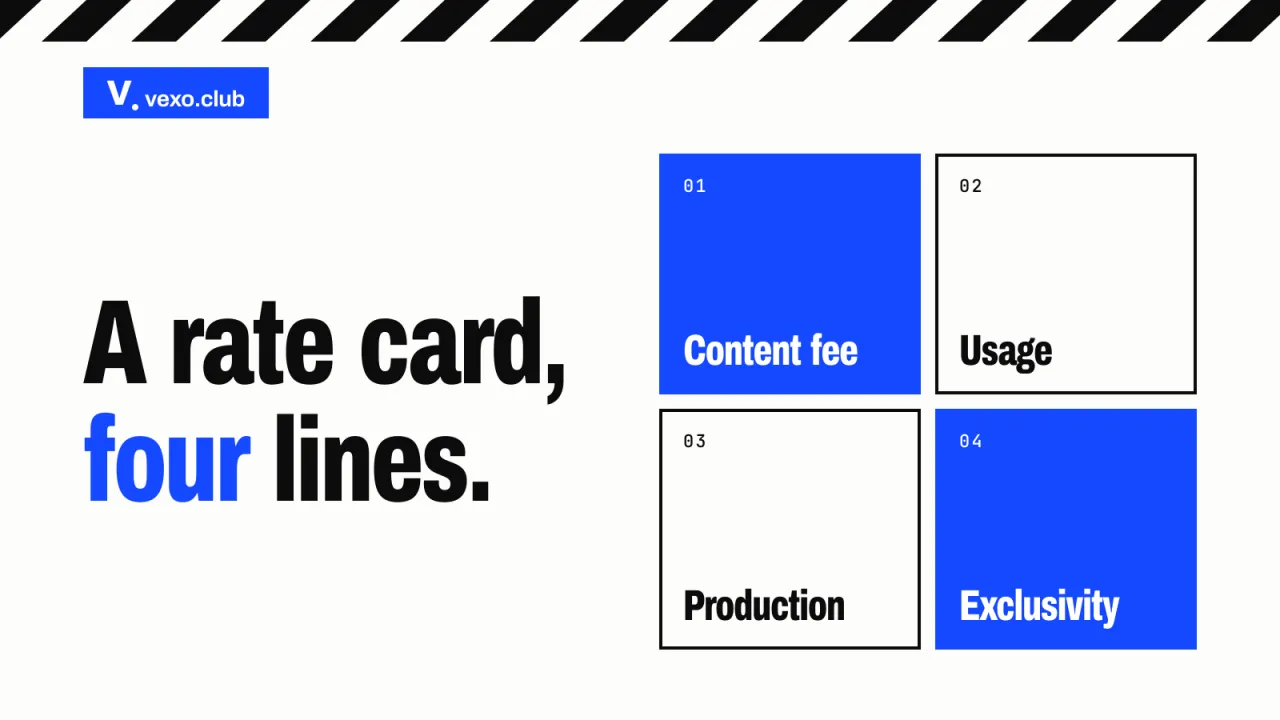
Four things sit behind a creator’s rate. They are quoted separately or they are not quoted.
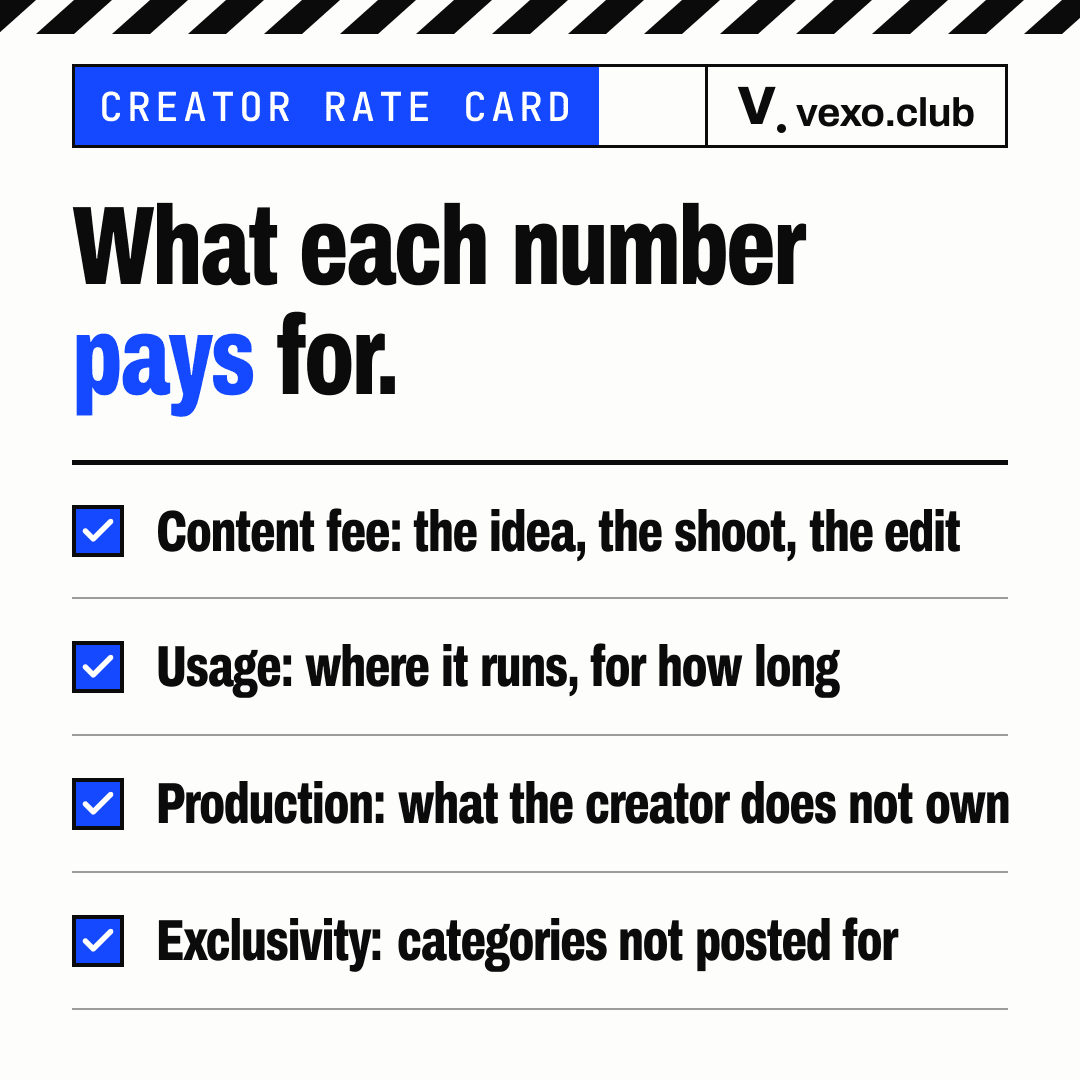
- Content fee pays for the idea, the shoot and the edit.
- Usage pays for where the finished asset may run and for how long.
- Production covers anything the creator does not own: a location, a second camera, a food stylist.
- Exclusivity pays for the categories the creator agrees not to post for.
Quoting a creator
Do
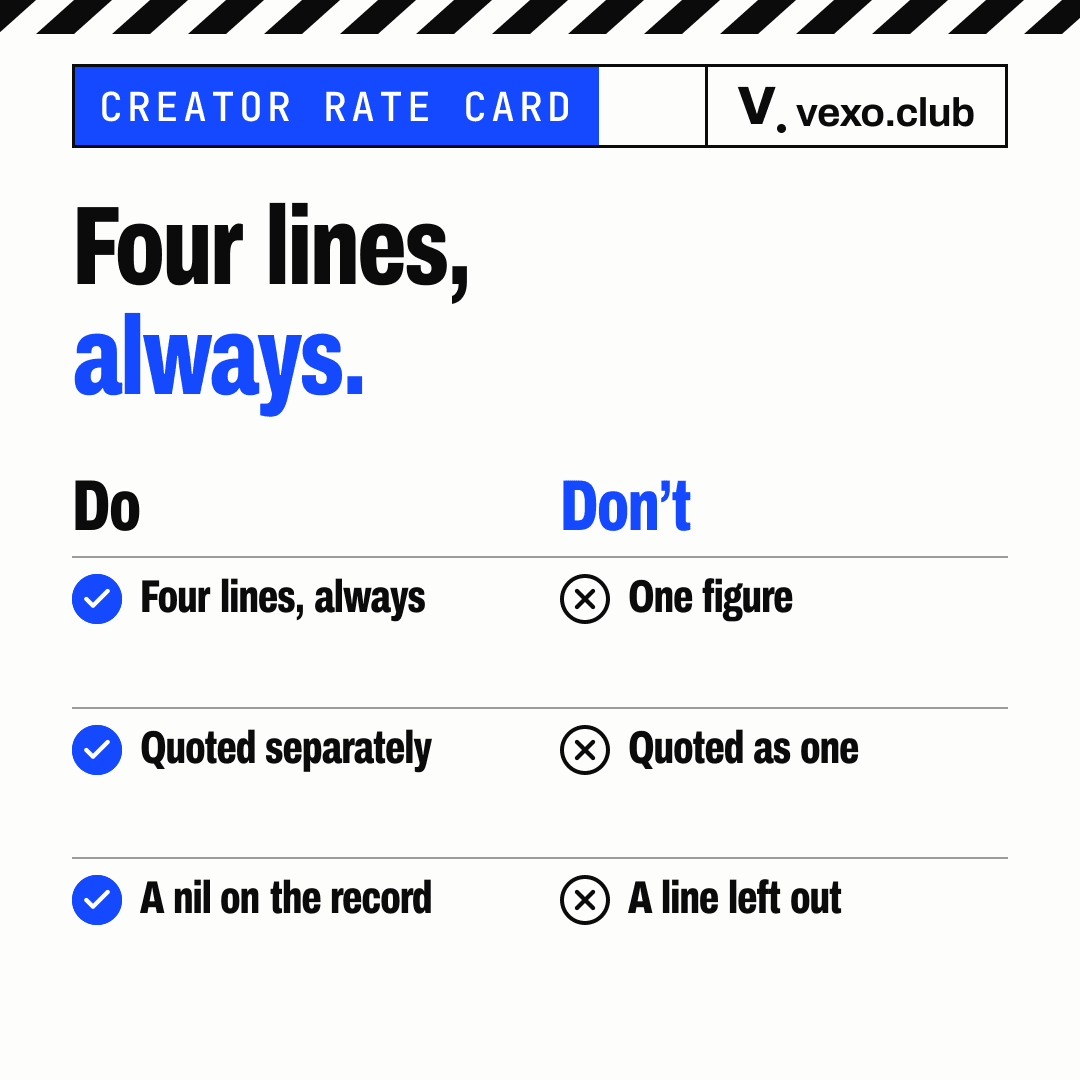
Quote content fee, usage, production and exclusivity separately
Don’t
Put one figure against a creator’s name
Do
Show all four lines, even when three are nil
Don’t
Leave a line out because it is nil
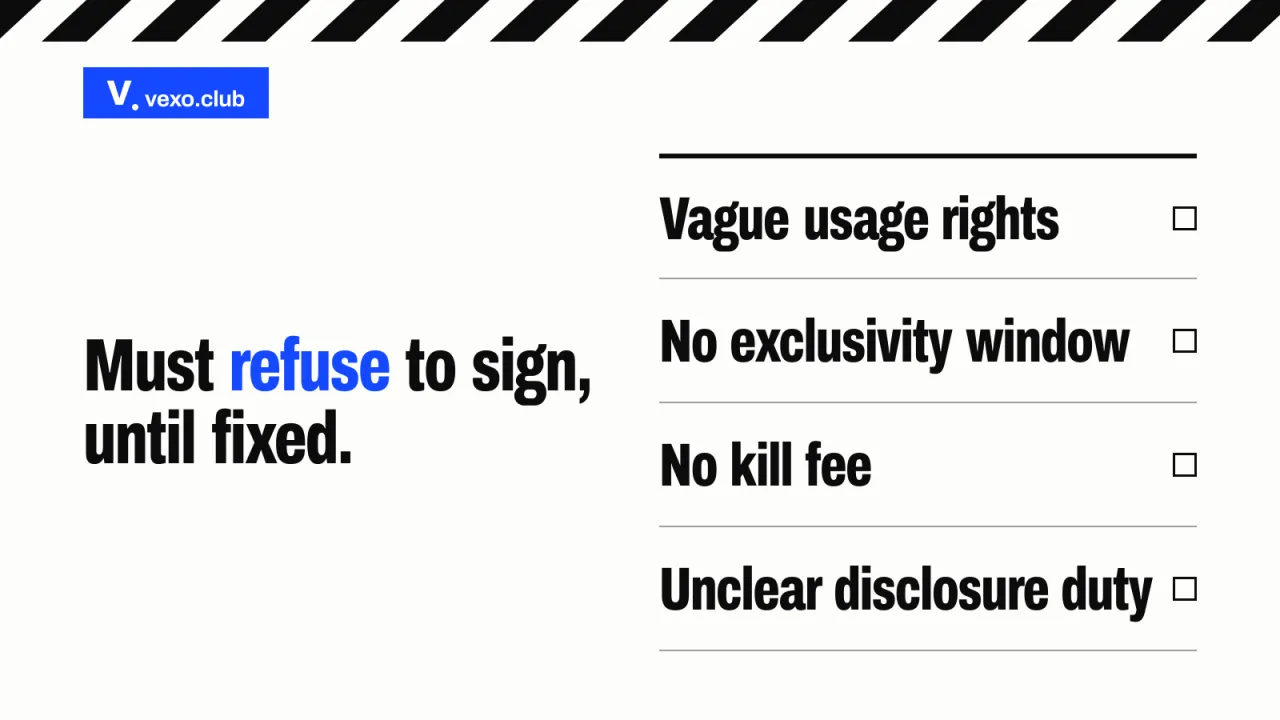
A nil is also the fastest way to find out a campaign does not need the usage it asked for.
Do
Write down where the asset may run and for how long
Don’t
Assume it may run as an ad for a quarter
What each line of a creator rate card pays for
Where does the quote go wrong?
A brand asks for a rate. A creator gives the content fee. The brand assumes it may run the asset as an ad for a quarter.
Nobody lied. The bill arrives in week three, and the argument is about trust when it was only ever about a missing line item.
How a single figure goes wrong
- The brand asks for a rate
- The creator gives the content fee
- The brand assumes it may run the asset as an ad For a quarter.
- The bill arrives in week three And the argument is about trust.
Where a creator quote goes wrong
How do we quote it?
Four lines, always, even when three of them are nil. A nil is a decision on the record. It is also the fastest way to find out that a campaign does not need the usage it asked for, which is the cheapest saving available on most briefs. Usage is the line most often left out, and usage rights splits it into its three fees; how the four lines add up to a campaign budget is on influencer marketing cost in India.
The four lines of a creator quote
- Content fee The idea, the shoot and the edit.
- Usage Where the finished asset may run, and for how long.
- Production Anything the creator does not own: a location, a second camera, a food stylist.
- Exclusivity The categories the creator agrees not to post for.
How the desk quotes a creator rate card
Questions brands ask
What does a creator rate card contain? Four numbers: content fee, usage, production and exclusivity. They are quoted separately or they are not quoted.
Why is a single figure against a creator’s name risky? It hides four separate decisions, and every one of them can move after the contract is signed.
Where does a quote go wrong? A brand asks for a rate, a creator gives the content fee, and the brand assumes it may run the asset as an ad for a quarter. The bill arrives in week three, and the argument is about a missing line item.
How does the desk quote it? Four lines, always, even when three of them are nil. A nil is a decision on the record, and the fastest way to find out that a campaign does not need the usage it asked for.
Cite this page
What a creator rate card actually contains. vexo.club, published 27 Sep 2026, updated 28 Oct 2026. https://vexo.club/blog/creator-rate-card-contents
Influencer marketing across India
Send the desk a brief: it comes back as a shortlist and a directional band, never a public price.
Brief the desk