How Google’s AI Overviews change what a brand marketer sees when they search for influencer marketing
A Google AI Overview now answers many influencer marketing searches before the usual list of links loads underneath it. What that does to a brand marketer’s search for an agency, a cost guide or a creator, and how a page should be built to still be the one the summary draws from.
Playbooks 13 min read The vexo.club desk
In this article8 sections
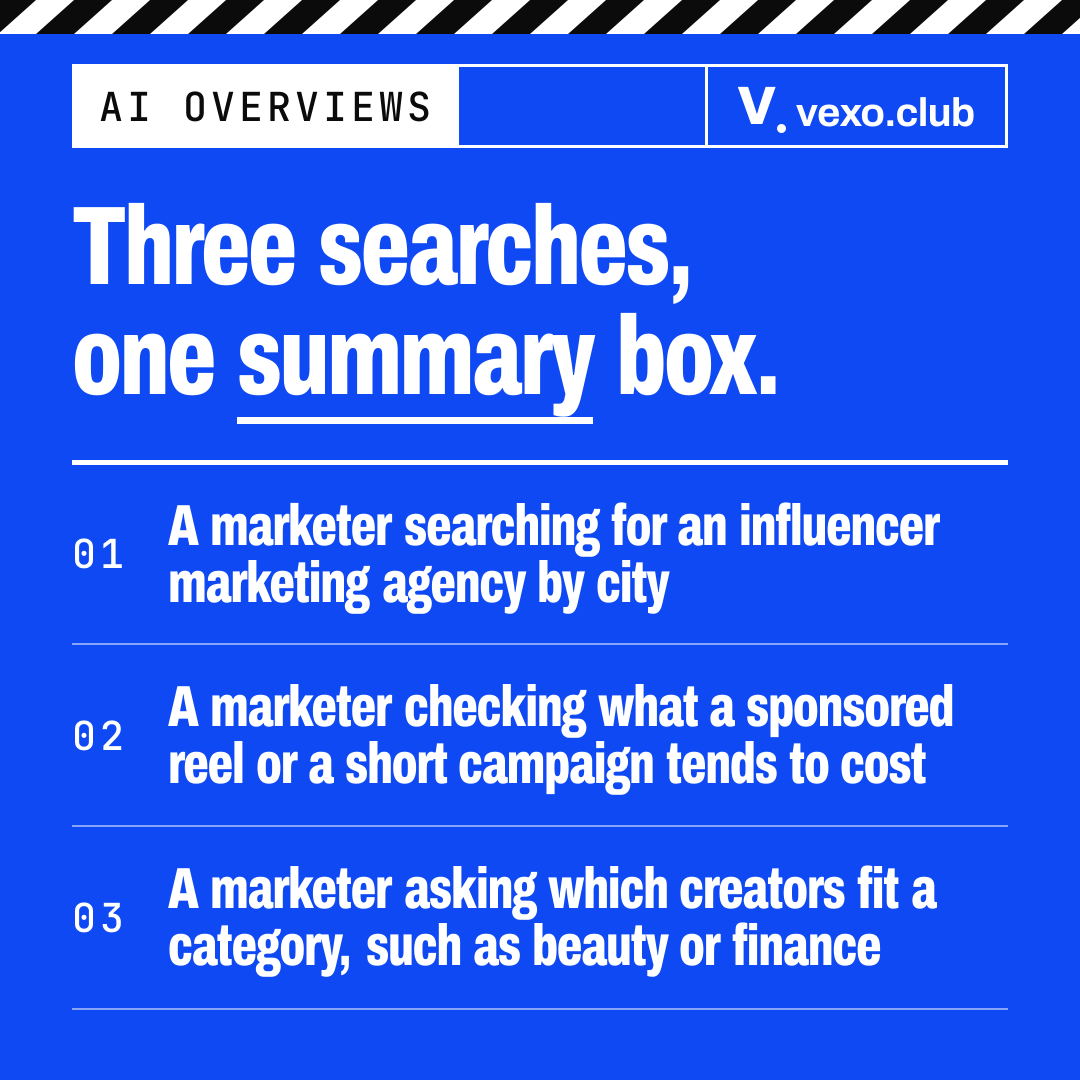
A brand marketer typing “influencer marketing agency in Bangalore”, “what does a sponsored Instagram reel cost” or “best beauty influencers in India to collaborate with” into Google increasingly does not land on a plain list of ten blue links. A generated summary sits above them: a few paragraphs or a short list, assembled from a handful of pages, with the usual results pushed down the screen underneath it. That box is Google AI Overviews, and for a growing share of commercial and informational influencer marketing queries, it is the first thing a marketer reads, sometimes the only thing.
This guide is specifically about that shift, not about AI search engines in general. It sets out what changed on the results page itself for the kind of query a brand marketer actually types when researching influencer marketing, why that class of query is exactly the kind Google tends to summarise, and what it means for how an agency should lay out its own pages so a direct, well-sourced answer still sits where the summary can find it.
What this guide covers
In short
- What an AI Overview adds to a Google results page for agency, cost and creator-recommendation searches
- Why influencer marketing queries are the kind of search Google tends to summarise rather than only list
- What a summary box does to the page an agency has already written, structurally
- How to order a page so the direct answer sits near the top, with the brand pitch after it
What actually changed on the results page
Google describes AI Overviews, in its own support documentation, as a feature that appears “when our systems determine that generative AI can be especially helpful”, for example when someone wants to understand information from a range of sources quickly. It was announced for India in August 2024, rolling out first in English and Hindi, and expanded through 2024 and 2025 to more Indian languages and a far larger share of queries. None of that is a guess about how often any one query shows the box; it is simply when and where Google said the feature arrived.
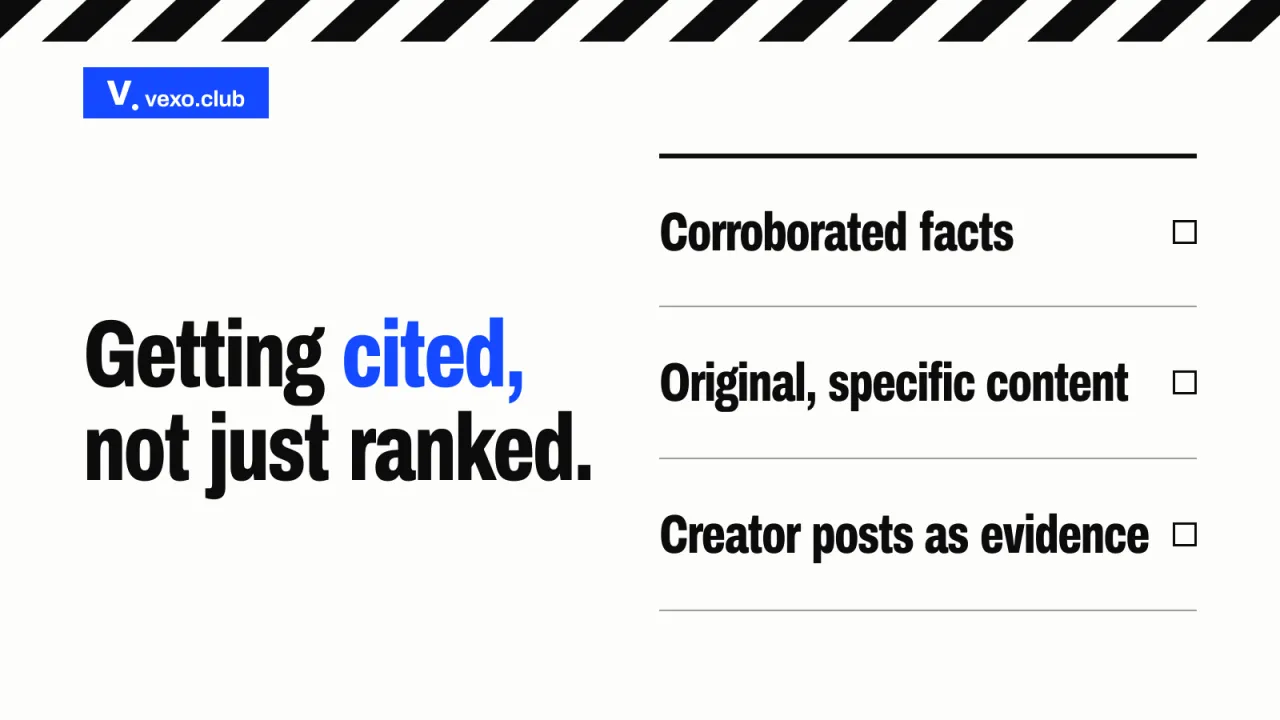
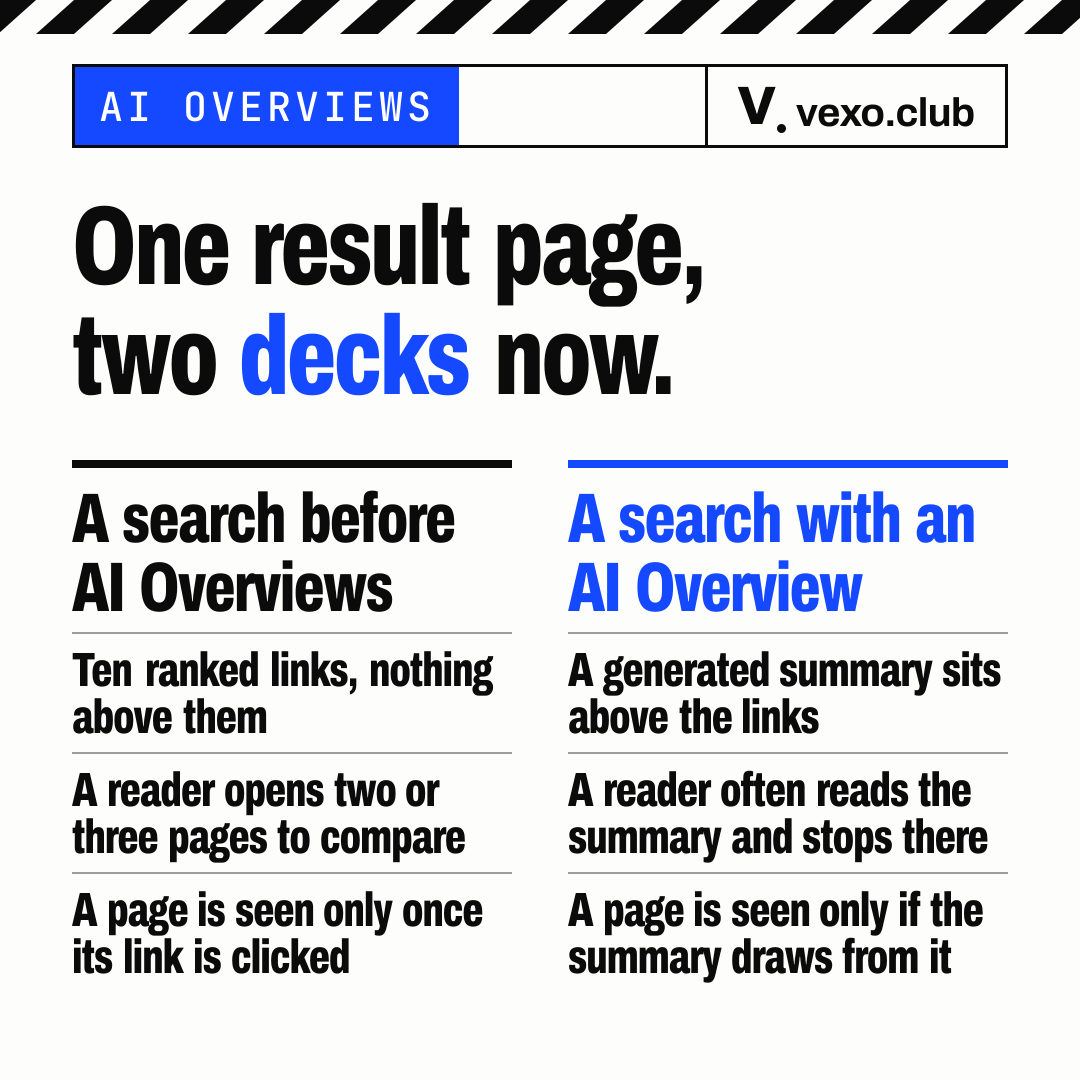
What matters for a brand marketer is the layout, not the mechanism. Before an AI Overview, the results page was one list: rank high enough, get the click. With an AI Overview, the page now has two decks. The top deck is a synthesised answer, drawing on several sources at once and citing a few of them with a link. The bottom deck is the familiar list, now one or two scrolls further down. A marketer can read the top deck, get a usable answer, and never reach the bottom deck at all, or read the summary, then click through to exactly one or two of the sources it named. Either way, being ranked eighth on the old list is no longer the main risk. Being absent from the few sources the summary drew on is.
How an AI Overview changes the layout of a Google results page
Why influencer marketing searches are the kind Google tends to summarise
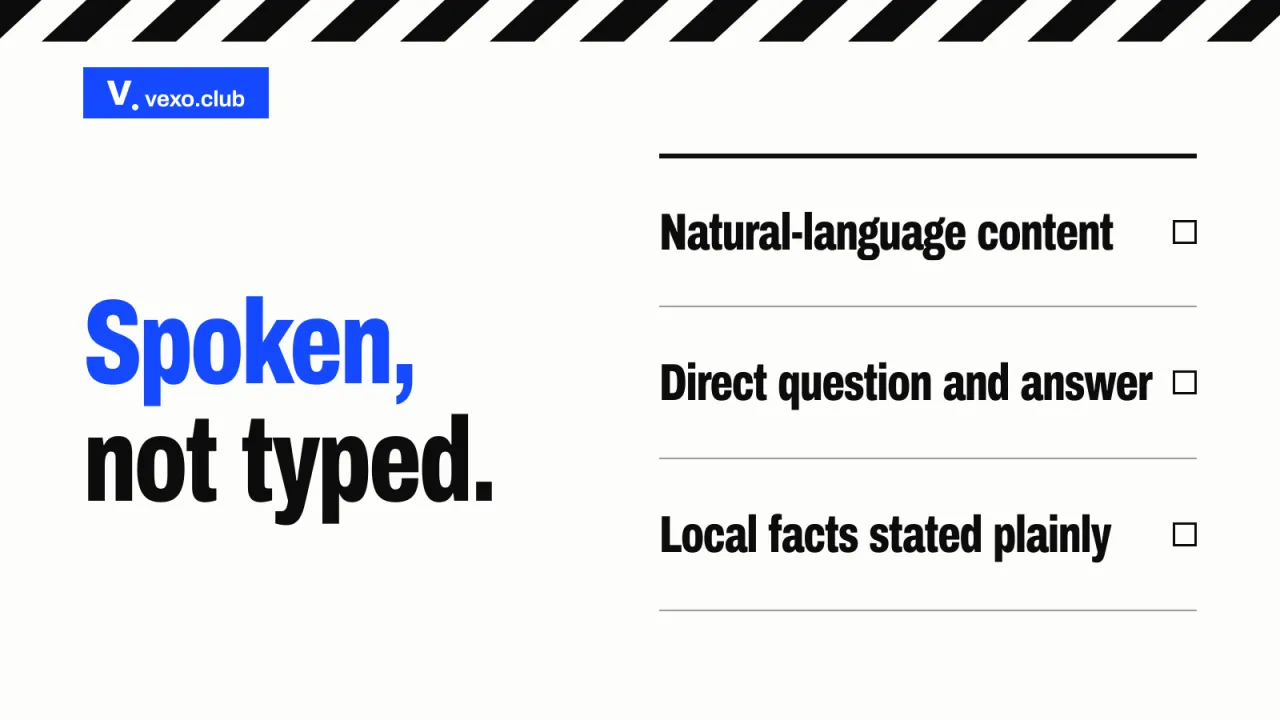
An AI Overview tends to appear on a query that has a synthesisable answer: something Google’s systems can assemble from a few pages that each state a similar fact or recommendation. A large share of what a brand marketer searches for in this category fits that shape exactly. “Influencer marketing agency in [city]” is a list query with a clear right answer pattern: names, locations, specialisms. “What does a sponsored reel cost” is a cost question with a band, not a single number, which is the kind of question a summary is built to condense. “Best beauty influencers to collaborate with” is a recommendation query, the single most summary-prone shape there is.
This is the part of the picture that is specific to influencer marketing rather than to AI search generally. A brand researching a legal filing or a tax rule tends to click through to a primary document regardless of what a summary says. A brand researching who to hire or what something costs is often satisfied by a short, synthesised answer, and has less reason to click further once it has one. That makes agency search, cost guides and creator recommendations three of the query types most exposed to this shift, and three of the query types an Indian influencer marketing agency’s own site is usually built to rank for.
Three influencer marketing searches that often surface a summary first
What Google has said about this, and why India is not an afterthought
Google has been explicit that AI Overviews changes how people use Search, not only what Search shows them, and it has said so with India named directly, alongside the US, as one of its biggest markets for the feature.
What Google said about AI Overviews usage in its biggest markets
“In our biggest markets like the US and India, AI Overviews is driving over 10% increase in usage of Google for the types of queries that show AI Overviews.”
Hema Budaraju, Vice President, Product Management, Search, Google, writing on the Google Search blog,
Source: blog.google
That line says nothing about any single brand’s traffic, and this guide makes no claim about click-through rates, lost visits or market share: none of that is verifiable from outside Google’s own systems, and a number invented to fill that gap would be worse than no number at all. What the line does establish, on Google’s own public record, is that India is not a secondary market for this feature. It was among the six countries the feature reached first after the US, in August 2024, and one of the two markets Google named in May 2025 when it said AI Overviews was driving over 10% more use of Google for the queries that show it. A page built for Indian search traffic is a page built for a results page that increasingly includes this box.
What a summary box does to a page already written for the old results page
Most agency pages, including older pages on this site before this kind of audit, were written for a reader who had already clicked through: an opening paragraph about the business, a section on philosophy or process, and the actual answer to the query (the city list, the cost band, the creator names) somewhere in the middle or further down. That order made sense when the only way to reach the page was a click. It works against the page once a summary is pulling a short, checkable fact from somewhere on it before a person reads the page at all.
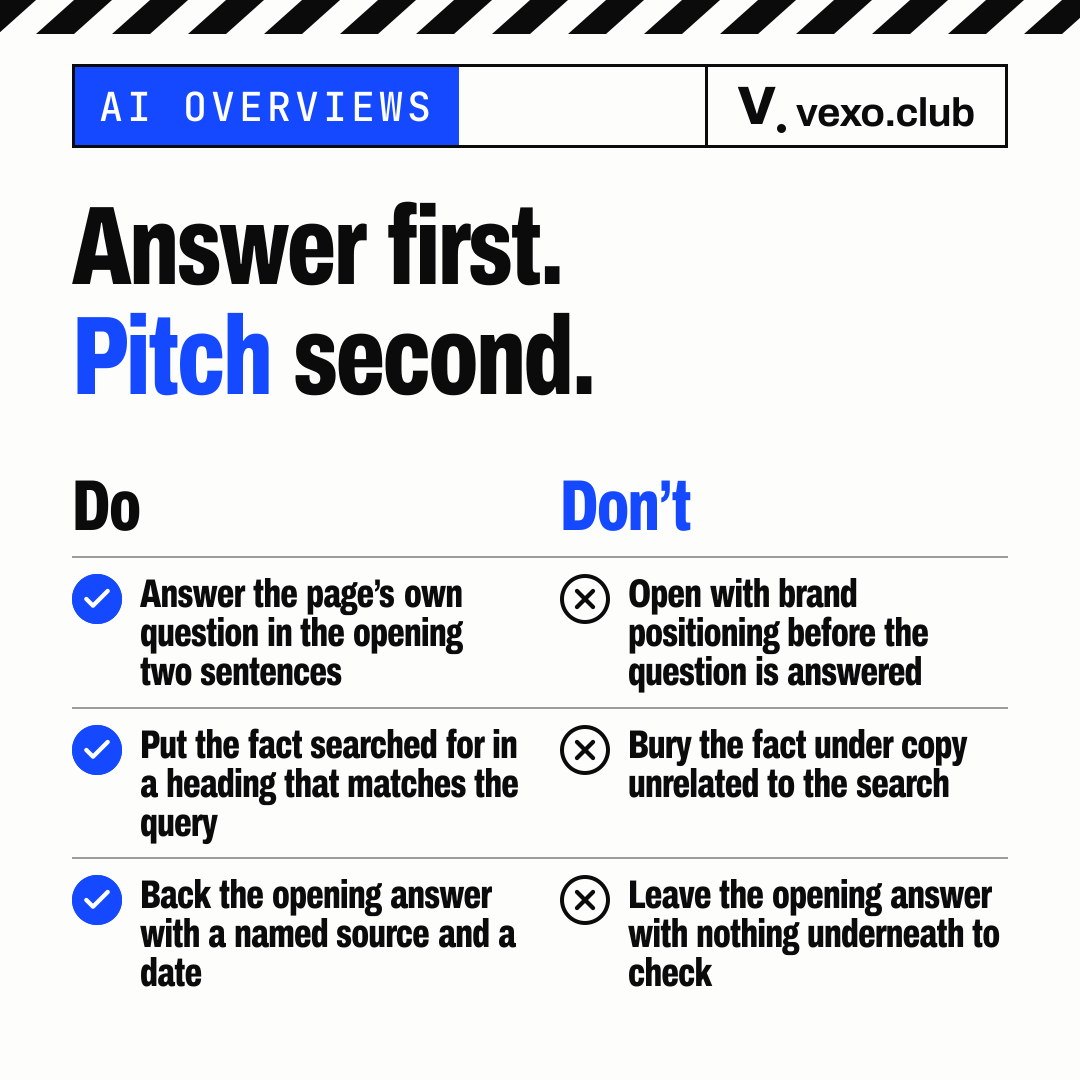
The practical requirement is not a rewrite of every page’s voice. It is a reordering: put the answer the query is actually asking for in the first two or three sentences, state it as something a summary could lift out whole, and move the brand framing to after it rather than before it. The comparison below sets out the difference in structure, not in tone.
A page built for the old results page against a page built to surface in an AI Overview
| Page built for the old results list | Page built to surface in an AI Overview | |
|---|---|---|
| Where the direct answer sits | After an introduction or a brand description | In the first two or three sentences |
| How the key fact is written | Woven into a long paragraph | Stated as a short, liftable sentence, list or table |
| What backs the claim | Often nothing, or an internal link only | A named, dated, checkable source |
| What the heading matches | A service name or a slogan | The exact question a searcher would type |
| Where the agency’s own voice carries most weight | The opening paragraph | The detail and the recommendation that follow the answer |
Structuring the page so the direct answer sits near the top
This is a change in order, not in honesty. Nothing about leading with the answer requires inflating a claim or stating something the agency cannot check (if anything, it requires the opposite), since a vague opening sentence gives a summary nothing worth lifting. Vexo.club’s own cost breakdown and follower-tier guide are written this way deliberately: a band or a definition in the opening lines, the reasoning and caveats after it, rather than a page that makes a reader scroll to find the number it was written to answer.
Putting the direct answer before the brand pitch
The same discipline applies to an agency-by-city page. A query like “influencer marketing agency in Delhi” is answered, as far as a summary is concerned, by a specific sentence: who operates there, from where, doing what kind of work. The Delhi agencies guide and the national list both open on that sentence rather than on a paragraph about the category’s growth, for exactly this reason, not because a summary box demands it, but because a reader scanning the page wants the same thing a summary does.
What still belongs further down the page
Leading with the answer does not mean the rest of the page stops mattering. A summary box names a source and links to it; the click that follows that link lands on the full page, not on the first two sentences. Everything that makes a page worth that click (the reasoning behind a recommendation, the caveats a short answer can’t carry, the named examples, the contact path) still has to live there. The order changes. The depth does not shrink.
What belongs below the opening answer on an agency page
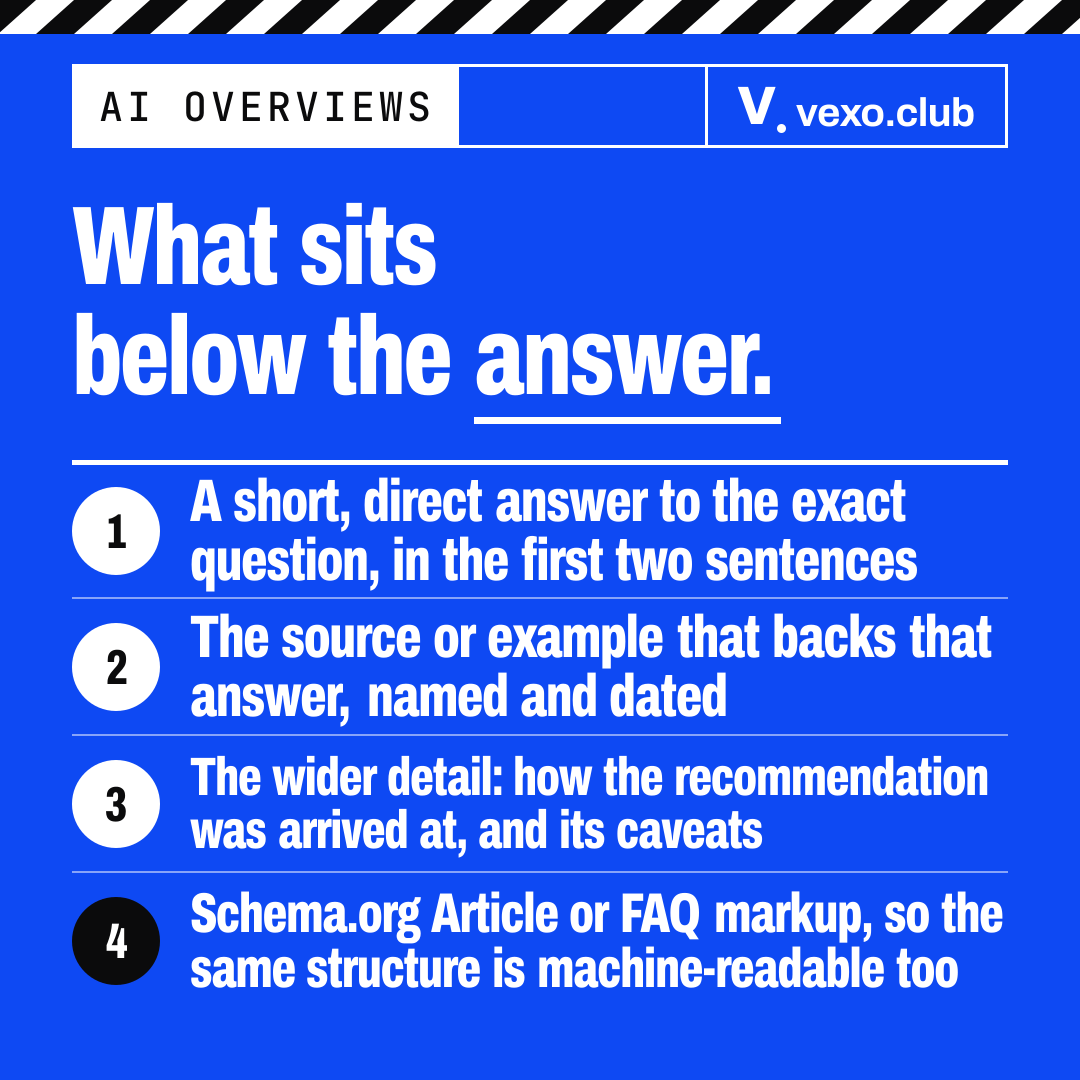
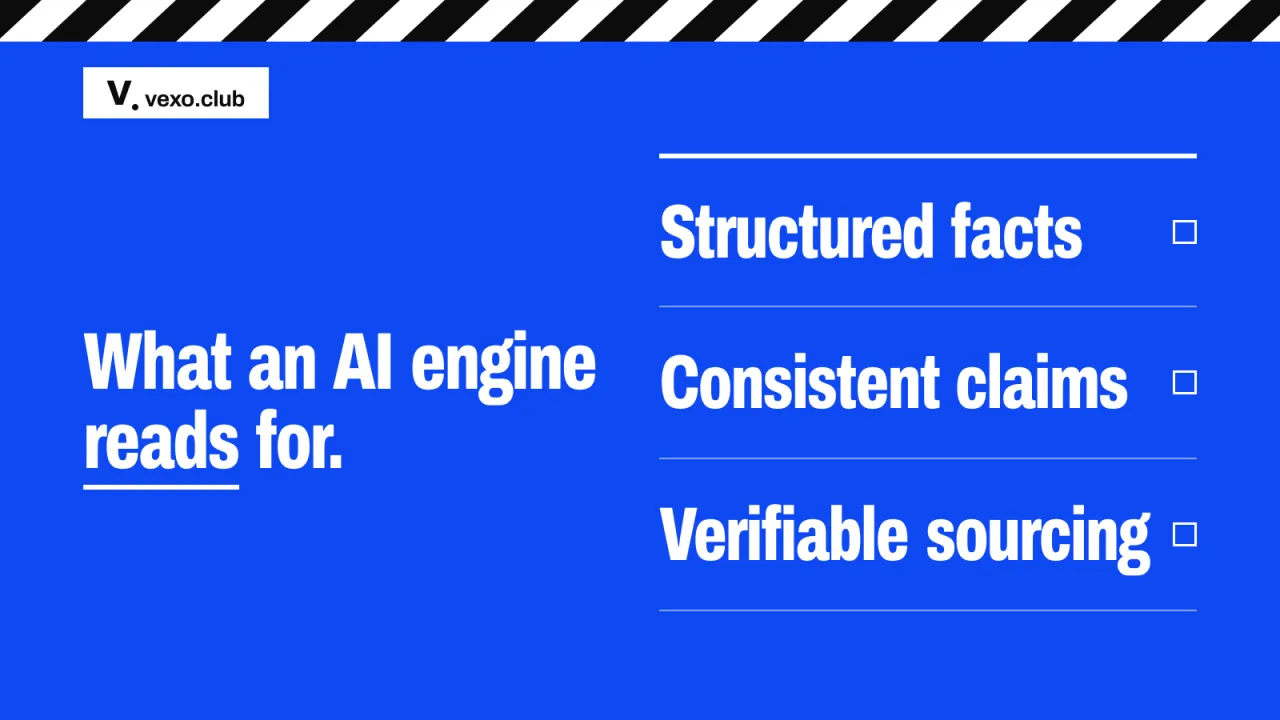
For Google itself, the prose carries this. Google’s guide to AI features says there are no additional requirements or special optimisations to appear in AI Overviews or AI Mode, no special schema.org structured data to add and no new machine-readable or AI text files to create: a page has to be indexed and eligible to show in Search with a snippet, and any structured data it carries should match the visible text. The machine-readable groundwork for other AI engines is covered in this site’s guide to how AI search engines choose sources; this guide stays with where the Google summary box sits on the page. Some in the Indian search industry are already calling this narrower discipline AI Overviews SEO: structuring a page so Google’s own summary finds a direct, sourced answer on it, rather than only chasing a ranking position in the list beneath it.
A structural checklist for agency pages
This is editorial reordering, not a rebuild. Most agency sites already have the right facts somewhere on the page; the work is moving them to where a summary, and an impatient reader, will actually look first.
A structural checklist for pages that compete with an AI Overview
- Open the page with a direct answer to its own heading, before any brand description
- State one fact or recommendation per paragraph, so a line can be lifted out whole
- Name a source or a dated example for the opening claim, not just for the page as a whole
- Write the heading as the exact question a brand marketer would type, not a service name
- Keep any cost reference a directional band, since no public rate card exists on this or most agency sites
- Keep any structured data matched to the visible text, since Google asks for no special schema to appear in AI Overviews
- Search the exact query the page targets, in a private browser, to see whether an AI Overview already sits above it
None of the above is a guarantee of appearing inside any particular summary. Google alone decides which pages it draws from, and this guide makes no claim about how often this site’s own pages are the ones chosen. What it describes is the only part of this a brand or an agency controls: whether the page gives a summary system, and a reader who skims past one, something plain and checkable to find. A brief that wants this work done across an existing site, rather than page by page, can be sent to the desk; what a brief to the desk contains is on the brands page.
Questions brands ask
What is Google AI Overviews, in plain terms? A summary Google generates and places above its usual list of results for a query it judges is well served by combining a few sources into one short answer. It launched in the US in May 2024 and reached India in August 2024, with language and coverage expanding through 2025.
Does an AI Overview mean fewer people click through to an agency’s page? This guide states no click-through number, because none can be verified from outside Google’s own data. What can be said plainly is that a summary box changes where the click happens: toward the handful of sources it names, rather than spread evenly across a longer list of results.
Should an agency rewrite its old blog posts for this? Not from scratch. The usual fix is reordering an existing page so its direct answer sits in the first few sentences rather than further down, and adding a named source where a claim currently has none. Most of the facts on a reasonable existing page do not need to change, only where they sit.
Does this replace ordinary SEO for an influencer marketing agency? No. A page that ranks well in the ordinary list because it answers a specific query clearly is usually the same page a summary draws from. The work described here sits on top of that discipline, not instead of it.
Can a brand pay to be named inside an AI Overview? Not into the generated answer: Google’s own support materials describe AI Overviews as drawn from organic web results and Search’s existing ranking systems. Ads are a separate placement, and Google Ads Help lists India among the countries where Text and Shopping ads can show within AI Overviews in English. Vexo.club’s services page lists SEO under Marketing, alongside paid media; earning a place in a summary is content and structure work, not a media buy.
Where can I read more about AI search and influencer marketing beyond Google specifically? How AI search engines choose sources covers the mechanics across ChatGPT, Perplexity and Google together, and getting cited by AI search is the playbook for earning a mention across all of them. This guide is the narrower one: what changed on Google’s own results page, and how a page should be ordered to answer it.
Sources
Cite this page
How Google’s AI Overviews change what a brand marketer sees when they search for influencer marketing. vexo.club, published 03 Nov 2026. https://vexo.club/blog/google-ai-overviews-influencer-marketing-searches
Send the desk a brief: it comes back as a shortlist and a directional band, never a public price.
Brief the desk