Influencer marketing in Dehradun, Rishikesh and Haridwar: a brief for the Uttarakhand pilgrim and wellness corridor
Temples, ghats and protected forest each have an owner with its own rules, several stricter this year. A brief for hospitality, wellness and travel brands in the Haridwar, Rishikesh and Dehradun corridor: the seasons, who must say yes before a creator films, and where a drone cannot go.
Playbooks 21 min read The vexo.club desk
In this article14 sections
A creator campaign in the Dehradun, Rishikesh and Haridwar corridor works when you sell the place that exists this month and not the postcard. Temples, ghats and protected forest each have an owner with its own rules. Several of those rules got stricter this year: phones and cameras are now kept out of the Char Dham temple complexes, and Haridwar’s Shri Ganga Sabha has put up boards against reels and drones at Har Ki Pauri. So brief for what a creator can film legally and respectfully, plan around closures, and treat every drone shot as optional.
This is a regional brief for hospitality, wellness and travel brands: retreats, ashrams, resorts, camps, rafting operators and the hotels and services around pilgrim traffic. The rules below are as of October 2026. The rules come from temple committees, district administrations and local trusts, and they shift by season and sometimes by the week. Every rule below names its source. Read the source again before you shoot, because a news report is not a notice.
The corridor brief, in short
- The corridor is four buyers, not one: Haridwar pilgrims, Rishikesh retreat and river visitors, the Dehradun gateway and the high shrines.
- Phones and cameras are kept out of the Char Dham temple complexes and reels and drones are banned at Har Ki Pauri, so the brief is built on what can be shot outside those lines.
- Seasons here are set by temple committees, district orders and river levels, so every date in a plan needs a reserve date.
- A drone shot is optional until a licensed pilot, the landowner and the district have all said yes in writing.
- Wellness content describes the day and the teacher. It does not describe a cure.
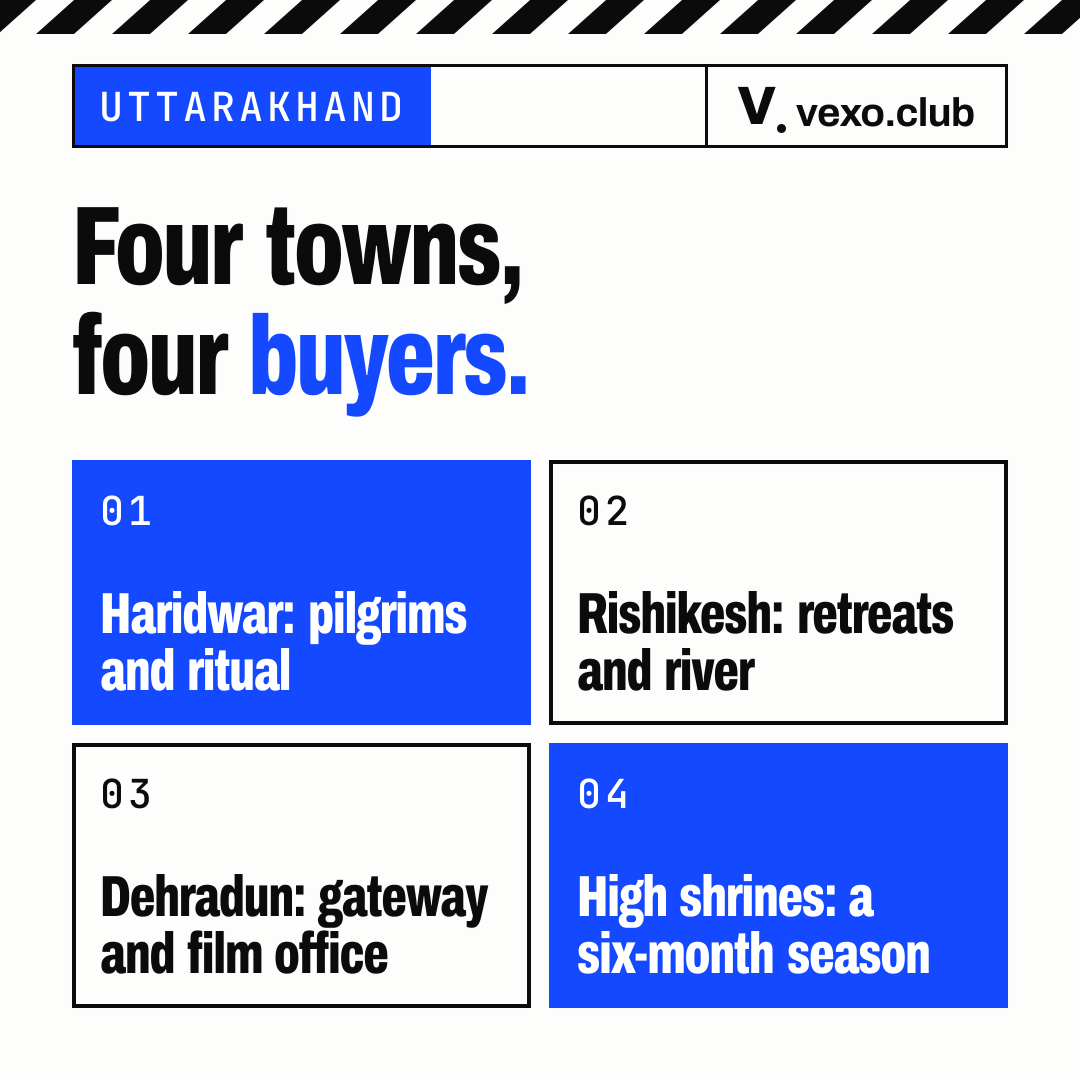
Four places that need four different briefs
Haridwar is a pilgrim town first. The Ganga aarti, the bathing ghats and the mela calendar set its rhythm, and most visitors arrive to do something devout. Rishikesh sells retreats, teacher training, river sports and ashram life to a mix of domestic weekenders and visitors who come for yoga. Dehradun is where the flights and the road to the hills begin, and where the state film office sits. The high shrines, Yamunotri, Gangotri, Kedarnath and Badrinath, run on a six-month season set by the temple committees.
A brief that says Uttarakhand and stops there casts one creator for all four and gets a mood film that fits none. Split the brief by place first. Then pick the creator who speaks to that place’s buyer. The Goa hospitality playbook makes the same argument for a beach state, and the travel and hospitality brief covers what any hotel or resort campaign carries.
Four places a corridor brief has to keep apart
Which season can you sell into?
The high shrines opened for the 2026 yatra on 19 April, Akshaya Tritiya, with Kedarnath following on 22 April, according to Hindustan Times. The closing dates were announced on Vijayadashami: Yamunotri and Kedarnath shut on 11 November and Badrinath on 16 November, per ETV Bharat. By mid-November Yamunotri, Kedarnath and Badrinath have all closed for the winter, so the 2026 yatra is over. Anything that needs a shrine in frame waits for spring. The deities move to winter seats, Badrinath’s to Jyotirmath, and darshan continues there.
The monsoon is the second gate. The yatra was suspended for two days in late July 2026 after landslides blocked routes. Rishikesh rafting stops for a monsoon break that began on 1 July this year. It resumed on 23 September and was halted indefinitely four days later when rain pushed the river up. A reopening date is a forecast. Plan a river shoot with a reserve week, not a reserve afternoon.
Then comes Kanwar. The 2026 Kanwar Mela ran from 30 July to 11 August. The Haridwar police plan closed the NH-58 stretch between Narsain, Roorkee and Haridwar to general traffic on peak days. It barred heavy commercial vehicles from the district from 5 August and kept kanwariya vehicles off the Delhi-Dehradun Expressway (Hindustan Times). A crew leaving Delhi NCR should avoid that fortnight. It is a devotional event and not a backdrop for a hotel reel.
The next date that matters is the Haridwar Ardh Kumbh. The dates announced by the Chief Minister run from 14 January 2027, Makar Sankranti, to 20 April 2027, Chaitra Purnima, with bathing days including Mahashivratri on 6 March, Phalgun Amavasya on 8 March and Mesh Sankranti on 14 April (Indian Express). Haridwar’s corporation has also been considering a wider meat ban in the city ahead of the mela, and a ban is already in force within a five-kilometre radius of Har Ki Pauri under old bylaws (Indian Express). A restaurant or food brand should brief for that, not against it. Rishikesh’s International Yoga Festival is listed for 9 to 15 March 2027 at Parmarth Niketan. Ask the organiser about coverage before you plan content there.
The corridor year, month by month
| Month | On the calendar |
|---|---|
| January | Mela begins Haridwar Ardh Kumbh opens at Makar Sankranti |
| February | Mela baths Bathing days bring road curbs and crowds |
| March | Yoga festival Rishikesh festival and the Mahashivratri baths |
| April | Yatra opens Shrines open at Akshaya Tritiya (19 April in 2026, 9 May in 2027); the mela ends |
| May | Yatra in flow Heavy pilgrim traffic and the tightest temple rules |
| June | Last dry stretch Rafting runs until the monsoon break |
| July | Monsoon opens Rafting shut; landslide closures can pause the yatra |
| August | Kanwar Mela Sawan fortnight; highway curbs across the district |
| September | Rafting reopens Late in the month, and only if the river allows |
| October | Clear weeks Closing dates for the high shrines are announced |
| November | Shrines close Deities move to winter seats |
| December | Winter Base towns carry on; snow at altitude |
Can a creator film inside the Char Dham temples?
No. Treat the temple complex as a place where the creator has no camera. The sequence of orders is worth knowing because the rule has tightened each year. In May 2024 the state police chief ordered a ban on reels and videography within 50 metres of the four temples, and India Today reported that carrying a phone was not itself banned then. In January 2026 the Garhwal commissioner said phones and cameras would be completely banned inside the temple complexes. Devotees deposit them before darshan and may take photos and videos with the temple behind them afterwards.
At Kedarnath this April the Rudraprayag police chief repeated it: no reels or videography in the courtyard, no phones inside the perimeter, lockers provided, and action already taken against two drones flown without permission. What is left for a brand is everything outside the gate. That means the approach, the queue, the town, the river, the stay and the creator’s own account of the journey told after darshan. A first-person piece about getting there serves a hotel or tour operator better than a sanctum clip the viewer cannot enter anyway.
Anyone travelling to the shrines, crew included, should register on the official yatra registration portal. It issues a letter with a QR code that is checked at the Dham, and the temple committee’s own page asks pilgrims to complete it before they set out. Vehicles have their own permit route on the same page.
Haridwar ghats and Har Ki Pauri: what the new boards say
In January 2026 the Shri Ganga Sabha, which manages Har Ki Pauri, put up boards stating that drone flying within Har Ki Pauri and Malviya Island is prohibited and that shooting reels or videos for entertainment is banned, with legal action threatened if such content is circulated, per TV9. The boards went up after a viral video of two visitors drew objections from priests and a police inquiry. The reporting does not say what the Sabha will allow for a documented brand shoot, and the desk could not find a published rule that does.
The same boards say entry for non-Hindus is prohibited. The Sabha’s president told TV9 that entry was already restricted and the boards were a reminder, and the desk could not verify the legal basis. For a brand the practical point is narrow. Settle access with the Sabha and the city police in writing before you book any creator for a Har Ki Pauri sequence, so nobody is turned away on the day or put in an awkward position on camera. If you cannot get that letter, shoot the town, the market, the stay and the river from public stretches and leave the main ghat out.
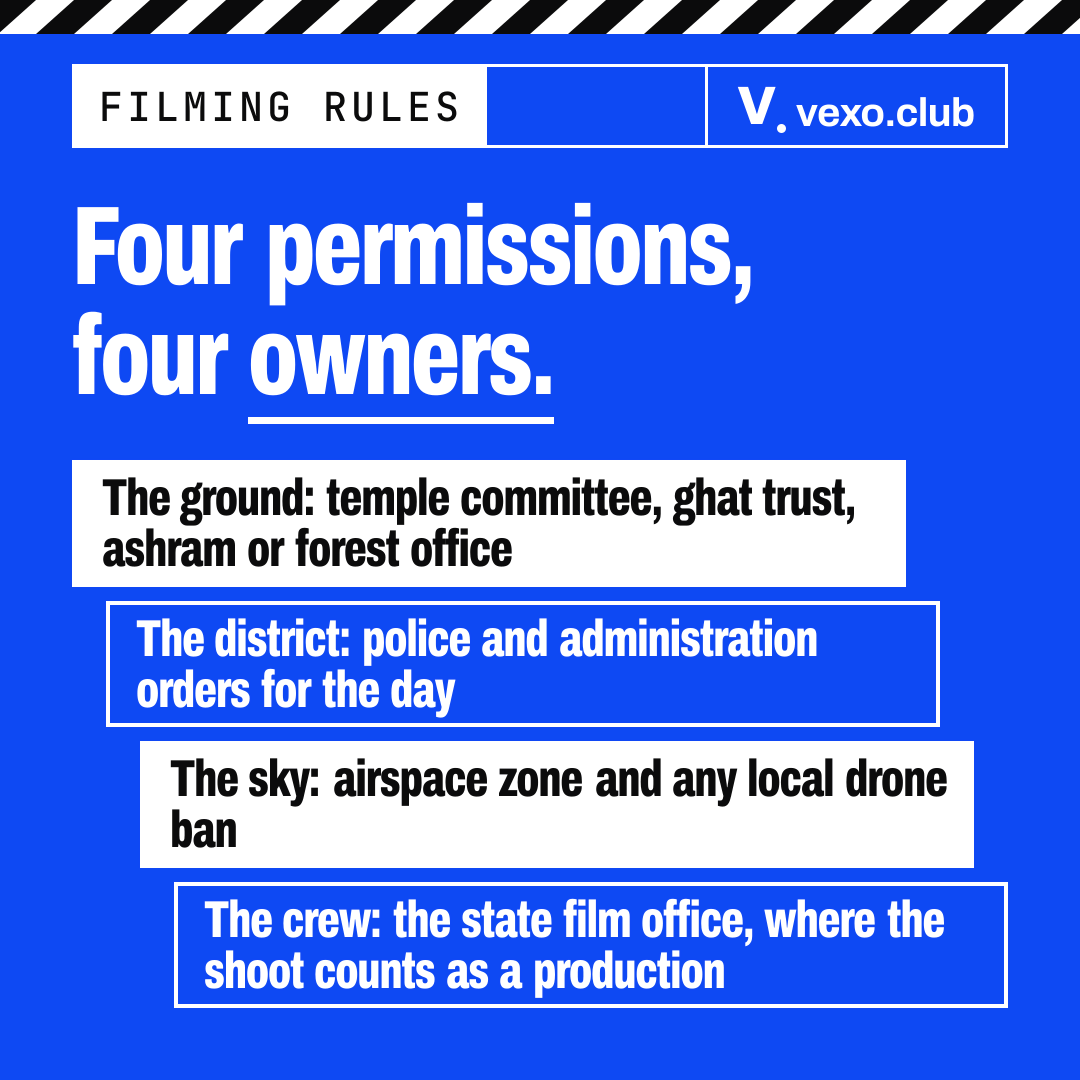
Who decides, and what is restricted, by place
| Who decides | Phone, camera and reels | Drone | |
|---|---|---|---|
| Char Dham temple complexes | Temple committees, district administration and police | Phones and cameras kept out of the complex; lockers provided | Not without permission; police have acted on unauthorised drones |
| Har Ki Pauri and Haridwar ghats | Shri Ganga Sabha and city police | Entertainment reels and videos banned on the Sabha’s boards | Banned at Har Ki Pauri and Malviya Island |
| Rishikesh ghats and ashrams | The trust or ashram that owns the ground | Set by each owner, so ask in writing | Owner consent, airspace zone and any district order |
| Rajaji and other protected forest | Forest department and the Chief Wildlife Warden | Permit needed for photography and film-making; none in core tiger habitat | Assume no unless the permit says otherwise |
| Rafting stretches on the Ganga | Tourism department, district tourism officer and the licensed operator | Operator and guide rules apply on the water | Airspace zone, operator consent and the day’s orders |
Rishikesh: ashrams, ghats and the river
Rishikesh has no single gatekeeper. Ghats, ashrams and cafes belong to trusts and owners who set their own filming rules, and none are published centrally. Ask each owner for a written yes. The river is different. Rafting runs under the state’s river rafting and kayaking rules, which the Cabinet moved to amend in July 2026 to add penalties for unlicensed operation, a requirement that no raft goes out alone and fines for missing life jackets and helmets, per Uttarakhand News Network. So an adventure piece should use a licensed operator, show the safety kit on camera and never put a creator on the water without the operator’s guide.
The September suspension for the Muni-ki-Reti stretch came from the Tehri Garhwal district tourism and adventure officer, per Hindustan Times. Ask the operator which office governs the day’s shoot. A bungee or camping brief has the same shape: a licensed operator, the district tourism office and a reserve date.
Drone rules: what the law allows and what the ground adds
The national rule is the Drone Rules, 2021. As PIB set out at notification, no permission is needed in a green zone, which is airspace up to 400 feet not designated red or yellow, and the yellow zone around an airport shrank to 12 kilometres from the perimeter. The Digital Sky platform carries the airspace map. The licence exemption PIB lists covers nano drones and micro drones used non-commercially. A paid brand shoot is commercial, so assume the pilot needs the remote pilot certificate and hire accordingly. The rules have been amended since, starting with the Drone (Amendment) Rules, 2022, so read the current text before a shoot. A draft Civil Drone Bill went out for comment in September 2025 and as of October 2026 it is not among the Acts the Ministry of Civil Aviation lists.
Here is the catch for this corridor. A legal green zone does not override a local ban. Kedarnath police have acted on drones this season. The Ganga Sabha prohibits them at Har Ki Pauri. Haridwar’s administration banned public drone flying around the ghat during the 2023 Kanwar Yatra. After the Dharali flash flood in August 2025 the Uttarkashi administration banned drones over Dharali, Harsil, Matli and Chinyalisaud so rescue helicopters could work. Uttarakhand also announced in 2020 that drones needed special permission, which the desk could not confirm is still the position. The rule for a brief is simple. If a shot matters, get the landowner and district to say yes in writing. Then design the film so it survives without the shot.
Rajaji and other protected forest
Section 28 of the Wild Life (Protection) Act, 1972 lets the Chief Wild Life Warden grant a permit to enter a sanctuary for photography and film-making that makes no change to the habitat and causes no adverse impact on wildlife. The National Tiger Conservation Authority’s compendium of guidelines states that no film shooting can be permitted in the core or critical tiger habitat. A safari ticket and a phone make a tourist. A branded shoot with a creator, a gimbal and a hotel logo is a different category and needs the forest office. The desk found no published drone route for Rajaji, so treat it as no-fly.
Who to ask, and in what order
The state runs a single window through the Uttarakhand Film Development Council in Dehradun, which routes an application to the district administration, the police and the forest department, as its workflow shows. The council’s own pages quote different turnaround times, from a few days to two weeks, so plan on the longest. The policy is written for films, serials and albums. The desk could not find a published threshold for crew size or for a creator shoot, so whether a small brand reel counts is a question to put to the council in writing. Do not assume the answer either way.
Owners talk to each other. A trust that hears about your shoot from the police before it hears from you will say no, so ask in this order.
The order to ask in
- Classify the ground Temple, ghat, ashram, forest or open road. The owner decides the next step.
- Ask the owner in writing Dates, crew size, gear, what the post will show and who is paying.
- Check the day’s orders District and police orders change by season and by event.
- Clear the sky separately Airspace zone on Digital Sky, then the owner, then the district.
- File with the film office where it applies The single window routes to district, police and forest.
- Carry the papers Printed letters, registration slips and operator licences on the day.
Keep the letters with the crew on the day.
Who has to say yes before a creator films in the corridor
What regional creators can carry and what they cannot
The case for a regional creator here is real. A Garhwal or Haridwar-based creator knows which road is open this week and which owner will answer the phone. They can reshoot on Tuesday when Monday was lost to a closure, which a creator flying in cannot. Their following is often domestic and trusting in a way a metro travel account is not. The regional language brief covers casting by language, and the travel vlogger roundup covers creators who already travel the circuit.
What a regional creator can and cannot carry
Can carry
- The language and local trust of the audience
- Knowledge of closures, road status and who owns the ground
- A working relationship with the ashram, camp or operator
- A fast reshoot when a closure scrubs the day
Cannot carry
- A permit for sacred premises that nobody can grant
- A drone licence, unless they hold the certificate
- A medical or yoga credential they do not have
- A national audience on their own
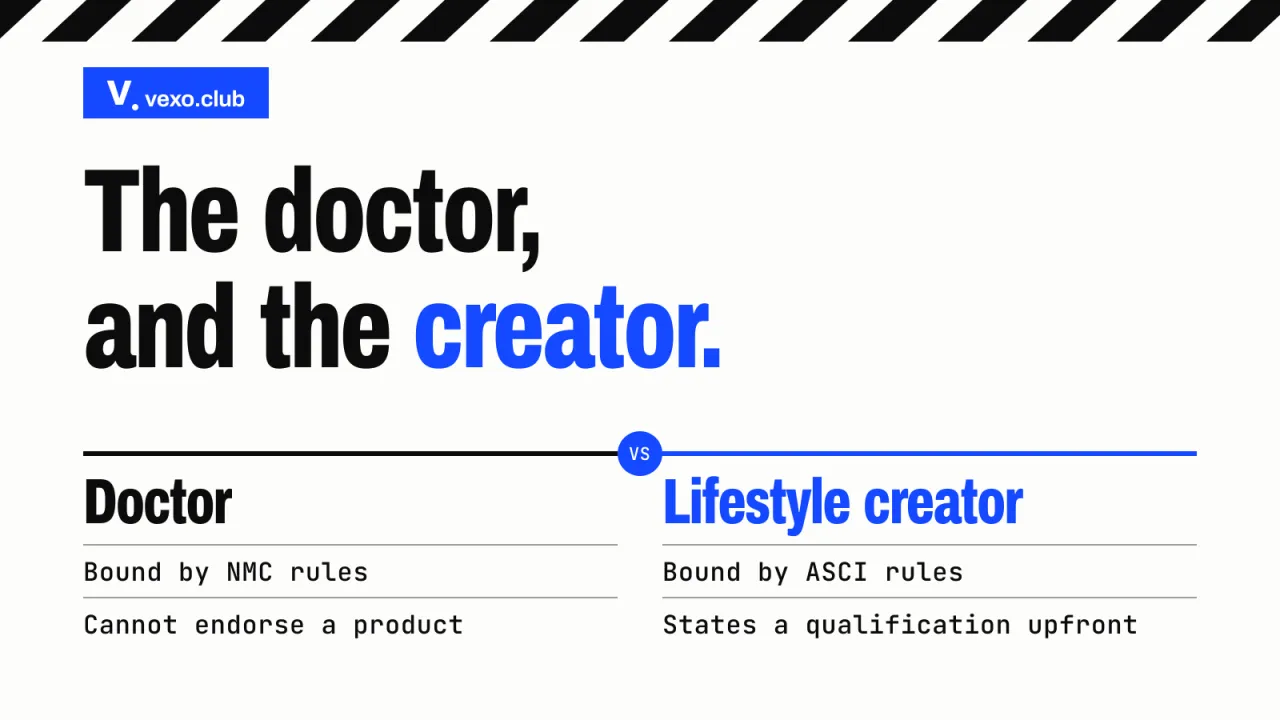
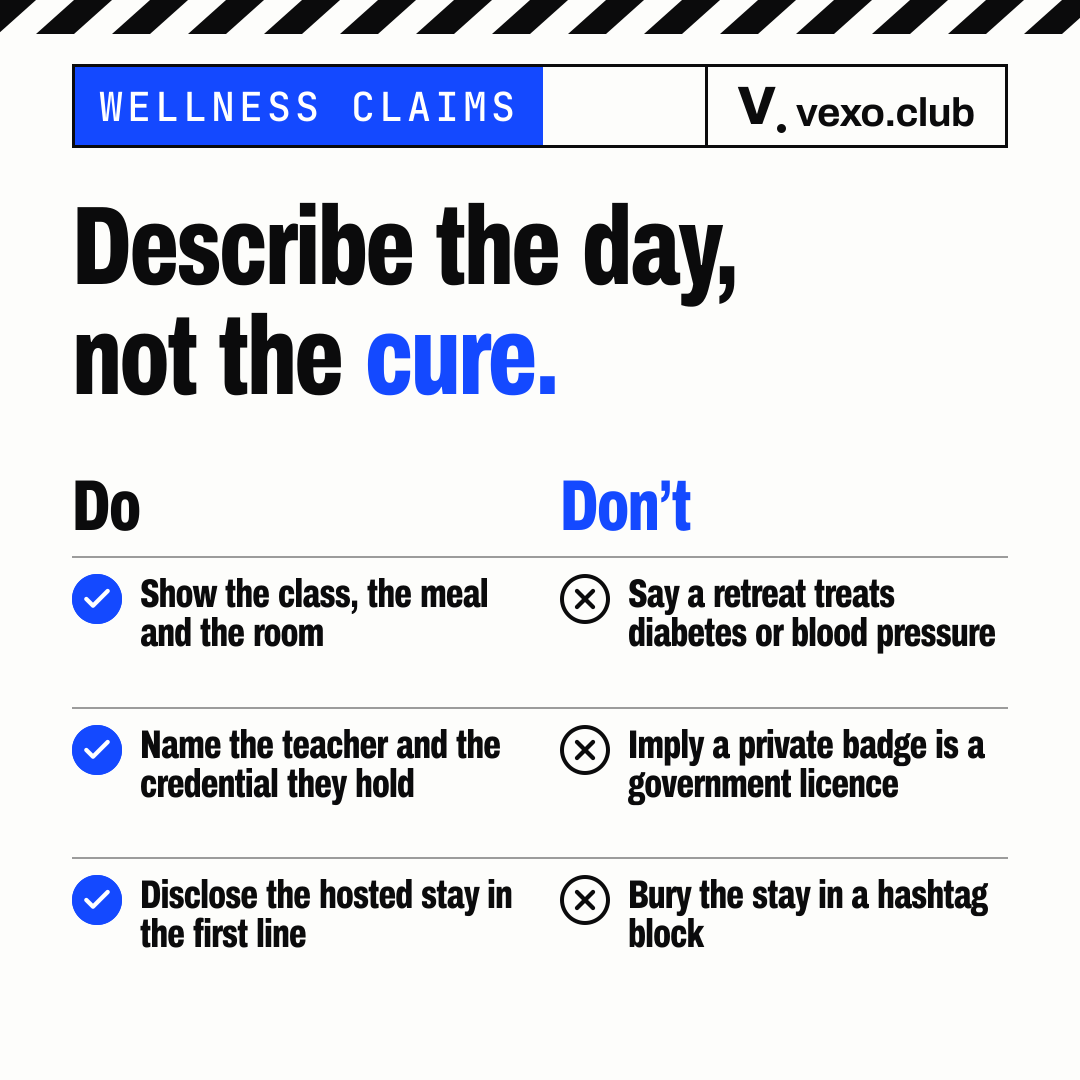
There are limits and a brief should say them out loud. A regional creator cannot get you into a temple, cannot make a drone legal and cannot supply authority they do not hold. That last one matters in a wellness brief. The Ministry of Ayush set up a Yoga Certification Board in 2018 to certify yoga professionals and accredit institutions. A badge from a private registry is a different thing, and a creator should not call it a licence. Ask for the credential in plain terms and let the script state exactly what it is.
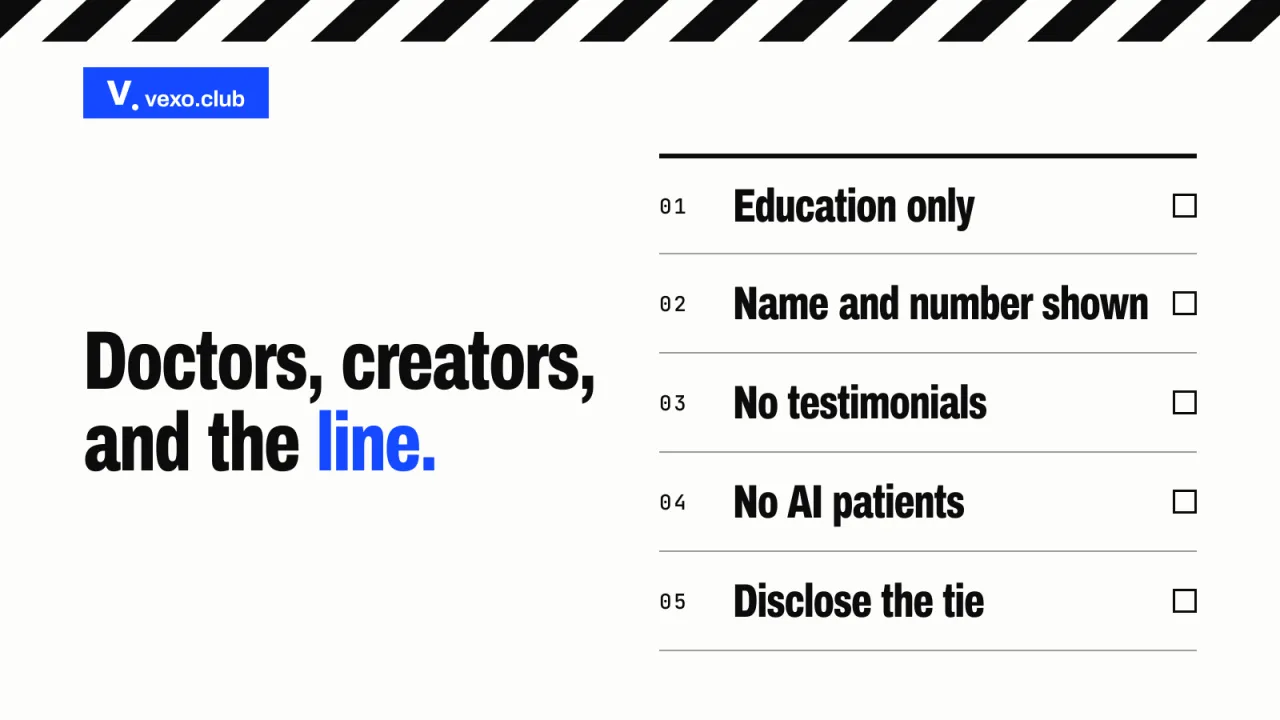
Disclosure is the other limit. The CCPA’s endorsement guidelines require disclosure of a connection that might materially affect the credibility of an endorsement, and they require claims about objective facts to be capable of substantiation. A hosted stay is such a connection and goes in the first line. The ASCI disclosure post sets out the label, and the barter post covers the paperwork a free stay creates. Small camp owners and local creators are often not GST-registered, so ask before the contract, not at invoice time.
On health claims, be careful rather than clever. The Drugs and Magic Remedies (Objectionable Advertisements) Act, 1954 bars advertising a drug in terms that suggest it treats conditions in its Schedule, which includes diabetes, heart disease, high or low blood pressure and obesity. Its definition of a drug covers medicines and articles meant to affect the body’s function. That does not make a yoga class a drug. A panchakarma package or a herbal product sold at a retreat may be. Brief the creator to show the day and the teacher and to leave outcomes out. The wellness and nutrition brief goes further on this.
What a creator says about a yoga or wellness stay
How the brief differs from a metro one
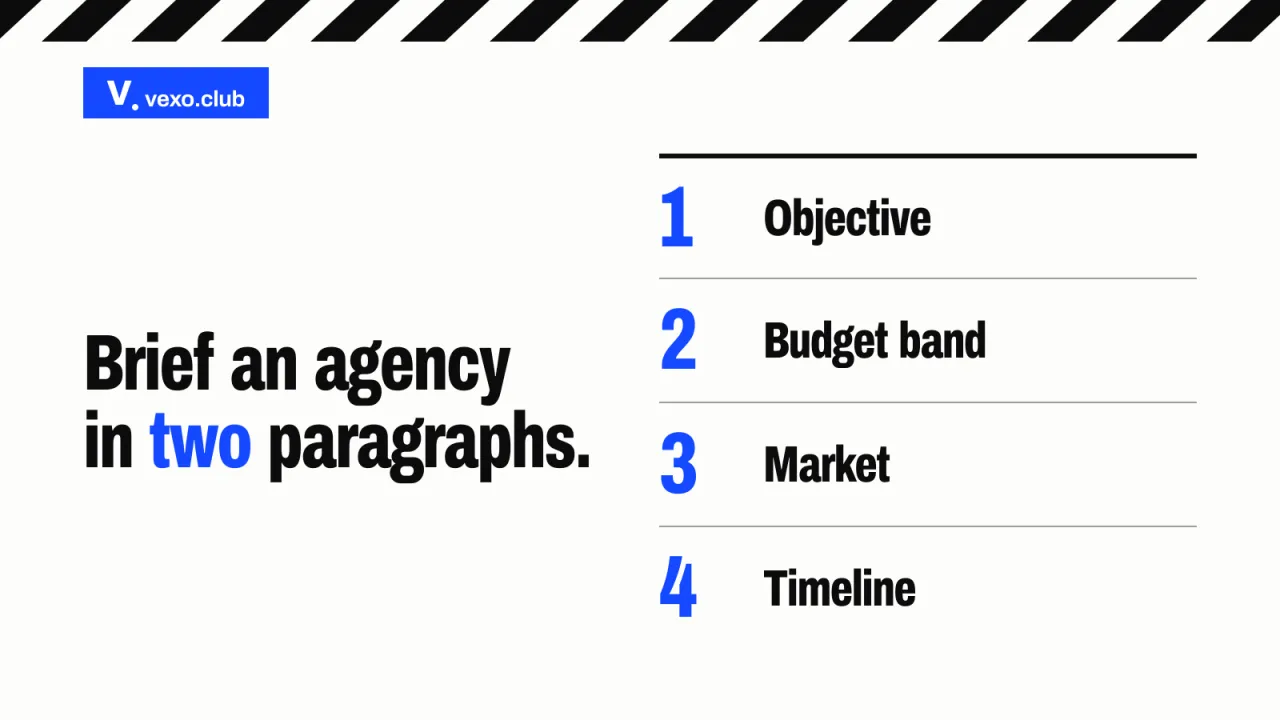
A metro brief assumes the location is available on the day and that the venue manager can say yes. A corridor brief assumes neither. It carries a primary date and a reserve date, a list of every place the creator will stand with the owner beside each, and a deliverables list that has been rebuilt around what cannot be filmed. It names who decides on the day when the weather turns and what the creator is paid if the day is lost. It adds a line on sentiment too: content shot near sacred places is read by people who may take offence, so say who reviews it before posting.
A metro brief against a corridor brief
| Metro brief | Corridor brief | |
|---|---|---|
| Lead time | A shortlist and a shoot date | Add time for letters, district orders and a weather reserve |
| Shoot day | Fixed date and fixed location | A primary date and a reserve date |
| Who signs off access | The venue manager | A trust, committee, police office or forest office |
| Claim checks | Product and endorsement rules | Those, plus wellness claims and sentiment at sacred sites |
| Cancellation | Rare and usually the brand’s call | Decided by closures, so write the fee in advance |
Here is a paste-ready paragraph for the contract. It is a starting point for your own counsel and not legal advice. “The Creator will film only at locations listed in Schedule A, each supported by written permission from its owner or the relevant authority, and will not film or fly any device where such permission is absent or where a notice, order or sign restricts it. If a shrine, ghat, road, river or forest area is closed by an authority on or before the shoot date, the parties will move to the reserve date in Schedule A at no penalty to the Creator, and the fee for the lost day will be as stated in Schedule B. Any drone footage will be captured only by a licensed pilot named in Schedule A.” Pair it with the usual contract clauses and a usage rights line, especially for crowd shots with identifiable devotees.
When not to run this at all
Skip a creator campaign if you cannot get a written yes from the owner of the ground and the shot you wanted needs it. Skip it if your guest books through a tour operator or a family decision and the creator’s audience is not that buyer. Pilgrimage travel is often planned by family and by the operator, and a reel is rarely the deciding input. Skip the mela weeks if your rooms are full and cannot absorb a shoot. A retreat with a strong booking channel may do better with two or three well-matched teachers than a wide creator list, or by licensing guests’ photos as the travel and hospitality brief describes.
How a corridor brief runs from Delhi NCR
vexo.club works from Delhi NCR and has no office or team in Uttarakhand. A brief for this corridor would run from the desk here, with permissions routed through the owners of the ground, the local operator and the state film office, and any on-the-ground need scoped into the plan before the creator is booked. For brands in Delhi NCR the geography helps: a Haridwar or Rishikesh shoot is a road trip away, which is exactly why Kanwar and the Kumbh calendars should sit in the plan from the first day.
What to do this week
Pick the one place, buyer and season you want to sell into. List every spot a creator would stand and find the owner of each. Send each owner a letter. If the season is the 2027 yatra you have until spring. If it is the Ardh Kumbh, look first for the mela administration’s media rules. The desk could not find official ones as of October 2026.
Before a corridor brief goes out
- Name the buyer: pilgrim, retreat guest, river visitor or gateway traveller
- List every place the creator will stand and who owns each one
- Put a letter from each owner in the file before the booking
- Mark every drone shot as optional and name the licensed pilot
- Agree a reserve date and a closure fee in the contract
- Write the hosted-stay disclosure into the script
- Remove every cure, treatment and certification claim you cannot show
Questions brands ask
Can influencers shoot reels at Kedarnath and Badrinath? Not inside the temple complex. The Garhwal commissioner announced in January 2026 that phones and cameras would be completely banned inside the Char Dham temple complexes, and police at Kedarnath repeated the ban on reels and videography this April. Content from the approach, the town and the journey after darshan is outside the ban.
Is making reels at Har Ki Pauri banned? The Shri Ganga Sabha put up boards in January 2026 saying drone flying is banned at Har Ki Pauri and Malviya Island and that shooting reels or videos for entertainment is banned. Whether a documented brand shoot can be allowed is not stated in the reporting. Ask the Sabha and the city police in writing.
Can I fly a drone for a Rishikesh or Haridwar campaign? Only with care. The Drone Rules, 2021 allow flight in a green zone without permission, but local bans apply on top: Har Ki Pauri, the Kedarnath perimeter and district orders issued around events. A paid shoot should use a licensed pilot, the landowner’s written consent and a check of the day’s orders. Always design the film so it works without the drone shot.
Do we need film permission for an influencer shoot in Uttarakhand? It depends on the place and the size of the crew. The state’s single window routes film shoots to the district, police and forest offices. The desk could not find a published threshold for a creator shoot, so ask the Uttarakhand Film Development Council in writing. In a protected forest you need the Chief Wild Life Warden’s permit whatever the crew size.
When is rafting open in Rishikesh? The 2026 monsoon break began on 1 July and rafting resumed on 23 September, then stopped on 27 September when rain raised the river. It runs on river levels and district orders. Book a reserve week and confirm with the operator the day before the shoot.
When do the Char Dham shrines open and close? The 2026 yatra began on 19 April. Yamunotri and Kedarnath closed on 11 November and Badrinath on 16 November. Committees announce each year’s dates, so check the notices for 2027 rather than assuming the same days.
Can a yoga retreat say its programme treats a health condition? It should not. The CCPA guidelines require claims to be substantiated, and the Drugs and Magic Remedies Act bars advertising certain drugs for listed conditions. Describe the schedule, the teacher and the setting, and disclose a hosted stay at the start of the post.
If you have a corridor brief and want a second pair of eyes on the permissions and the contract before it goes to creators, send it to the desk. Tell us the place, the season and what you cannot afford to get wrong.
Sources
- Hindustan Times (opens in a new tab) hindustantimes.com
- ETV Bharat (opens in a new tab) etvbharat.com
- suspended for two days (opens in a new tab) hindustantimes.com
- halted indefinitely four days later (opens in a new tab) hindustantimes.com
- Hindustan Times (opens in a new tab) hindustantimes.com
- Indian Express (opens in a new tab) indianexpress.com
- Indian Express (opens in a new tab) indianexpress.com
- International Yoga Festival (opens in a new tab) internationalyogafestival.org
- India Today (opens in a new tab) indiatoday.in
- completely banned inside the temple complexes (opens in a new tab) indiatoday.in
- official yatra registration portal (opens in a new tab) registrationandtouristcare.uk.gov.in
- temple committee’s own page (opens in a new tab) badrinath-kedarnath.gov.in
- TV9 (opens in a new tab) tv9english.com
- Uttarakhand News Network (opens in a new tab) uttarakhandnewsnetwork.com
- PIB set out at notification (opens in a new tab) pib.gov.in
- draft Civil Drone Bill (opens in a new tab) civilaviation.gov.in
- banned public drone flying around the ghat during the 2023 Kanwar Yatra (opens in a new tab) inkl.com
- banned drones (opens in a new tab) uttarakhandcitynews.com
- Wild Life (Protection) Act, 1972 (opens in a new tab) easyacts.in
- compendium of guidelines (opens in a new tab) ntca.gov.in
- Uttarakhand Film Development Council (opens in a new tab) investuttarakhand.uk.gov.in
- workflow (opens in a new tab) investuttarakhand.uk.gov.in
- Yoga Certification Board (opens in a new tab) yogacertificationboard.nic.in
- endorsement guidelines (opens in a new tab) consumeraffairs.gov.in
- Schedule (opens in a new tab) legislations.in
Cite this page
Influencer marketing in Dehradun, Rishikesh and Haridwar: a brief for the Uttarakhand pilgrim and wellness corridor. vexo.club, published 17 Nov 2026. https://vexo.club/blog/influencer-marketing-dehradun-rishikesh-haridwar
Send the desk a brief: it comes back as a shortlist and a directional band, never a public price.
Brief the desk