Female fashion and beauty influencers in India: the lines a brief tells apart
Female fashion and beauty influencers in India increasingly work the same crossover: ethnic styling, skincare explained with a credential, makeup shown as technique, sustainable wardrobes. What each line may claim, and what a brand checks before booking one creator for both.
Playbooks 11 min read The operators’ desk
In this article8 sections
Female fashion and beauty influencers in India are creators whose work sits across two shelves at once: how an outfit is styled, and how a face or a skin routine reads on camera. Many of the country’s best known creators work this crossover by instinct rather than by plan (a stylist who also reviews a serum, a dermatologist who also talks about what to wear to a wedding), and a brand booking one needs to know which shelf a given post is actually standing on before it checks anything else.
This guide comes from vexo.club: an influencer marketing agency run from one desk in Delhi NCR. It sorts female fashion and beauty creators by what they actually do rather than by platform size, names a public creator only where the creator’s own page confirms the work, and leaves out follower and subscriber counts, which move daily and say nothing about a claim’s evidence. “Female fashion influencer” and “female beauty influencer” are searched as different phrases for people who, in practice, increasingly work both lines in the same week.
Female fashion and beauty creators in short
- Many creators who work in fashion also carry beauty, and the useful sort is by what each actually does: ethnic wear, skincare science, makeup artistry, sustainable fashion.
- What a creator may claim follows the line they work in, not their following: a material claim and a treatment claim answer to different rules.
- A qualification does not make a claim true, and a filter does not make a result real; both still need the brand’s own evidence.
- The checks that matter are the sub-niche, the claim and the label, in that order; reach comes after.
Who are the female fashion and beauty influencers in India?
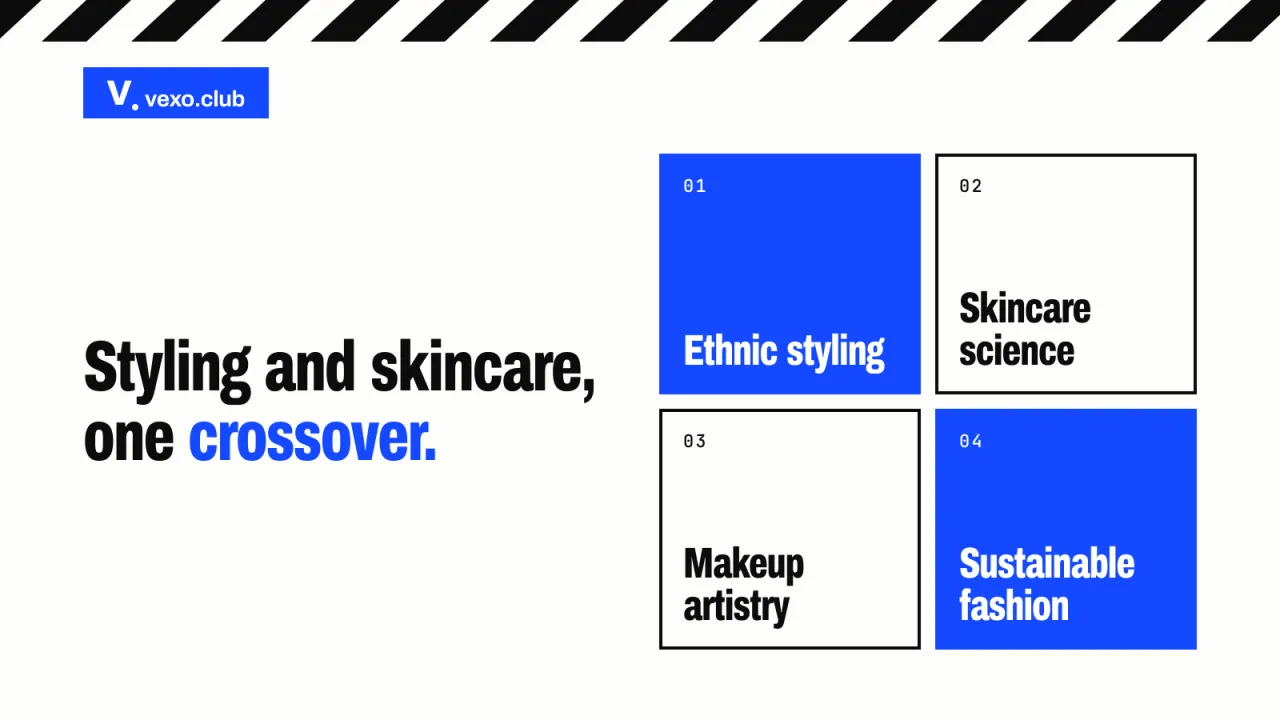
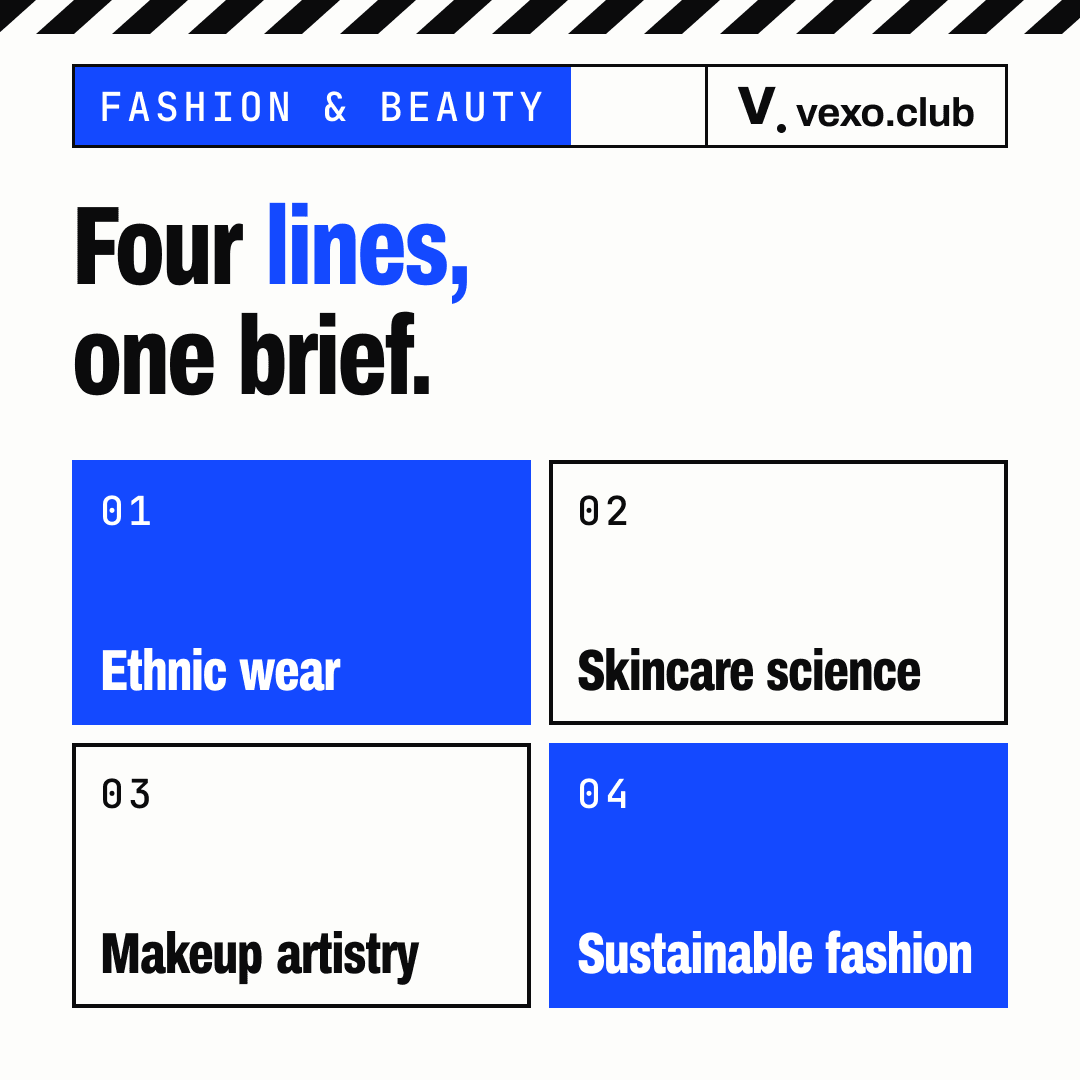
The useful split is not fashion versus beauty; it is the four lines a brand briefs differently once it looks past the feed: ethnic and occasion wear, skincare explained with a credential, makeup shown as technique, and a wardrobe or routine built around sustainability. A single creator can sit in two of these at once: a stylist who also does skincare explainers keeps both audiences, and a brief that treats her as only one of them misses half the value and half the risk.
The four lines this guide sorts creators by, and what each allows
| What the work actually is | What a claim here looks like | Brief rule | |
|---|---|---|---|
| Ethnic and occasion wear | Festive and bridal looks styled rather than modelled: a dupatta, a silhouette, a piece reworked | Handloom, pure zari or hand-embroidered: a material and origin claim | The approved wording for fabric and craft comes from the brand; the creator stays inside it |
| Skincare explained with a credential | A dermatologist or cosmetologist explaining an ingredient, a routine or a result on camera | Clears pigmentation or treats acne reads as a claim about a medicine, not a cosmetic | The qualification is stated upfront; the claim still needs the brand’s own evidence |
| Makeup shown as technique | Technique shown on a face: a bridal transformation, a festive look, a product demonstrated in use | How a product wears, blends or lasts: a claim about performance | The result shown is the result the product gives; no filter on a finish or wear-test shot |
| A wardrobe built around sustainability | A wardrobe or routine built around handloom, upcycling or a slower buying habit | Eco-friendly, zero-waste or ethically made: a sustainability claim | Words like eco-friendly and sustainable need adequate, accessible substantiation on file |
The four lines this guide sorts creators by
Which creators work which lines, and are any of them public?
Yes, several are public enough that a mainstream fashion or beauty feature, or the creator’s own page, confirms what they make, and this guide names only those. It is a reading of the landscape, not a shortlist or a ranking, and only one of the names below, Kritika Khurana, carries a vexo.club record.
- Komal Pandey: ethnic and festive looks reworked rather than simply worn, a dupatta draped against type or a silhouette rebuilt, as Komal Pandey’s Instagram shows.
- Kritika Khurana: boho-meets-ethnic lookbooks and outfit-of-the-day posts since the format’s early days in India, posting as That Boho Girl.
- Dr. Rashmi Shetty: aesthetic dermatologist posting ingredient and in-clinic explainers under her own qualification, as Dr. Rashmi Shetty’s site describes.
- Dr. Geetika Mittal Gupta: aesthetic physician and founder of ISAAC Luxe, posting skin, hair and wellness explainers under her own medical degree, as Dr. Geetika Mittal Gupta’s site describes.
- Namrata Soni: working makeup artist to Hindi film actors, posting technique and red-carpet looks, as her brand Simply Nam describes.
- Aditi Mayer: journalist, photographer and sustainability advocate whose work on fashion supply chains includes documenting India’s artisan textile traditions, as Aditi Mayer’s site describes.
The creators named here are public examples, read from their own sites or profiles; only Kritika Khurana is on the vexo.club roster. Live follower and subscriber counts are on each public profile, where they change daily, so none is typed here. A fame count says how many people are watching, not who buys a saree or a serum because of it.
Why a crossover audience is checked on both counts
Apart from Kritika Khurana, who is on the fashion and style roster, none of the creators named above carries a vexo.club record. A brief that wants one of them by name is cast and approached on its own terms, the way any outside casting is; a brief that wants a creator who already carries consent on file runs through the fashion and style roster or the beauty and skincare roster, where the current list and the record behind each name live.
What can each kind of creator claim?
The claim follows the line, not the creator’s fame. In ethnic and occasion wear, the claims that get a brand into trouble are about material, origin and craft: handloom, pure zari and hand-embroidered are statements of fact, and the brand holds the evidence behind them. In skincare explained with a credential, the line that matters is between a cosmetic claim and a drug claim: a cosmetic cleanses, moisturises or alters appearance, and a claim that a product treats or cures a condition reads as a claim about a medicine, which neither a dermatologist’s degree nor a brand’s marketing team can sign off on its own.
A sponsored outfit and a sponsored serum carry different evidence
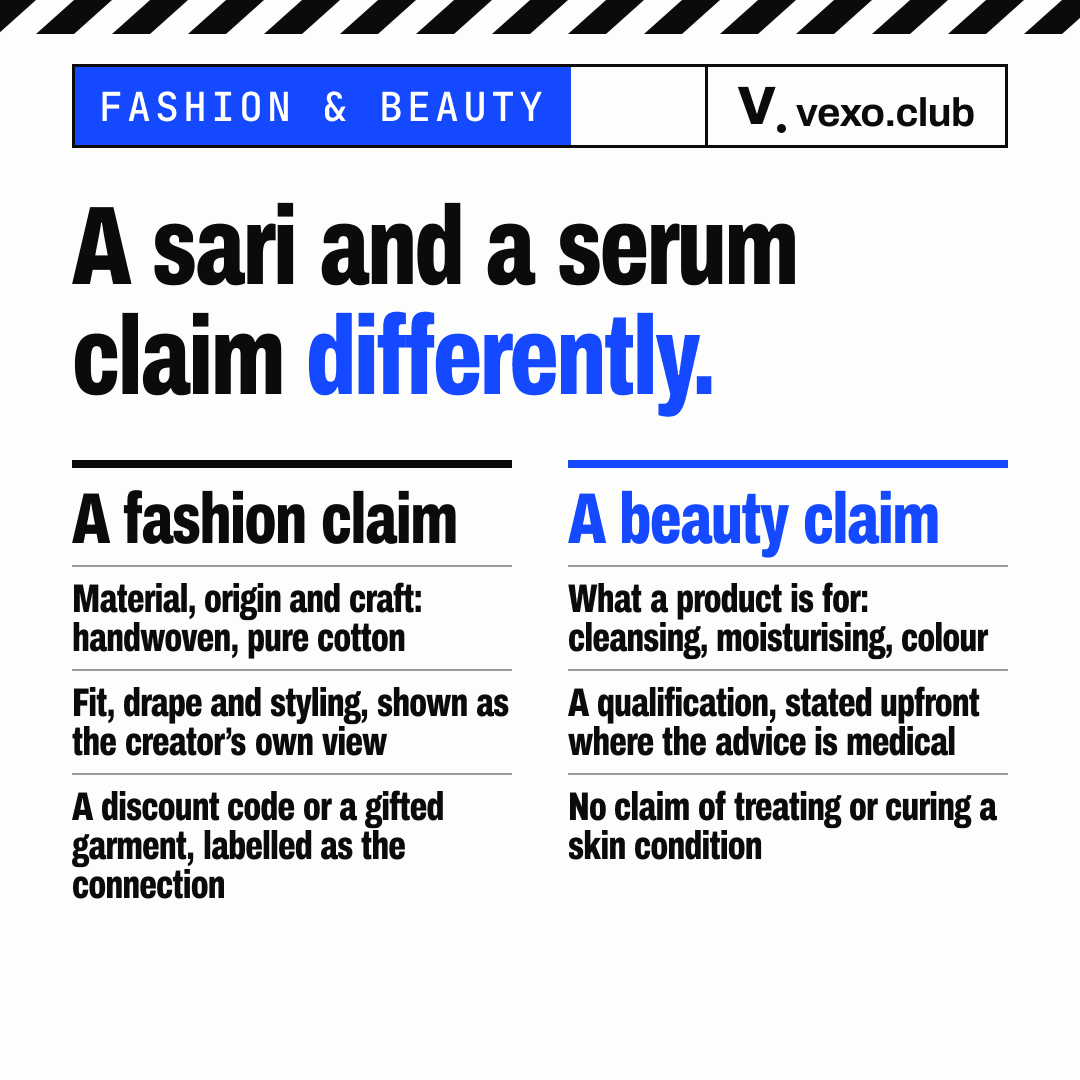
In makeup shown as technique, the claim that needs the most care is the result shot: how a finish holds, how a shade reads across skin tones, how a product performs in heat, and the honesty rule is the same one that governs a before-and-after in skincare (the result shown has to be the result the product gives, with no filter or retouch doing the work). In a wardrobe built around sustainability, a creator talking about a slower buying habit or a handloom source is making the same kind of origin claim ethnic wear makes, and an unsubstantiated sustainability word is read as a misleading one under advertising rules, whoever says it.
How does disclosure change between a styled outfit and a skincare routine?
The underlying rule does not move, and a label is owed whether the post is a styled saree or a serum review. What changes is what sits beside the label. A fashion post needs the claim about fabric or origin approved ahead of the shoot. A beauty post that leans on a qualification needs that qualification stated as prominently as the label itself: a rule written for creators who comment on health and skin, not only fashion. See ASCI disclosure for brands for the fuller rule on where and how a label sits.
Disclosure across a styled outfit and a skincare routine
Do
Approve the fabric, origin or treatment claim before the shoot
Don’t
Let a creator improvise a material claim or a cure claim on camera
Do
State a medical or craft qualification as prominently as the paid label
Don’t
Bury either one in a bio or a caption nobody opens
Do
Ask for the original, unfiltered files on a result or wear-test shot
Don’t
Approve a before-and-after with no originals to check
What should a brand check before booking one creator for both lines?
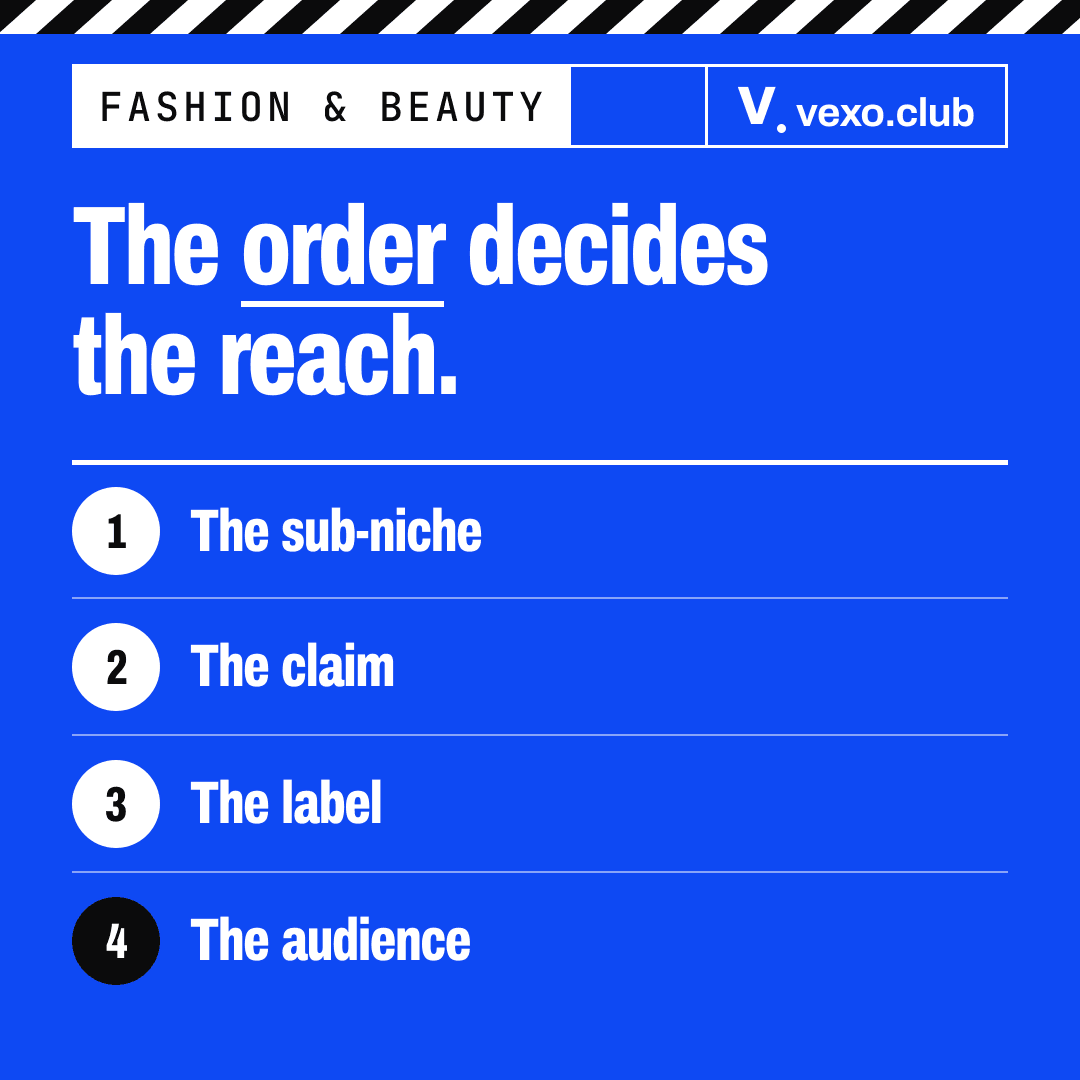
It should check the line before it checks the reach. A crossover creator is attractive precisely because one booking can carry two kinds of content, and the order below is the one the desk runs before a brief goes out.
Before booking a female fashion and beauty creator for both lines
- Does the creator’s sub-niche genuinely match the product: ethnic styling, skincare science, makeup artistry or sustainable fashion?
- Is every material, origin or treatment claim on the brand’s approved list, with evidence on file?
- Where a qualification carries the claim, is it provable on request and stated as prominently as the label?
- Are gifted pieces, affiliate links and discount codes labelled for what they are, not just mentioned?
- Are result shots and wear-tests free of filters, with original files due at the approval round?
- Are usage rights and any whitelisting term written into the contract before the shoot, not after?
What a crossover brief checks, in order
How does a crossover brief move from claim to live post?
Logistics come before creative, the same as a single-line brief, except that a crossover booking carries two approvals instead of one: the fabric or origin claim for the outfit, and the qualification or product claim for the skin or face work, both signed off before the draft goes anywhere near a second read.
How a crossover brief moves from claim to live post
- Brief Names the line, the approved claim and the label each post needs
- Claim check Material, origin or treatment wording signed off against the brand’s own evidence
- Draft Qualification and paid label on screen before a second read
- Approval Approved once the claim, the qualification and the label are all visible
- Live and review Posted, labelled, checked again after it goes up
Direct, through a manager, or through an agency?
A brand can brief a fashion or beauty creator directly, through the creator’s own manager, or through an agency, and each route can work for a single-line post. What a crossover brief adds is a second reader who checks the claim against the line it belongs to (a material claim read differently from a treatment claim) before the post goes live; at vexo.club every paid post is checked for its disclosure before sign-off regardless of which line it sits in.
For the wider landscape, see influencers in India; for the fabric and craft claims specific to apparel, fashion influencers in India; and for credential and cosmetic claims specific to skin and face, beauty bloggers in India. To start a brief that spans both, send it to the desk.
Questions brands ask
Who are the top female fashion and beauty influencers in India? No ranking holds across a brief, so the desk keeps none. The useful list is by line (ethnic wear, skincare explained with a credential, makeup shown as technique, a wardrobe built around sustainability) because the line decides what a creator may claim and what a brand should check.
Can one creator work both a fashion brief and a beauty brief? Often, yes, and several well known creators do it as a matter of course rather than a plan. The brief should still carry two separate claims: a note on fabric or origin for the outfit, and a separate note on what the product is for, or what qualification backs the advice, for the beauty side.
Does a sustainability claim need the same evidence as a skincare claim? Yes, in substance. Words like eco-friendly and sustainable need adequate, accessible substantiation behind them, the same standard that applies to an unsubstantiated cosmetic or treatment claim, whichever line the post sits in.
Do makeup artists have to label a gifted product the same way a stylist labels a gifted outfit? Yes. A gifted product, including one received unsolicited, is a connection that needs disclosure whether it is a garment, a palette or a serum, and the label sits upfront and prominent regardless of which line the post belongs to.
Does vexo.club have female fashion and beauty creators on its roster? The fashion and style roster and the beauty and skincare roster each carry creators with consent on file. Who is on them at a given time is best read on the roster pages themselves, since a list printed into an article ages the moment a creator joins or leaves.
Sources
- Komal Pandey’s Instagram (opens in a new tab) instagram.com
- That Boho Girl (opens in a new tab) instagram.com
- Dr. Rashmi Shetty’s site (opens in a new tab) drrashmishetty.com
- Dr. Geetika Mittal Gupta’s site (opens in a new tab) drgeetikamittalgupta.com
- brand Simply Nam (opens in a new tab) simplynam.com
- Aditi Mayer’s site (opens in a new tab) aditimayer.com
Cite this page
Female fashion and beauty influencers in India: the lines a brief tells apart. vexo.club, published 29 Oct 2026. https://vexo.club/blog/female-fashion-beauty-influencers-india
Send the desk a brief: it comes back as a shortlist and a directional band, never a public price.
Brief the desk